Does Private Liquidity Keep a Strategy Private?
An unknown owner can still have a recognizable strategy. Privacy research should measure both attribution and commercial exposure.
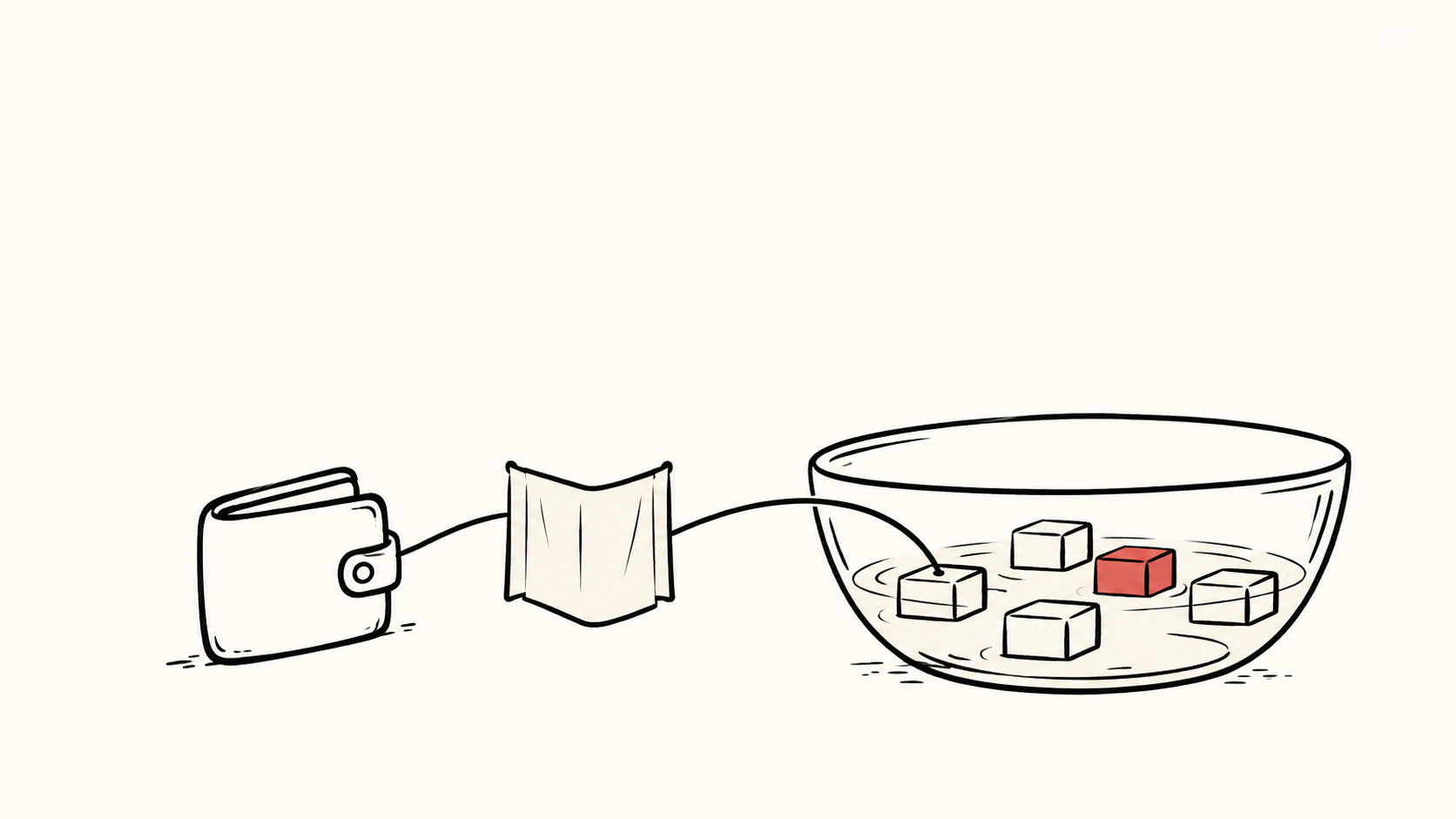
Ekubo says it added shadow-account liquidity on October 14: positions stay public; main-wallet links are concealed. Announcement.
The interesting consequence is a change in what an observer has to learn. A participant could protect its identity yet leave enough decisions visible for someone else to model its behavior. That possibility deserves analysis without declaring the product ineffective. Obscuring ownership can have value to an organization even when its activity remains observable.
What would a competitor need to know?
Consider a hypothetical liquidity provider whose main concern is that another trader will anticipate its next adjustment. Learning the provider’s legal name might add little to that prediction. Conversely, a supplier concerned about revealing its relationship with a customer might care greatly about attribution even if the underlying transaction is ordinary. These are different commercial needs.
Our reading is that privacy evaluations should begin with the decision an observer could take using the disclosed information. Could it identify an organization, infer a position’s owner, or predict a strategy well enough to change its own behavior? Reporting one success rate across those questions would conceal the distinction that matters to the user.
This also changes procurement. A buyer should describe what harm it wants to reduce before comparing products. A credible improvement against one observer does not promise equal protection against every other observer or every future use of the data.
An attribution is a hypothesis
Tutela’s Ethereum research links addresses through behavioral heuristics and explicitly warns about false positives. Study.
That older research is context, not an assessment of Ekubo.
A useful experiment would recruit consenting test participants, keep their true relationships separate from the evaluation team, and ask that team to make defined predictions. The comparison should give public and privacy-enabled cases the same observation period and similar opportunities to act. Investigators would then report incorrect attributions alongside correct ones, including how often the system declined to decide.
Disclosure has an audience
ERC-5564 distinguishes keys for recognizing incoming transfers from keys for spending the funds. Standard.
That is a separate Ethereum design, not a claim about Ekubo’s implementation. A business evaluating any privacy system should be explicit about which permission an accountant, a compliance reviewer or an operating employee needs.
We would also ask whether a report reveals only the period and activity needed for its purpose. A narrowly scoped review may be easier to govern than handing over an enduring view of unrelated business. This is a proposed disclosure requirement, not a statement that the new product already supplies it.
Follow the strategy over time
A one-off demonstration cannot settle the commercial question. Our proposed test would revisit the same participants after repeated decisions, then measure whether the evaluator’s predictions improve. It would distinguish learning who someone is from learning how that someone operates.
The possible results are informative in both directions. Reduced attribution could justify adoption for one business even if strategy prediction barely changes. Another business might need additional protection before the same feature fits its purpose. Neither conclusion follows merely from attaching the word private to a position.
The unanswered question is empirical: how much useful knowledge does a real observer lose, for which task, over what period? Publishing that evidence would make the trade-off easier to understand without promising invisibility or dismissing a narrower, valuable gain.
Information only. No investment, legal, tax, or financial advice.