Before buying robot touch, separate the training bill from the hardware bill
A proposed four-cell test helps buyers decide which part of a robot system earns its place.
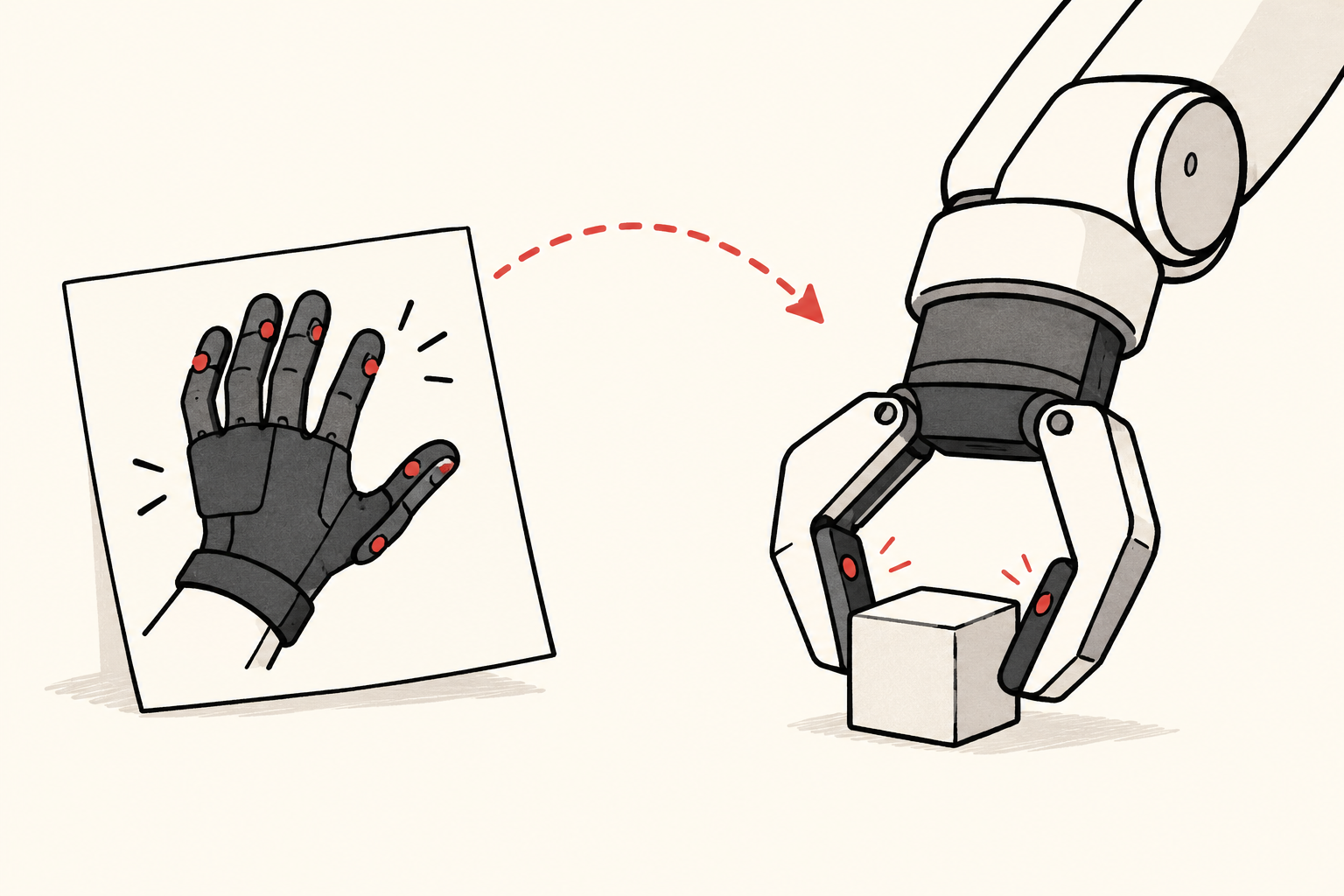
On October 15, 2026, the Spark-0 preprint described tactile supervision during training and optional tactile-conditioned deployment. These are separate design choices.
Earlier work provides useful context. ZeroTouch, submitted September 18, uses tactile training supervision without requiring tactile sensors at deployment. UniDex-ViTac, submitted September 15, trains a vision-and-contact policy using human-video-guided simulation. These are research reports, not equivalent commercial product trials.
Analysis: write the acceptance test before the purchase order
For a buyer, a useful question is which expense survives a controlled comparison. A training-data contract and a sensor-maintenance contract should not be bundled into one unexplained performance premium. Our proposal is a four-cell evaluation, not a description of an experiment performed by these researchers.
Use the same robot, task list, training budget and evaluation objects. Compare A: no tactile supervision and no runtime touch; B: tactile supervision but no runtime touch; C: no tactile supervision but runtime touch; and D: both. Here “supervision” means an additional learning target, not all exposure to sensor input. C still needs training compatible with its runtime inputs. A physically disconnected sensor is not automatically a fair baseline for a policy trained to depend on it.
B against A would estimate the value of the additional training target under those conditions. D against B would test the added runtime pathway after that training. C against A supplies a second comparison; disagreement between the two hardware comparisons would suggest interaction rather than a universally transferable upgrade. This design requires compatible implementations. If a supplier cannot provide them, the buyer should record the resulting uncertainty instead of attributing all improvement to touch.
Count the failed recoveries, too
Choose the pass criteria before demonstrations begin. Record completed tasks, damaged objects, human interventions and time to recover from failure. Include unfamiliar packaging and a separately reported sensor-fault condition. A fast successful cycle should not conceal a long manual reset after a dropped object. Show the denominator and failure categories, not just a video of selected successes.
Commercial acceptance also needs a cost boundary. Ask who pays for replacement surfaces, recalibration, operator training and integration changes. Use a buyer-defined operating period and compare total costs per accepted task; do not infer a payback period from laboratory success rates.
These papers do not settle which configuration a particular factory should buy. The immediate opportunity is to request evidence that matches the contract: a separately tested data contribution, a separately tested hardware contribution, and an explicit plan for failures. A preprint can justify a pilot. It cannot, by itself, determine the pilot's acceptance threshold.
Information only. No investment, legal, tax, or financial advice.