Stablecoin prefunding can speed up funding. Payout has its own clock
Visa’s APAC pilot changes how providers fund payments, not the recipient’s fiat experience. The whole lifecycle determines efficiency.
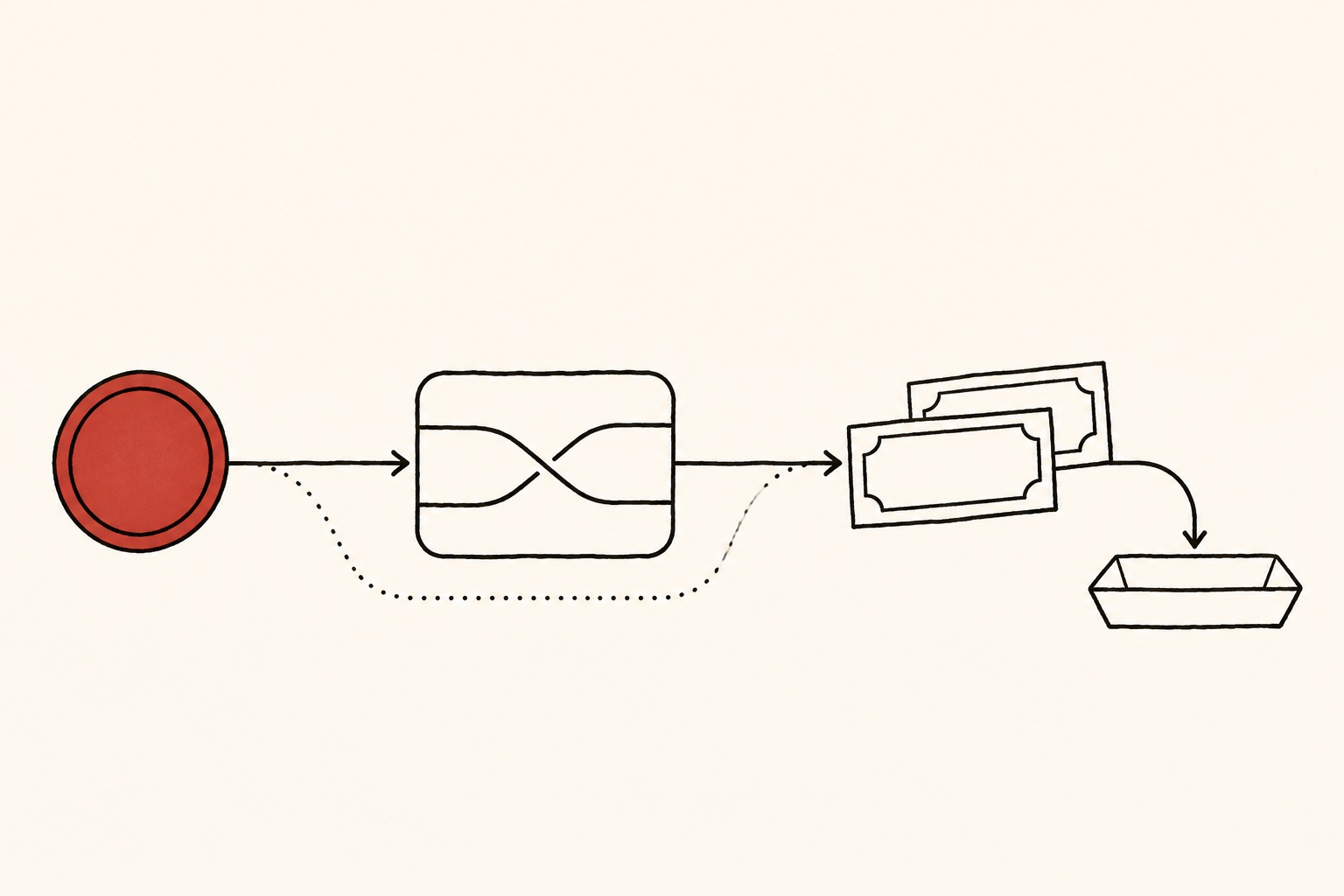
The easiest mistake in stablecoin payments is to equate being able to send funding at any time with a beneficiary being able to receive money at any time. Visa’s November 18 Asia-Pacific announcement offers a more specific case: a dtcpay pilot uses stablecoins to prefund cross-border fiat payouts through Visa Direct. Recipients still receive fiat. Visa’s APAC announcement
The change is at the payment provider’s funding entrance, not a requirement for every recipient to learn to use a wallet. The practical question is therefore not whether a blockchain is faster. It is whether funding, conversion, settlement and crediting form an explainable, recoverable and reconcilable business process.
Related announcements do not establish a single route
Visa calls the dtcpay arrangement a pilot, assigns digital-asset services to an independent licensed partner and makes availability subject to eligibility and geography. Pilot boundaries Triple-A separately announced stablecoin processing, currency conversion, compliance screening and settlement support for eligible Visa Direct clients, while recipients receive local currency. Triple-A’s announcement
Together, the releases show an industry building stablecoin funding entrances. They do not establish that the dtcpay pilot necessarily routes through Triple-A. Drawing them as one serial connection would turn an undisclosed supplier relationship into an asserted fact.
The United States is not at the same experimental stage. On October 15, Inyo announced commercial production of Visa Direct’s USDC prefunding capability through its existing APIs. Inyo’s announcement That establishes production for an implementation, not simultaneous availability across every APAC market, asset and payout method. A pilot, a service announcement and a production launch are distinct statuses.
Minting and redemption supply liquidity, not a payout network
Also on November 18, DBS and Circle announced direct USDC minting and redemption through DBS for eligible institutions, with round-the-clock USD–USDC settlement in that process. DBS’s announcement
This is an institutional liquidity layer for acquiring or exiting stablecoins. It is not an established downstream leg of the Visa arrangements. Minting addresses how dollars become usable stablecoins; redemption addresses the return to dollars. Paying an overseas beneficiary in local currency additionally requires conversion, recipient eligibility and local delivery arrangements.
These capabilities can complement each other at an industry level without already being integrated. Round-the-clock institutional dollar–USDC settlement cannot be extrapolated into instant, round-the-clock crediting by every receiving bank.
Prefunding changes location and timing; it does not disappear
Prefunding means making usable money available before payment execution. Stablecoins may allow funds to move closer to the moment of need, reducing some advance positioning. But the operator still needs to hold or acquire the asset, obtain usable funding after conversion and retain the ability to manage exceptions.
Capital efficiency therefore cannot be measured solely by a lower balance in one bank account. If the same amount sits instead in a wallet, with a conversion provider or in a pending account, the money has changed location. A genuine improvement would require less total funding for the same completed payment volume without trading that benefit for higher failure rates or longer refund waits.
Costs extend beyond blockchain fees. Acquisition, custody, currency spreads, liquidity buffers, manual intervention and failed-payment refunds all affect the result. This is an evaluation framework, not a claim that any announcement demonstrates a particular saving.
A payment has at least four completion states
The following is a general operating model, not a description of any partner’s internal implementation.
First, funding has been received. Confirmation of an onchain transfer establishes arrival at an address or account, but does not automatically establish a usable payout balance.
Second, funding is available for payment. Supported-asset checks, screening and conversion conditions must be satisfied before the agreed currency balance can be usable. Quote expiry and fee deductions affect the net amount that can be paid.
Third, the payment has been delivered. Network acceptance of an instruction and actual beneficiary credit are different states. A product should identify when a payment is merely processing and when downstream confirmation exists, rather than compressing every intermediate step into “success.”
Fourth, the books have been reconciled. Finance teams must link funding records, conversion records, payment identifiers, fees and recipient outcomes. An onchain transaction identifier does not explain every fiat accounting entry. A bank statement does not independently explain the stablecoin movement either.
This decomposition makes service promises precise. A provider may accept funding around the clock without being able to promise identical final delivery times across every route.
The stress test starts when conversion succeeds but payment does not
Suppose stablecoins have been received and converted, but the beneficiary account cannot accept the payout because of its details or a downstream restriction. Is the refund made in the original asset or in fiat? Which exchange rate applies, who bears fees and when is the balance released? The announcements do not settle those contractual questions, and no guarantee should be invented for any participant.
An ambiguous timeout is harder still: a request can time out even though a payment may have completed. Blindly resending risks duplication; always waiting prolongs the customer’s funding requirement. A dependable process needs traceable request identifiers, status checks and duplicate-submission protection, with complete records for manual resolution. These are design requirements to test, not a list of verified product features.
Stablecoin prefunding may create value by widening the funding window and reducing unnecessary reserves. It does not transfer conventional payment responsibilities to a blockchain transaction. Only when conversion, delivery, recovery and reconciliation work together can a provider tell whether it has gained efficiency or merely a faster route into a pending state.
Information only. No investment, legal, tax, or financial advice.