Route GPT-6.2 by the cost of accepted work
Astra and Sol token prices are only a starting point. Retries, human review and deadlines determine the cheaper delivery route.
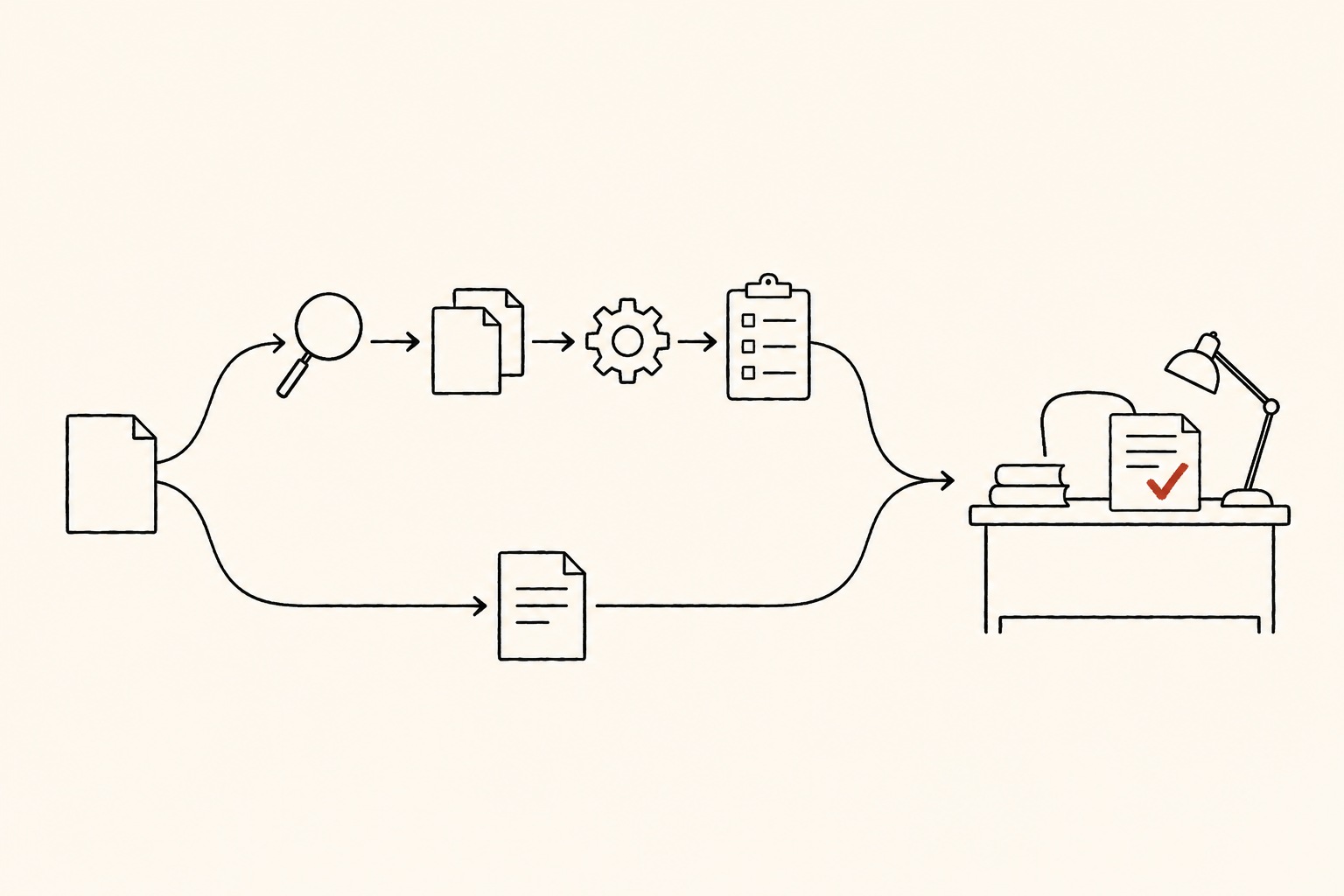
OpenAI released GPT-6.2 Astra and Sol on November 17, positioning them for difficult projects and everyday work respectively. The announcement raises a practical enterprise question: which tasks should go to which model? Neither the price per million tokens nor a blanket preference for the stronger model supplies the answer.
The useful comparison is total cost per accepted deliverable under the same quality requirements and deadline. A cheap first draft that needs more corrections may simply transfer expense to its reviewer. A more expensive call that does not improve usable outcomes may be unnecessary.
A call price is not a delivery price
For short-context Standard text processing, the Sol model page lists $2 per million input tokens and $10 per million output tokens. The Astra page lists $8 and $40. These are billing units, not fixed task prices. Input length, output length and retries change the bill.
Hold billing conditions constant, then measure actual usage. The API pricing documentation distinguishes caching, processing tiers and context conditions. Do not compare discounted background work on one model with immediate processing on another. The calculation below uses only Standard, uncached, short-context text rates, not subscription allowances.
An internal metric can divide a cohort's model and tool charges, plus review and rework costs, by its number of deliverables meeting agreed acceptance criteria. Keep spending on failures, timeouts, abandoned attempts and escalation in the numerator. If nothing is accepted, the route is not yet viable; do not manufacture an attractive average.
A deliberately hypothetical example
These figures are not measured Astra or Sol performance. Suppose the same 100 low-risk assignments have identical acceptance criteria and a 30-minute deadline each. Both routes deliver 95 accepted results and meet the same predefined error-tolerance threshold. Costs of the five failures remain included. Human time is valued at $1 per minute, including review, edits and failed-task handling.
For simple arithmetic, assume every call uses 10,000 input tokens and 2,000 billable output tokens, including applicable reasoning tokens, without caching or tool charges. A Sol call then costs $0.04; Astra costs $0.16. Real retries may carry longer histories, which this example deliberately simplifies.
- Sol route: 100 initial calls and 20 retries cost $4.80. Human work totals 300 minutes, or $300. Total cost is $304.80, approximately $3.21 per accepted deliverable across 95 results.
- Astra route: 100 initial calls and five retries cost $16.80. Human work totals 190 minutes, or $190. Total cost is $206.80, approximately $2.18 per accepted deliverable.
Under these assumptions, Astra spends $12 more on inference but saves 110 human minutes, lowering total cost. This does not establish that Astra is always cheaper. With equal human time, Sol would cost less. At the assumed labor valuation, saving more than 12 minutes offsets Astra's additional model bill. Replace these assumptions with observations rather than treating the illustration as procurement evidence.
Labor valuation is not cash savings. Less reviewer time may create capacity without reducing payroll. Financial reporting should separate recoverable capacity from payments actually avoided.
Benchmarks inform questions, not acceptance decisions
Cognition's FrontierCode 2.0 methodology uses weighted scoring, zeroes solutions failing blocking criteria, and reports average API-priced spending per rollout. Its score is not an acceptance rate that can be inserted into the cost formula, and rollout spending is not delivery cost including people.
The official leaderboard targets whether maintainers would merge code. That is useful, but a coding evaluation cannot establish the same ranking for reports, sales emails or a company's particular repository. This article neither extrapolates vendor score differences into enterprise returns nor assumes that the two models have equal quality.
Build a small sample stratified by task type: clearly specified formatting, research requiring source verification and cross-module changes should be assessed separately. Blind reviewers to the model name, hold acceptance rules fixed, and record first-pass acceptance, retries, editing time and defects discovered after delivery. Repeat batches to check whether an apparent small-sample advantage persists.
Routing needs escalation costs and stopping rules
One policy to test starts Sol on bounded, reversible work, escalating only on observable failures such as a failed test, a missing mandatory source or a predefined rework limit. Send Astra the original task, verified facts and failure reason, not merely a context-free unfinished draft.
“Cheap first, escalate later” is not automatically economical. The initial spend, handoff preparation and second reading of context belong to the same task. If a category frequently escalates, sending it directly to Astra may be more efficient. Count the router's own classification cost and routing mistakes too.
Compare three complete routes: direct Sol, direct Astra, and Sol with rule-based escalation. Give them identical deadlines, tool permissions and quality thresholds. Examine the distribution of delivery delays, not just mean response time. A good answer after the deadline is not on-time completion. A material defect discovered later should reverse the earlier acceptance and add repair costs.
This analysis concerns low-risk, reviewable work. It excludes medical or legal determinations, financial transactions, irreversible business actions and security testing. Routing does not replace required human approval. Keep policies that can explain which tasks become cheaper and more reliable under which conditions, and revalidate them when models, prices or the work mix change.
Information only. No investment, legal, tax, or financial advice.