AI Search Links Need an Economic Destination
A more visible citation matters only if the journey beyond it creates value for readers and publishers.
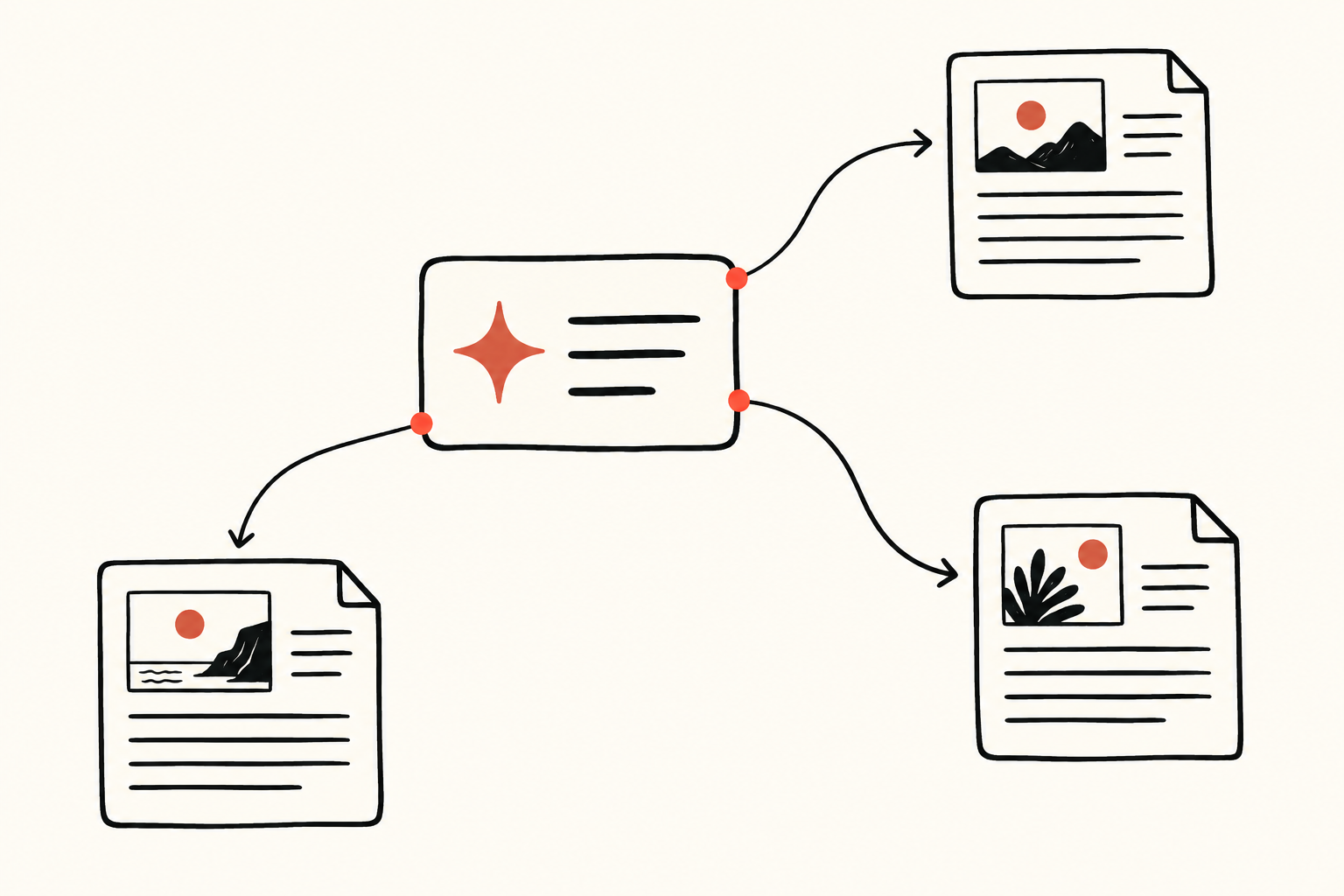
On October 15, Google announced more prominent AI Search links and a test highlighting official destinations. Announcement.
For a publisher, a citation can provide recognition, a visit can provide an audience, and a returning reader can support a business. These are different outcomes. Our analysis is that the next contest in AI search will turn on how effectively a platform connects them, rather than how many links it can display.
Count the journey, not the decoration
Consider a hypothetical independent astronomy publication. An answer may summarize why an eclipse occurs and cite its explanation. The reader has no reason to leave if that resolves the question. A different reader wants to plan a neighborhood viewing session: compare possible times, sketch buildings blocking the horizon, and print a sky map annotated for the group. For that person, visiting the publication’s imagined planning tool is part of completing the task.
Neither outcome is automatically a product failure. But they have different economics for the guide’s author. The first supplies information without an on-site encounter. The second creates an opportunity to earn trust, sell a service, or gain a future reader. A dashboard that combines them under “visibility” conceals the distinction.
The useful accounting chain is therefore: eligible queries, visible source appearances, outbound visits, useful on-site actions, and repeat relationships. Publishers should measure the conversion between each stage where data is available, and mark missing observations rather than filling gaps with assumptions. An impression is not a customer, and a crawler request is not an impression.
A historical warning, not a forecast
Pew’s March 2025 U.S. browsing study observed fewer traditional-result clicks when AI summaries appeared. Study. This association does not establish the current redesign’s effect.
Query intent matters. A request for a quick definition and a request for an original investigation should not be pooled into one success rate. Nor should a publisher conclude that every lost visit was commercially valuable. Some visits would have ended immediately; others might have become subscribers. The difference has to be measured.
A practical test would compare similar pages and query categories over time, separating changes in demand, ranking, and presentation. Platform-level randomized tests would be stronger. Publishers can still examine whether referred visitors finish a tool, read a second article, or return later. These are proposed tests, not results reported by Google.
Discovery is an input
Cloudflare and OpenAI reported improved discovery on October 15; business-outcome measurement remains future work. Update.
Our inference is that better discovery can expand the available supply while leaving the distribution of attention highly concentrated. If a hundred useful sources become available but an answer directs visitors to two, technical inclusion alone does not establish broad economic participation. That does not make discovery worthless; it makes the next stage decisive.
Publishers should therefore ask which distinct contribution survives the summary. A firsthand dataset, regularly maintained directory, original photograph, or functioning calculator gives a reader something to do beyond checking an attribution. Merely adding length to a page may increase production costs without creating a reason to visit.
A link also makes a claim
A 2025 attribution study found trade-offs between citation coverage and correctness. The research reinforces why counting linked phrases cannot by itself measure answer quality.
For the reader, a link should clarify what the destination contributes and which claim it supports. For the publisher, it should preserve enough identity to make the visit memorable. For the platform, success should include useful external completion, even when that shortens time spent inside the answer interface.
That is the underlying design tension: the answer should remove unnecessary effort without removing every reason to encounter the people who produced the knowledge. More visible exits create an opportunity. Sustainable value depends on where they lead, what remains available there, and whether readers choose to return.
Information only. No investment, legal, tax, or financial advice.