Keeping enterprise AI tests comparable when approvers change
Role and policy changes make versioned organizational context essential to interpreting enterprise AI test results.
On October 30, 2026, Microsoft Research described synthetic enterprise evaluation environments that already include evolving organizational histories. Original announcement
Our narrower question concerns acceptance: after a legitimate change of approver, how can a team preserve comparability and distinguish changed answers from business facts that should remain stable? This is Open Market Notes analysis, not a claim that Microsoft omitted time. All companies and workflows below are hypothetical, not disclosed deployment cases.
Fix the organizational state behind a judgment
Imagine a sales assistant at an equipment supplier being asked who now approves a customer's discount. An old email names a business manager. A newer notice transfers responsibility to a regional lead. A draft proposes another change next month. All three documents can exist legitimately and read coherently.
Saving only the question and one name as the expected answer reduces an organizational judgment to string matching. The test needs the query time, policy effective time, user identity and materials visible at that moment. Otherwise a different name could reflect a retrieval error, a temporal misunderstanding or an obsolete expected answer.
Upload time, the time of the event described and policy effective time can fall on different days. Automatically treating the latest upload as current policy would let a backfilled historical document change today's workflow. We suggest deliberately introducing that conflict rather than making every date agree.
Preserve changes, not just more material
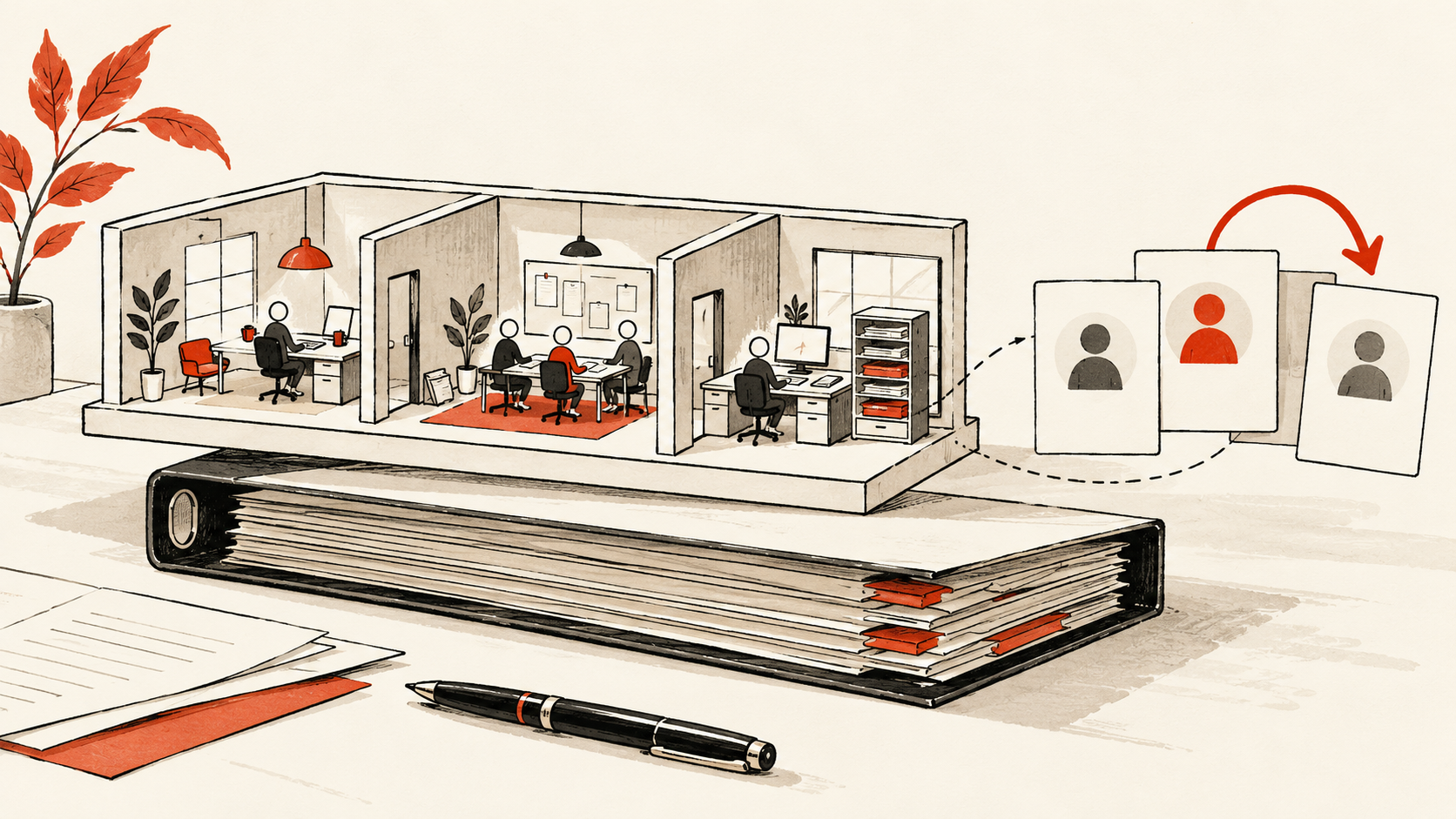
A maintainable environment can start with a stable baseline and explicit changes. Version one contains the original approval relationship. Version two adds the transfer while retaining old mail. Version three adds the future draft. Changing a few conditions at a time helps locate the point at which an answer loses its support.
This does not require a complete replica of a real company. Decorative detail increases maintenance without necessarily improving judgment. If conflicting effective dates are the risk, preserve dates, document status and authority relationships. Restaurant names and employee hobbies can remain sparse. Realism should serve the error being tested, rather than justify generating more data.
The change record should also specify what remains unchanged. A new approver need not change the customer's price; renaming a project need not invalidate an old contract. Rewriting all context with each test update can hide a regression behind a replacement answer. Some judgments should remain valid across versions.
Identity changes the answerable question
Microsoft's product documentation ties access scope to user permissions. Product documentation For an assistant using a comparable access model, the test user's identity is consequently more than a display name.
In our hypothetical example, a salesperson may read published discount policy but not a restructuring discussion. An assistant can respect the access boundary and still lack decisive evidence. A useful test must allow it to explain uncertainty, seek confirmation or refer the question to an owner, rather than require a complete answer every time.
The reverse direction matters too. After someone leaves a project, does an old conversation still get treated as currently usable evidence? This is a proposed test condition, not an allegation of a product vulnerability. Running the same question before and after a role change examines the workflow the team actually configured. Results must identify that configuration and identity, without generalizing to every tenant.
Bound the transfer into real work
NIST's AI Risk Management Framework connects measurement with deployment context. Framework Our implementation inference is that synthetic testing can first eliminate known logical errors, while a real pilot must establish whether those errors represent this company's important work.
One bounded design would select a low-risk team and reversible task, keeping the assistant advisory and the existing owner responsible for review. Returned suggestions could be classified as missing evidence, conflicting policy or unclear requests. Representative failures could then become test conditions without customer details. This is a design proposal, not permission to copy production data: institutional authorization and protection requirements still apply separately.
Pilots also have selection bias. Volunteers may maintain tidier documents, know the tasks better and review more patiently. One department's smooth experience cannot establish equivalent conditions elsewhere. The team should specify included and excluded work, and stopping conditions, before interpreting a success rate.
Include maintenance in acceptance costs
Someone must keep the test current. Business owners interpret rules, technical staff preserve versions and execution records, and reviewers decide whether expected answers remain valid. Assigning this vaguely to the model team risks leaving the test collection without a clear owner.
The environment's value therefore has two dimensions: whether it discovers previously missed errors, and whether the organization can afford to keep it relevant. Cost includes revising answers, resolving disputes and reconstructing earlier results, not simply generating material quickly.
A more useful handover is a scoped test record: which organizational version, user identity and task set produced which results, and which changes require a rerun. It cannot guarantee future correctness. It can show where an earlier passing result stops being informative as people and rules change.
Information only. No investment, legal, tax, or financial advice.