Supermicro’s delivery challenge: who finances the interval?
AI infrastructure delivery depends on matching procurement, customer commitments and payment timing.
On November 3, 2026, Supermicro reported preliminary September-quarter revenue of $19.9 billion and operating cash outflow of $434 million. Closing remained incomplete; the figures were unaudited. Results
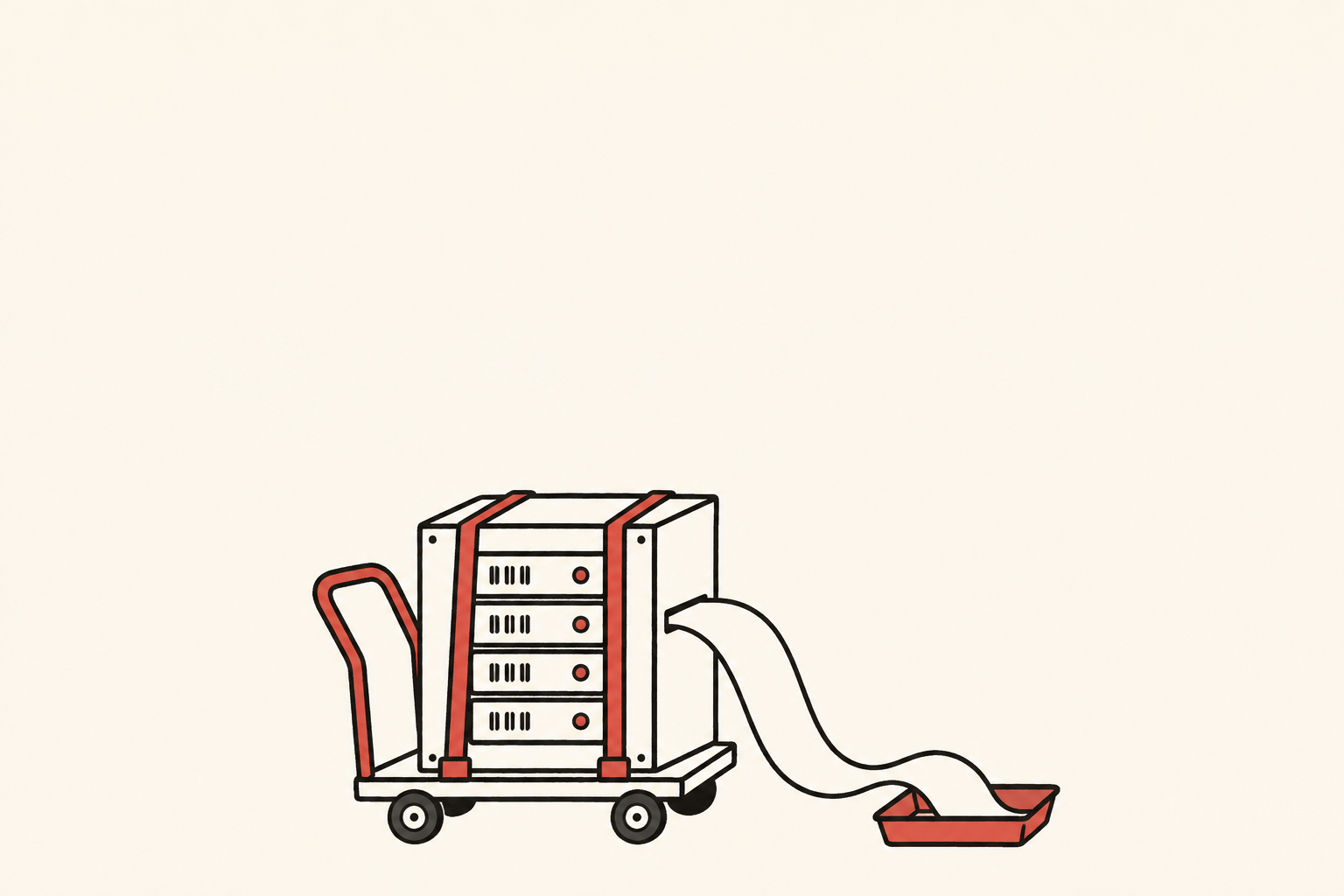
The useful analytical question is how an infrastructure supplier finances the interval between committing resources and receiving usable cash. This is an operating-design question, not a verdict on accounting quality. A company can sell valuable equipment while carrying an increasingly demanding coordination task. Conversely, a temporary funding requirement can accompany a successful delivery expansion. Neither interpretation should be accepted solely because it sounds consistent with a headline.
The interval is part of the product
The company's fiscal 2026 annual report identifies mismatches between supplier and customer payment terms and advance component commitments as business risks. Product revenue generally follows transfer of control, subject to applicable acceptance requirements.
Our analysis starts with a hypothetical rack order. Purchasing components, assembling the system, transferring control and collecting payment need not occur together. Each step resolves a different uncertainty. The purchasing decision establishes access to parts; assembly establishes technical readiness; acceptance addresses contractual performance; payment releases cash for reuse. Treating them as interchangeable obscures where the business must supply financing.
A larger contract can make this interval more consequential without changing its length. If resources committed per order rise, an unchanged collection schedule can require a larger cash buffer. Equally, faster collection may offset heavier procurement. The relevant comparison is therefore the movement of commitments and cash across successive stages, not revenue growth considered in isolation. This is a mechanism to test against future disclosures, not a claim about individual Supermicro contracts.
Customer funding changes the allocation of risk
Consider two possible commercial designs. A buyer could fund part of a purchase before delivery, or a supplier could extend credit after delivery. Both arrangements might support the same physical shipment, but the financing burden falls differently. Advance funding may reduce the supplier's immediate need for outside capital while increasing the importance of executing the promised delivery. Extended credit may make purchasing easier for the customer while leaving the supplier exposed for longer.
These are analytical examples, not descriptions of undisclosed transactions. Their implication is that a cash balance is more informative when read beside the obligations attached to it. Money available today and money free of future performance requirements answer different questions.
Flexibility has an economic value
Procurement choices create a second trade-off. Reserving parts early can protect delivery schedules, but it reduces the opportunity to change configuration if demand shifts. Waiting preserves flexibility but risks missing the delivery window. An infrastructure supplier is managing this trade-off across orders, rather than simply choosing a universally correct inventory level.
A useful operating advantage would be the ability to redeploy components or sequence orders without losing customer commitments. Such flexibility could lower the funding needed for a given delivery programme. Its value cannot be inferred from a product catalogue alone: compatibility, contractual constraints and the cost of rearranging production all matter. We should therefore separate the appeal of modular architecture from evidence that it improves realised cash conversion.
What would resolve the competing readings?
The constructive interpretation would gain support from subsequent collection, orderly inventory conversion and delivery obligations being fulfilled without progressively greater financing demands. A more cautious interpretation would gain support if resources remained committed for longer while the ability to reallocate them narrowed. These are conditional tests, not forecasts.
One quarter cannot establish the pattern. A later cash inflow might reflect genuine conversion, changed payment timing or financing, which have different implications. Likewise, an outflow can precede productive delivery or indicate a slower release of working capital. The next assessment should reconcile the final financial statements, contractual disclosures and several periods of operating cash flow before choosing among those explanations.
For Supermicro, the durable question is whether commercial growth can be organised so that procurement commitments, delivery performance and payment terms remain mutually supportable. That is a more precise standard than treating shipment scale as self-funding, or treating a funding interval as proof that the underlying business has failed.
Information only. No investment, legal, tax, or financial advice.