Sierra charges for outcomes. Buyers need to decide what counts
Compare AI support bids using closure evidence, reopen rules, handoffs and the total cost per verified case.
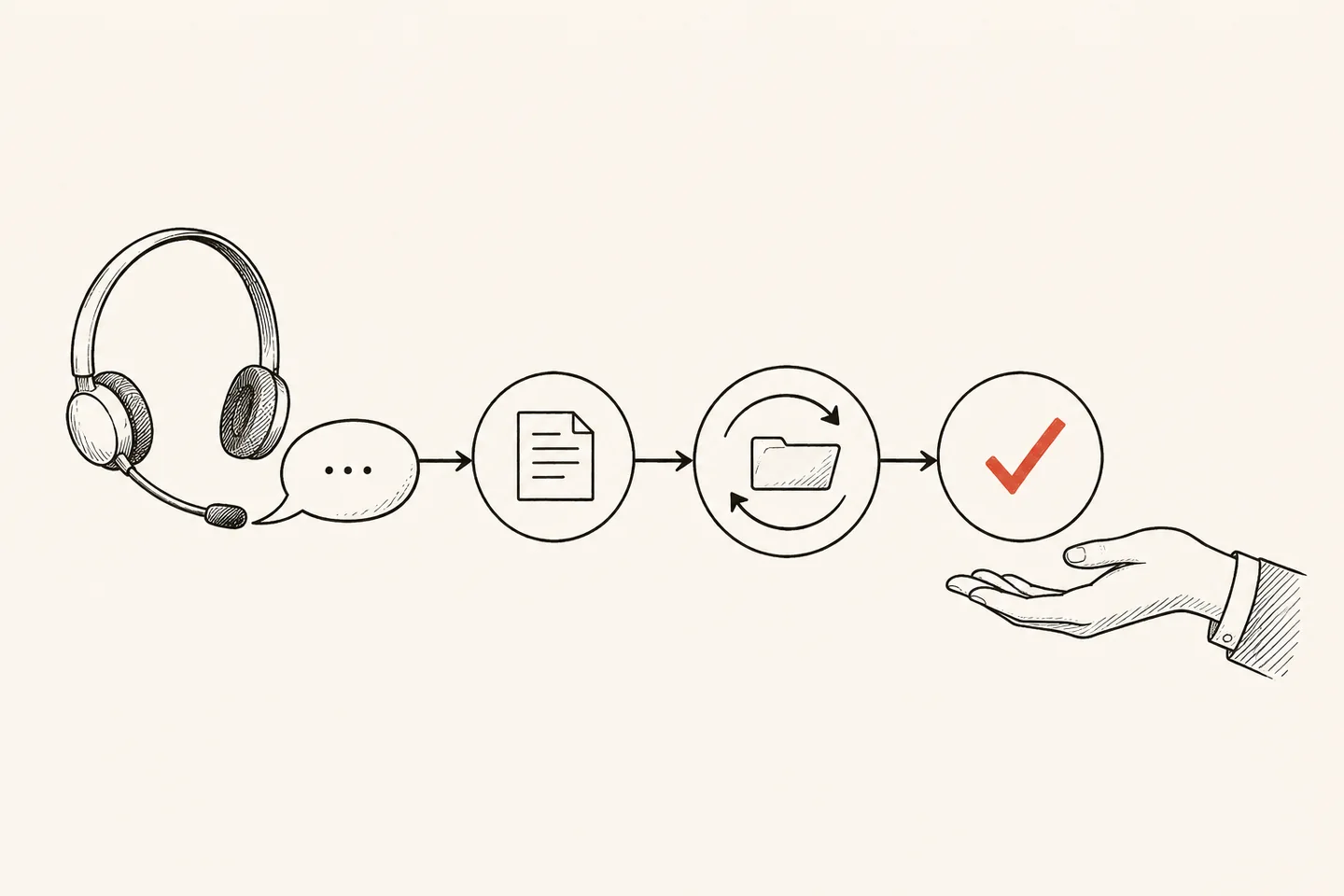
On November 23 Sierra announced a $1.75 billion raise at a $30 billion valuation and said its annual recurring revenue (ARR) had exceeded $400 million. The customer-facing AI agent provider charges for outcomes such as solving a problem or originating a loan. Buyers should ask what proves a result and what happens to the invoice if the same customer asks for help again on a different channel.
Define the billable event and the proof
Sierra says customers agree on criteria in advance and that unresolved or escalated cases are not charged in most cases. It also describes blended arrangements, such as charging for routing by conversation volume. Its posts do not establish a universal price or reopen period. Ask for contract terms that name the unit, required evidence, exclusions and dispute handling. A customer can confirm a useful answer; a refund may call for a specified state and transaction ID in the order system. Sending a message does not establish that the action happened.
Intercom’s Fin documents offer a separate example: an explicitly confirmed resolution and a resolution inferred when a customer leaves without seeking more help are different categories. The latter can be billable under the arrangements described. This is not Sierra’s policy. It shows why buyer reports should separate customer confirmation, backend verification and silence-based inference. A customer who stops replying may have called support or given up.
Track handoffs and reopens against the same case
Start with a stable queue and an original case or issue ID linking conversations, agent actions, transfers and final states. Suppose a customer asks for a refund in chat on Monday and emails about the same order on Wednesday. Agree on how to link the issue, when the observation window starts and whether an in-window reopen voids the charge or generates a later credit. Choose the window for the workflow: settlement times for a refund and a delivery status question are different.
An agent that collects order information before handing off may save time without resolving the case autonomously. Report autonomous closures, agent-assisted human closures and unresolved cases separately. If routing is worth buying on its own, price and report it separately so one case is not also counted as an automated resolution. Reconcile sample duplicates, bad closures, channel switches and delayed events against the vendor invoice. Make sure disputed charges can be traced to an individual record and corrected.
Compare fully loaded cost per verified resolution
For the same cohort, add vendor charges, staffing for handoffs and reviews, and consistently allocated integration and maintenance costs. Divide by the number of quality-checked resolutions that hold through the observation window. For a whole-queue measure, include both human cost and human resolutions. If evaluating automated cases alone, report the full-queue result separately so expensive cases sent back to people do not disappear. For illustration, $1,000 spent on a cohort initially marked as 100 closures costs $12.50 per verified resolution if just 80 pass reopen and quality checks, not $10. Keep queues, evidence rules and windows equivalent across offers.
Sierra reported $400 million ARR on October 30 and more than $400 million on November 23. This is a company-reported annualized metric, not recognized revenue for the period, cash collected or profit. The public posts do not supply enough buyer-level contract and cost data to infer savings. Scale is useful context; purchase decisions should still rest on the buyer’s own cases, defensible outcomes and charges that finance can reconcile.
Sources
- Sierra’s November 23 Series F announcement
- Sierra’s outcome pricing explanation
- Sierra’s October 30 ARR announcement
- Intercom Fin outcomes and billing
AI Q&A
How can procurement audit a monthly invoice that shows only totals?
Require an export with case-linked event IDs, charge categories, timestamps and credits. Sample silent exits, handoffs and reopened cases against your own records.
Is every follow-up on the same order a reopen?
No. One order can have more than one issue. Use the order ID, issue type and promised action together. Send ambiguous cases for review before reversing a charge.
What about tickets still inside the observation window when a pilot ends?
Keep them in a pending group, with counts and maturity dates. Update final states after the window and then compute verified cost per resolution rather than giving provisional closures final credit.
Information only. No investment, legal, tax, or financial advice.