Comparison of 3 Short-Cycle Event Contract Platforms: TurboFlow, Polymarket, and Robinhood
TurboFlow, Polymarket, and Robinhood all offer short-cycle event trading, but pricing, exit methods, and settlement sources are completely different. This article compares the three mechanisms and their use cases item by item.
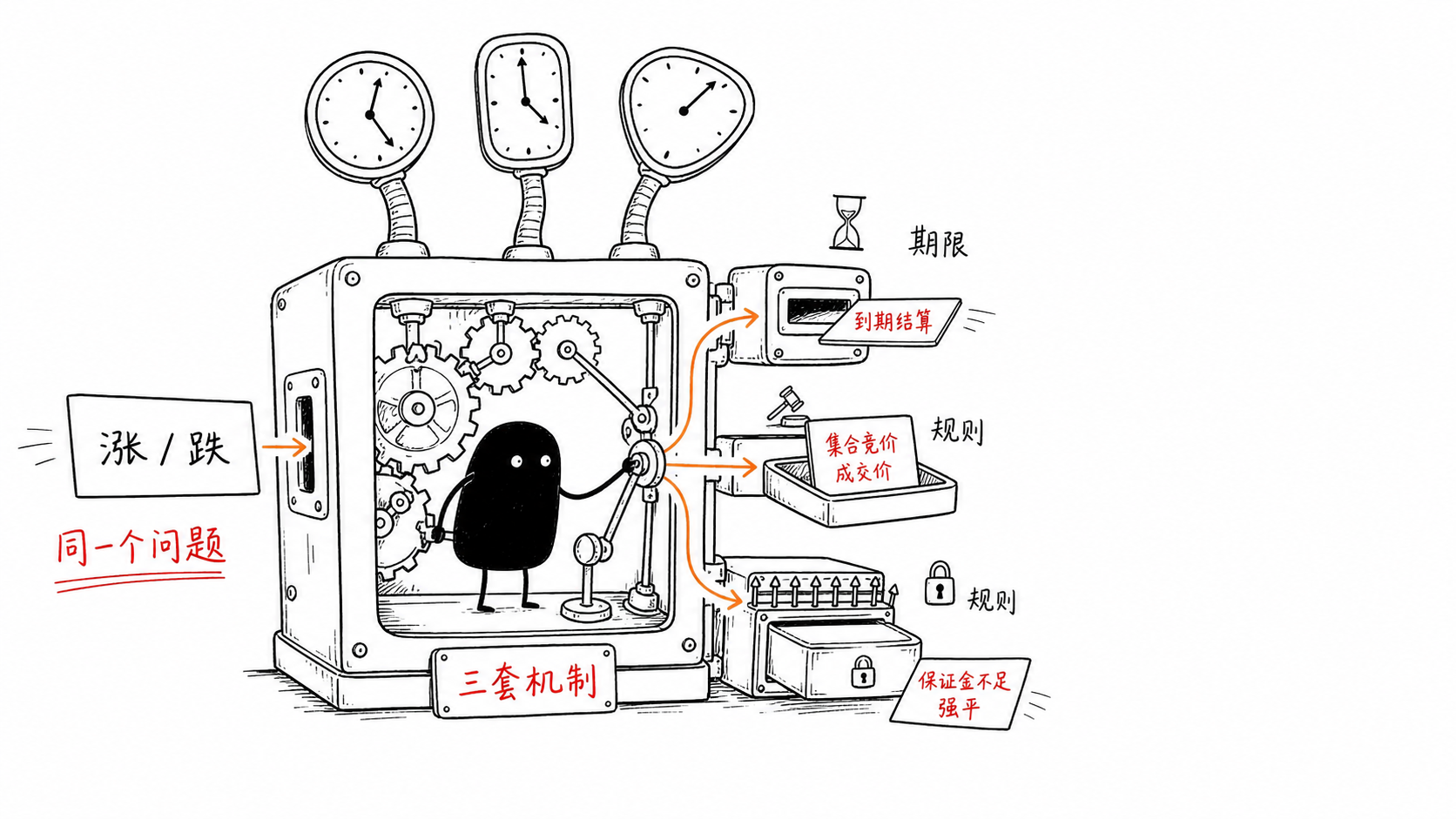
If you only look at the trading interface, short-cycle event contracts all seem to answer the same question: in a few minutes, or even a few dozen seconds, will the price be higher or lower? The differences become apparent only after you place the order. Who sets the quote, whether the contract can be sold before expiry, how a tie is handled, and where the settlement price comes from — these details directly change the risk of a trade.
TurboFlow, Polymarket, and Robinhood happen to represent three different paths. TurboFlow compresses directional judgment into a fixed-term call / put order; Polymarket trades outcome shares through an order book; Robinhood places standardized event contracts into a regulated retail investing account. They cannot be compared solely by asking whose cycle is shorter.
The comparison below focuses on product structure and does not rank the platforms by trading volume or user base. Platform availability by region, fees, supported markets, and specific rules may change, so you should still read the current contract page before trading.
# 1. TurboFlow: compressing directional judgment into a single fixed-term order
!TurboFlow compresses amount, time tiers, and call/put judgment into a fixed time window
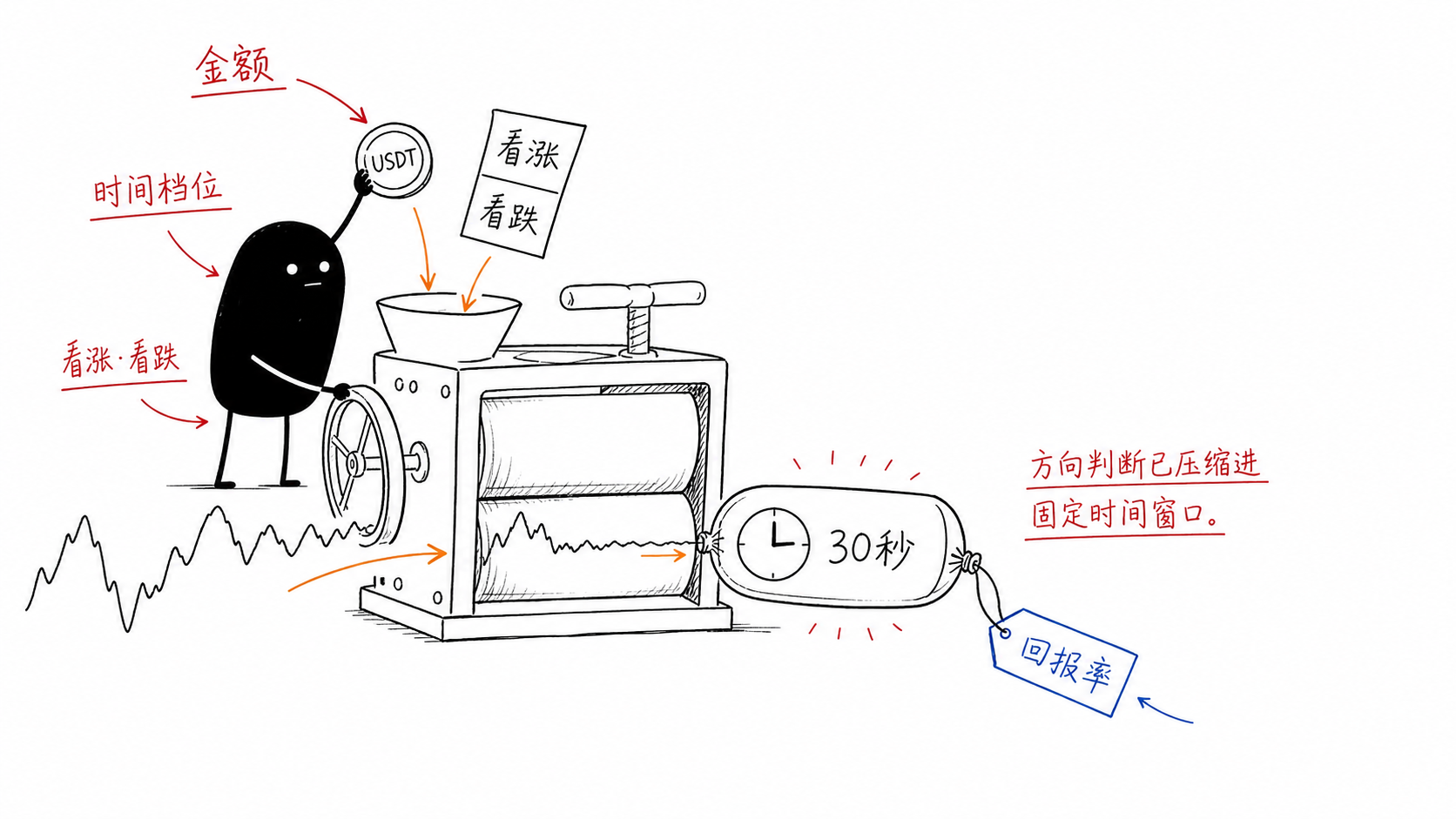
TurboFlow is an on-chain trading platform for global retail users, offering two product types: event contracts and perpetual contracts. The two use different trading logic: perpetual contracts revolve around continuous holding and position management, while event contracts concentrate the judgment into a preset time window — whether the expiry price will be higher or lower than the entry price.
The event contract workflow can be summarized in four steps: choose a trading pair, choose a time tier, enter an amount, and then choose "Call" or "Put." The trading page offers BTC/USDT markets, ETH/USDT, and gold trading; any future supported trading pairs are subject to the platform’s market list. Time tiers start at 30 seconds, and the page lists options such as 1 minute, 3 minutes, 5 minutes, 10 minutes, 15 minutes, 30 minutes, and 1 hour. Amounts are denominated in USDT, with the single-order input range shown as 2—200, and common amounts plus quick adjustment options such as 1/2 and 2x are provided.
Before confirming direction, the interface displays the payout rate for both the call and put directions, along with the corresponding estimated payout amount. For example, if the stake is 5 USDT and the payout rate is +91%, the estimated payout amount after a correct directional call is 9.55 USDT, including the 5 USDT principal and 4.55 USDT in potential return. The payout rate represents the potential return ratio available if the direction is correct, relative to the principal, and does not represent the platform’s assessed probability of the event. Under simplified conditions that ignore other costs, a +91% payout rate corresponds to a theoretical breakeven win rate of about 52.4%. This figure is only the return-risk balance point calculated from potential gains and principal at risk, and should not be interpreted as a market probability.
After the order is submitted, the trade appears under "Open Positions"; once settlement is complete, users can view the trading pair, direction, amount, time tier, payout rate, entry price, exit price, payment amount, and status under "History." Orders in progress have not yet generated a final exit price or payment result, and the related fields are updated after settlement based on the outcome. This fixed time window makes the amount and duration of a single trade more intuitive, but it also means that the shorter the cycle, the more the entry timing, market latency, and instantaneous price fluctuations affect the result.
# 2. Polymarket: price is both the trade price and the market probability
!Polymarket forms probabilistic pricing through an order book, spreads, and outcome shares
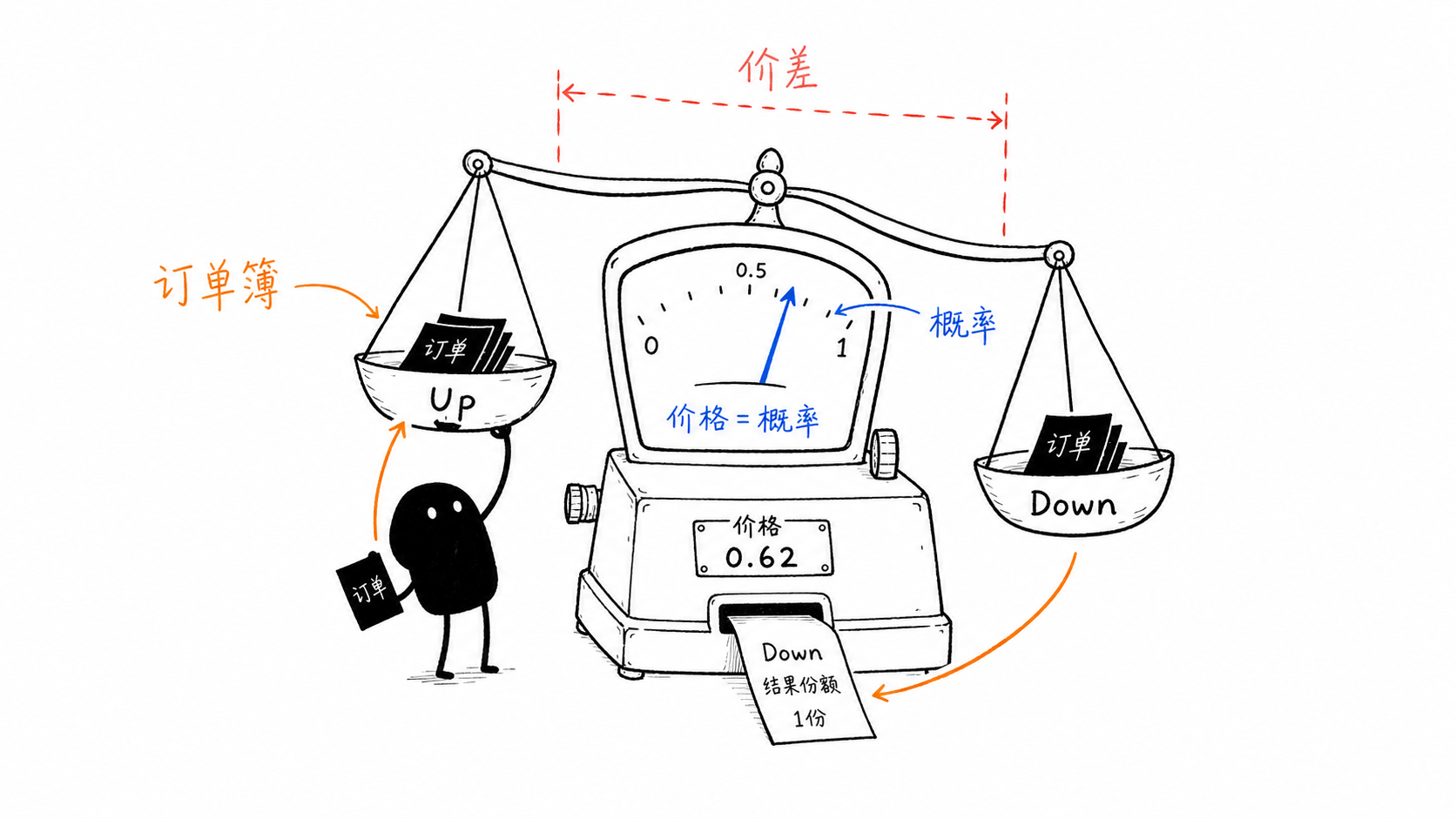
Polymarket is a prediction market platform whose market topics cover politics, economics, sports, technology, and crypto assets. Participants trade shares of different outcomes, and prices change with buy and sell orders. If an outcome share trades around $0.60, it can generally be understood as the market’s implied probability of about 60%, but that is only the price formed by supply and demand at that moment, not a guarantee. In other words, traders must not only judge whether the direction is correct, but also whether the current market price is reasonable.
Its trading structure is different from TurboFlow’s. Polymarket uses a central limit order book, with orders matched off-chain and settlement completed on Polygon. Users can place limit orders at a specified price or accept the existing quote. As long as there is still liquidity in the order book, positions can usually be sold before the market ends; the exit cost depends on the spread, depth, and market conditions at the time of execution.
In the 5-minute Bitcoin Up or Down market, the contract compares the opening price and closing price of the specified five-minute window. Polymarket’s market rules state that these markets use Chainlink BTC/USD Data Stream as the settlement source; if the closing price is not lower than the opening price, the result is Up, otherwise it is Down. BTC quotes seen on other exchanges can help with judgment, but they cannot replace the contract’s designated data source.
The order book brings flexibility, but it also increases the complexity of trading decisions. The purchase price determines potential returns, the bid-ask spread affects entry and exit costs, and liquidity may thin quickly as settlement approaches. In short-cycle markets, even when the directional call is correct, an overly high execution price can compress the actual return.
# 3. Robinhood: putting event contracts into a retail investing account
!Robinhood event contracts are constrained by account eligibility, region, and contract rules
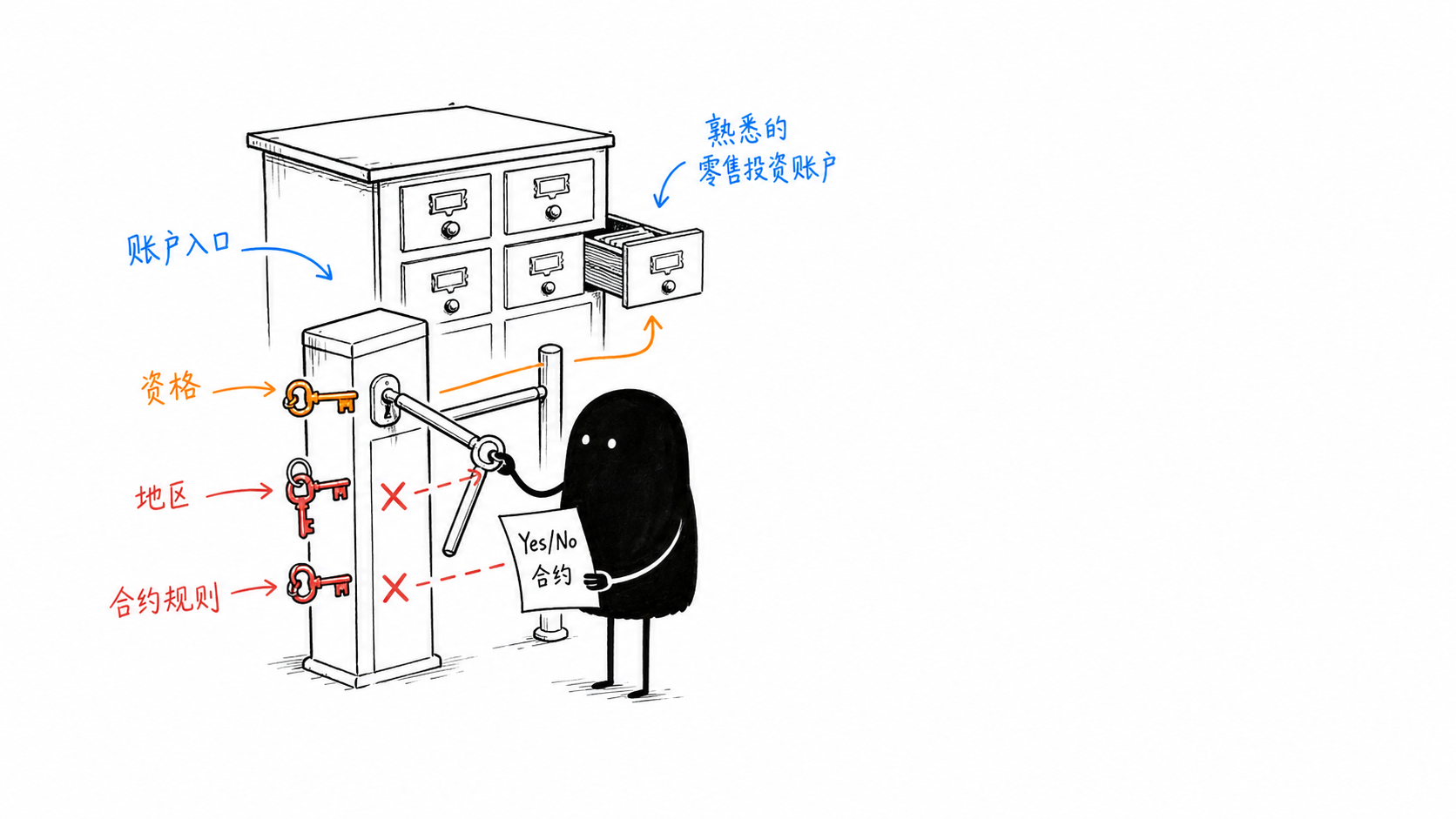
Robinhood is a comprehensive investing platform for retail users, and prediction markets are available as a separate in-app product entry. Event contracts are offered by Robinhood Derivatives through a regulated partner exchange. Users must meet regional and account eligibility requirements, and can trade only after approval for the relevant account.
Similar to Polymarket, Robinhood’s event contracts also use a Yes/No structure. Contract prices are usually between 0.01 and 0.99 dollars and can be understood as market-implied probabilities; the correct outcome settles at 1 dollar, and the wrong outcome settles at 0. Users can either hold until settlement or close the position before expiry at the market price, but the ability to exit still depends on liquidity.
Robinhood’s 15-minute BTC market provides a good example of the rules. The contract uses CF Benchmarks’ Bitcoin Real Time Index and compares the averaged index values at the start and end of the window according to the specific market terms. The official page states that for each decision point, 60 real-time index prices within the corresponding one-minute interval are collected and averaged. This design reduces the chance that a single instant quote determines the outcome, and it also means that prices shown on Coinbase, Google, or other quote pages are not the final settlement basis.
Robinhood’s appeal lies in its familiar account structure, with U.S. dollar funds and event contracts in the same retail investing platform. But a familiar entry point does not mean fewer trading restrictions; account eligibility, region, fees, and partner exchange rules all affect the product’s actual availability.
# 4. The real differences are pricing, exit, and settlement
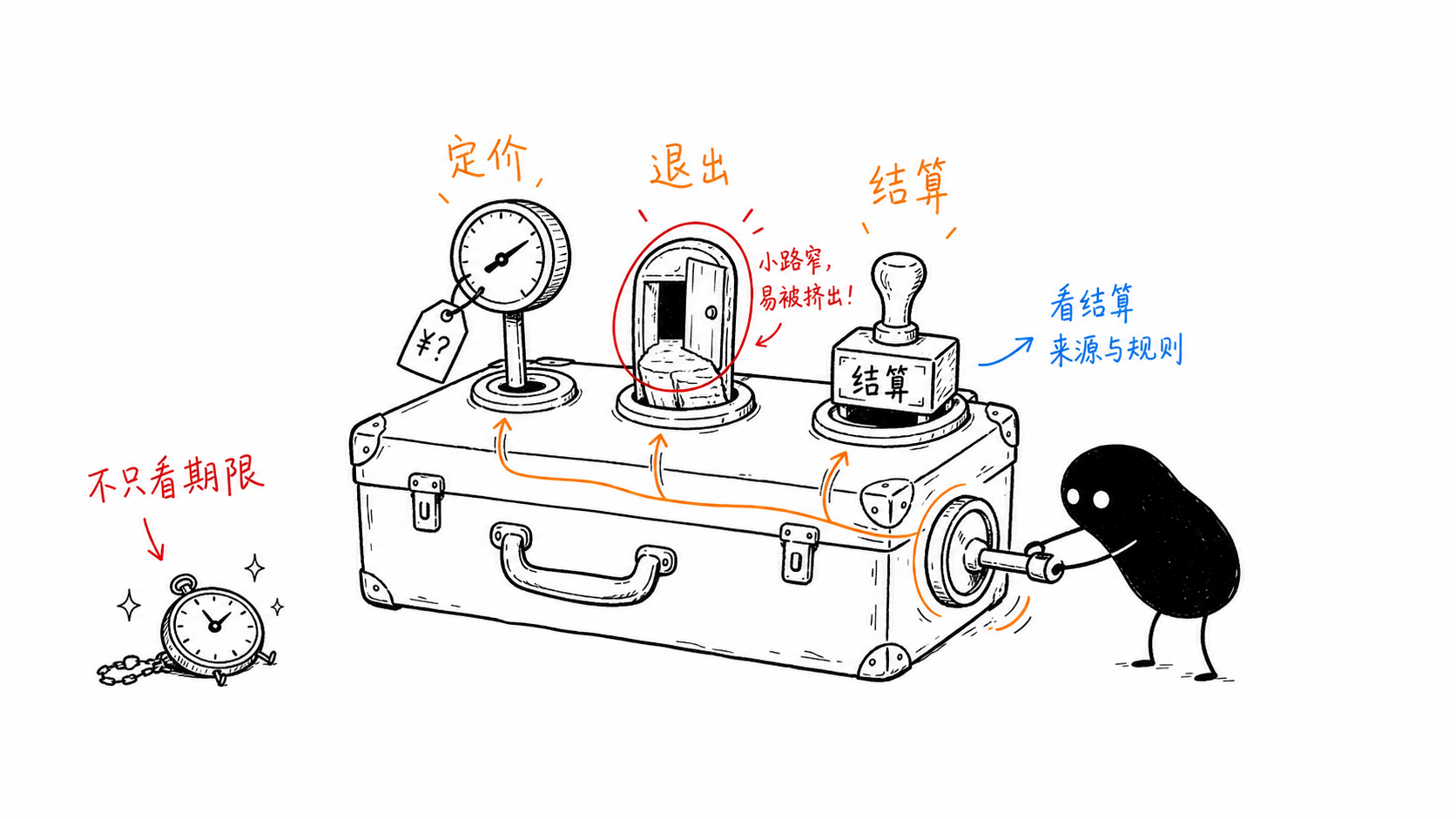
First, look at pricing. TurboFlow displays call and put payout rates before the order is placed, and the user is judging the direction of the price relative to the entry price after a specified time; Polymarket and Robinhood contract prices are formed by market trading, and the price itself carries probabilistic meaning. The former is a directional order that runs on a preset duration, while the latter two are tradable outcome shares.
Next, look at the trading process. TurboFlow’s event contracts run according to preset time tiers and update the exit price and payment result after settlement. Polymarket and Robinhood allow users to sell contracts before expiry, but being able to sell does not mean you can necessarily execute at an ideal price; when order book depth is insufficient or spreads widen, exiting early can incur a noticeable cost.
Finally, settlement. TurboFlow compares the order record’s entry price and expiry settlement price; Polymarket’s 5-minute BTC market reads Chainlink data streams according to the contract rules; Robinhood’s 15-minute BTC contracts use the CF Benchmarks index and the specified averaging calculation. All three products are trading direction, but in practice they are trading three different price definitions.
# 5. Before choosing a platform, first decide what you want to trade
If you want to express a directional view over an extremely short period with a fixed amount, TurboFlow’s call / put flow is more straightforward. Before placing an order, you should focus on the time tier and the payout rate: the former determines the judgment window, and the latter determines the potential return on a single trade, as well as the win rate needed to offset losses.
If you want to choose your own entry price, observe probability changes, and retain the option to exit early, Polymarket’s order book is more suitable. In return, you also need to understand limit orders, spreads, depth, and the designated settlement source.
If you need access to a U.S.-regulated market and prefer a traditional retail investing app, Robinhood provides a more familiar account experience. It is not a universal entry point open to all regions, and eligibility approval and current fees must be checked separately.
Whichever platform you choose, do not look only at the shortest duration. Short-cycle contracts compress a trend into a specific decision window. You may be right about the direction over the next hour, yet still lose at the five-minute or 30-second settlement point. Before trading, confirm at least four things: the time window, the settlement data source, the tie or boundary rules, and how much you could lose in the worst case.
!When comparing event contract platforms, check pricing, exit, and settlement together
# Conclusion
These three product types all appear to trade whether prices will rise or fall, but the core is different: TurboFlow trades direction and payout rates over a fixed term, Polymarket trades probabilistic pricing in an order book, and Robinhood trades standardized event contracts offered by a regulated exchange. Once you understand this difference, comparing cycle length becomes meaningful. Otherwise, even a seemingly simple "up or down" button can hide completely different risks.
Information only. Not investment, legal, tax, or financial advice.