Scientific AI Needs a Revision Test
Scientific AI should be judged by what survives revision: sound repairs, unresolved flaws and the human work required.
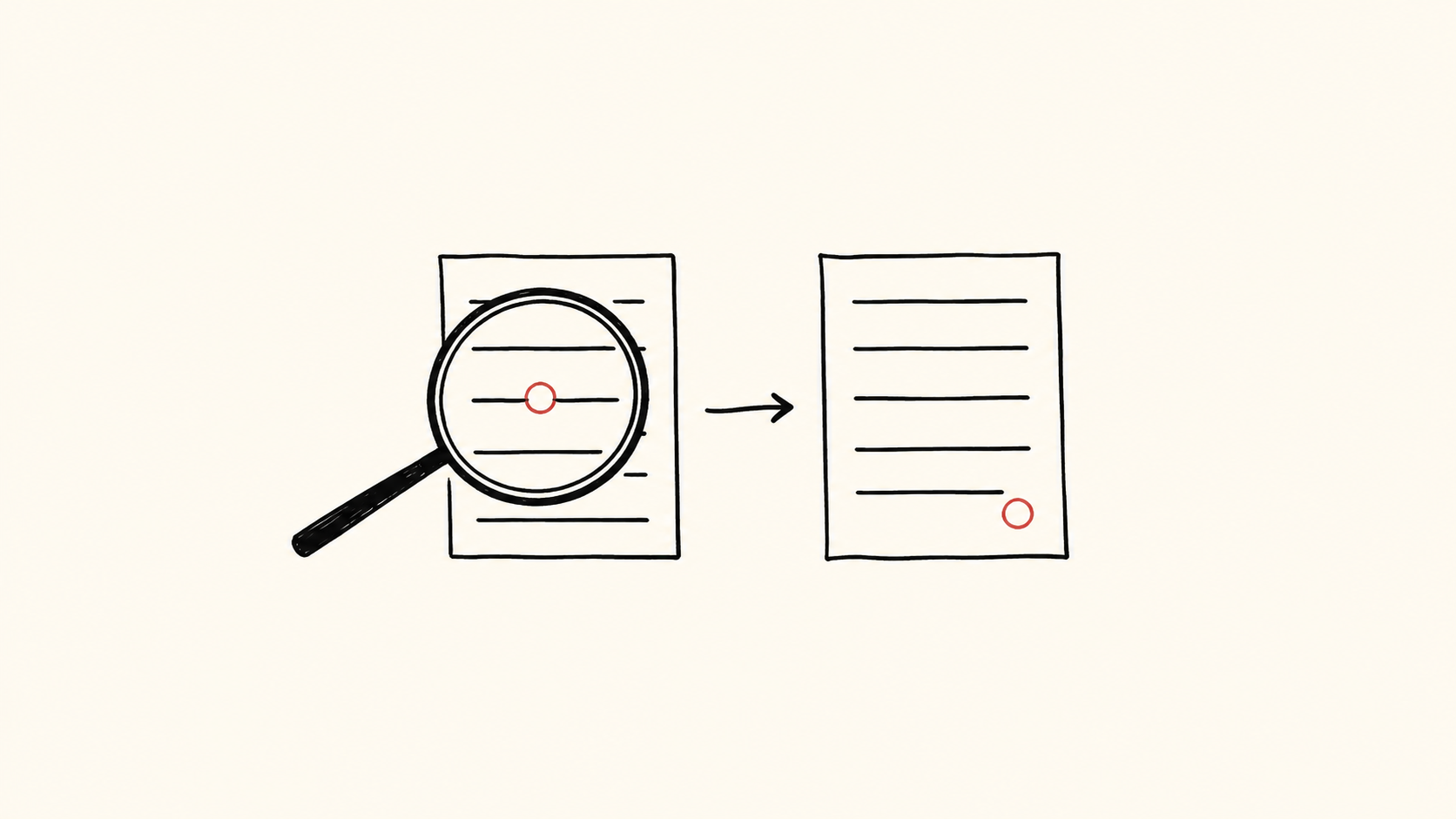
Deep Review is live. For institutions buying scientific AI, the harder question is what happens after an author receives a critique. A plausible objection can lead to a sound repair, a needless rewrite, or a new mistake. A useful evaluation should follow that entire journey.
Separate the objects being measured
An October 8 preprint tests review systems with inserted contradictions, while warning that synthetic mistakes may be easier to detect.
An earlier ICLR study found that selected, revised reviews were clearer and more informative in blinded assessment.
A September ICML preprint measured policy assignment, finding near-zero effects on paper decisions and substantial self-reported noncompliance.
These are different objects of measurement: a detected defect, an improved review, and an institutional intervention. None should be silently substituted for the outcome a laboratory actually wants: a manuscript whose important claims are better supported after revision. Our proposed next test starts there.
Follow the change, including its cost
Consider a hypothetical manuscript that reports a method working across several settings. An AI reviewer questions whether one setting was tested. The author might add a missing experiment, narrow the claim to match existing evidence, or discover that the requested test was already documented. These responses have different scientific value even if each produces a grateful user rating.
The evaluation should preserve the original claim, the exact criticism, the author's response, and the revised supporting material. A separate assessor should then decide whether the claim became sounder, merely clearer, weaker without justification, or newly incorrect. Legitimate disagreement should remain unresolved until the relevant evidence exists. A polished response must not close the case automatically.
Count the work required as well. A criticism that takes an afternoon to dismiss consumes scarce researcher time. A justified request for a new experiment may be expensive and still worthwhile. Report confirmed improvements alongside author hours, computing costs, and unresolved consequential defects. Combining these into one score too early would hide the trade-offs that different laboratories need to make.
Give the comparison a fair chance
A practical pilot could randomly allocate eligible manuscripts to ordinary revision support or ordinary support plus AI feedback, with author consent and suitable confidentiality arrangements. Both groups should receive the same revision window. Assessors should examine the resulting manuscripts without knowing which assistance was available, then compare the change from each starting version.
The primary outcome should be specified before results arrive. One possibility is the share of manuscripts with a verified improvement to a consequential claim and no new consequential defect. Supporting measures should show how often useful advice was rejected, incorrect advice was accepted, and feedback produced no change. Report all allocated manuscripts, including authors who ignored the tool, while separately describing actual use.
Importantly, a higher publication acceptance rate would answer a different question. A venue can reward relevance, presentation, or originality; those decisions cannot by themselves establish that an experiment is reproducible. Likewise, a successful revision of one theorem says little about another field with different evidence requirements. Any deployment decision should stay within the tested task and workflow.
Preserve a route back
Revision histories should make damaging edits reversible. If an author changes an assumption to satisfy an automated objection, the system should retain the earlier statement and the reason for changing it. If later checking overturns that objection, the affected conclusions need another review. This is a proposed operating discipline, not a claim that any named product currently provides it.
The commercial opportunity is meaningful: a tool that helps researchers reach defensible revisions can earn a place in serious work. The purchasing question should therefore be concrete. After the comments have been read and the edits made, which important claims improved, which remained uncertain, and what did the improvement cost?
Information only. No investment, legal, tax, or financial advice.