Schneider is doubling CDU capacity. What still has to happen before an AI rack goes live?
Schneider’s Italian expansion adds cooling equipment capacity in stages. It does not measure the number of AI racks ready to operate.
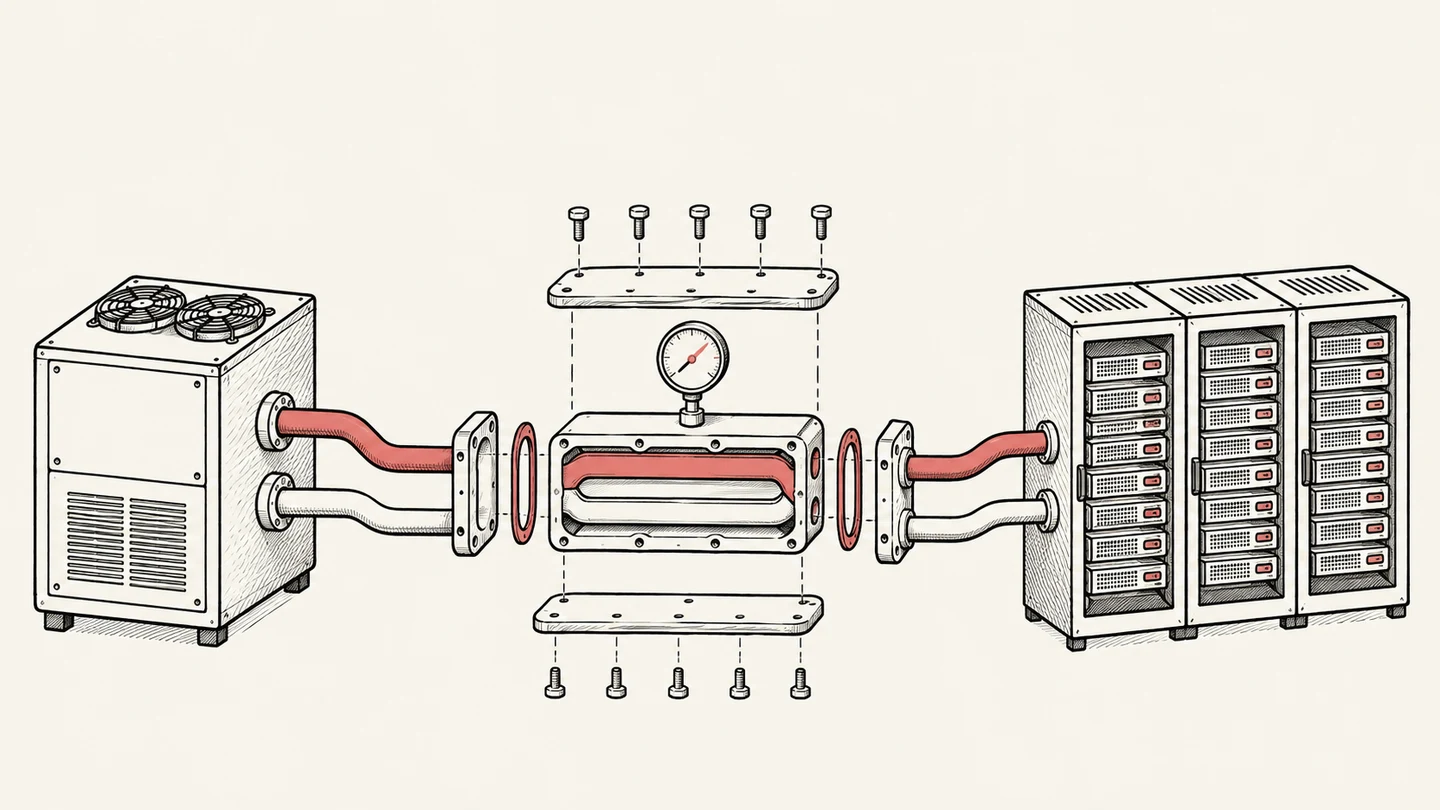
Schneider Electric is expanding its cooling factory in Conselve, Italy. Its announced plan puts coolant distribution unit (CDU) manufacturing capacity at twice the prior level from January 2027. Large-chiller capacity is due to rise 50% by the end of 2026. A laboratory intended to triple testing capacity is targeted for December 2027. The plan was covered in Europe on November 25 and circulated in the company’s international release on November 26. The three percentages describe different activities and timelines, not a single measure of what the site can ship.
Where a CDU fits
A liquid-to-liquid CDU can separate the coolant serving the IT equipment from the facility water loop while transferring heat between them. The chiller, where the design calls for one, is part of the facility-side heat rejection system. A data center can have sufficient aggregate capacity on paper and still be unable to put a given rack into service if the system cannot provide the required flow and temperature under load. A megawatt rating without its test conditions does not tell the operator what will happen on a hot day or after a component fails.
For example, a retrofit may have floor space for a new group of racks and an adequate electrical feed. Using that space still depends on whether the building loop can handle the new hydraulic load, whether the operators can isolate a faulty segment, and whether the rack and facility controls agree on alarms and shutdown conditions. Delivering a CDU earlier takes one obstacle out of the schedule; it need not move the date the racks become available for paying work.
Why testing has its own timeline
Factory testing can make questions about flow, pressure and heat transfer repeatable before equipment goes to site. Site commissioning addresses a different problem: demonstrating that the installed combination works in the actual building, including when cooling demand changes or equipment goes offline. An expanded test lab is potentially valuable even if the operator buys the same number of units: it can shorten the queue for validation or make more test conditions possible. Neither effect is quantified by the release.
The sensible comparison is between stages: available manufacturing capacity, equipment acceptance, delivery and commissioning. A fraction of the schedule can be constrained by the plant one quarter and by grid connection, construction or integration the next. The announcement does not give absolute unit counts, booked demand, utilization or customer commissioning dates. It supports a conclusion about European supply capability. Connecting it to deployment or revenue needs further evidence.
Sources
- Schneider Electric announcement
- Open Compute Project: CDU testing methods
- Data Center Dynamics: November 25 coverage
AI Q&A
Does doubling capacity imply twice as many shipments?
No. Shipments depend on orders, utilization and how quickly qualified equipment can be delivered.
Can a new CDU replace all existing cooling?
No. The CDU serves a specific circuit; other facility equipment and residual air cooling may still be required.
What evidence would show improved rollout speed?
Project-level acceptance and commissioning dates, with comparable scope, would show where time was saved.
Information only. No investment, legal, tax, or financial advice.