When payment agents lose the receipt
A missing payment response tests an agent’s authority, reconciliation and ability to avoid paying the same obligation twice.
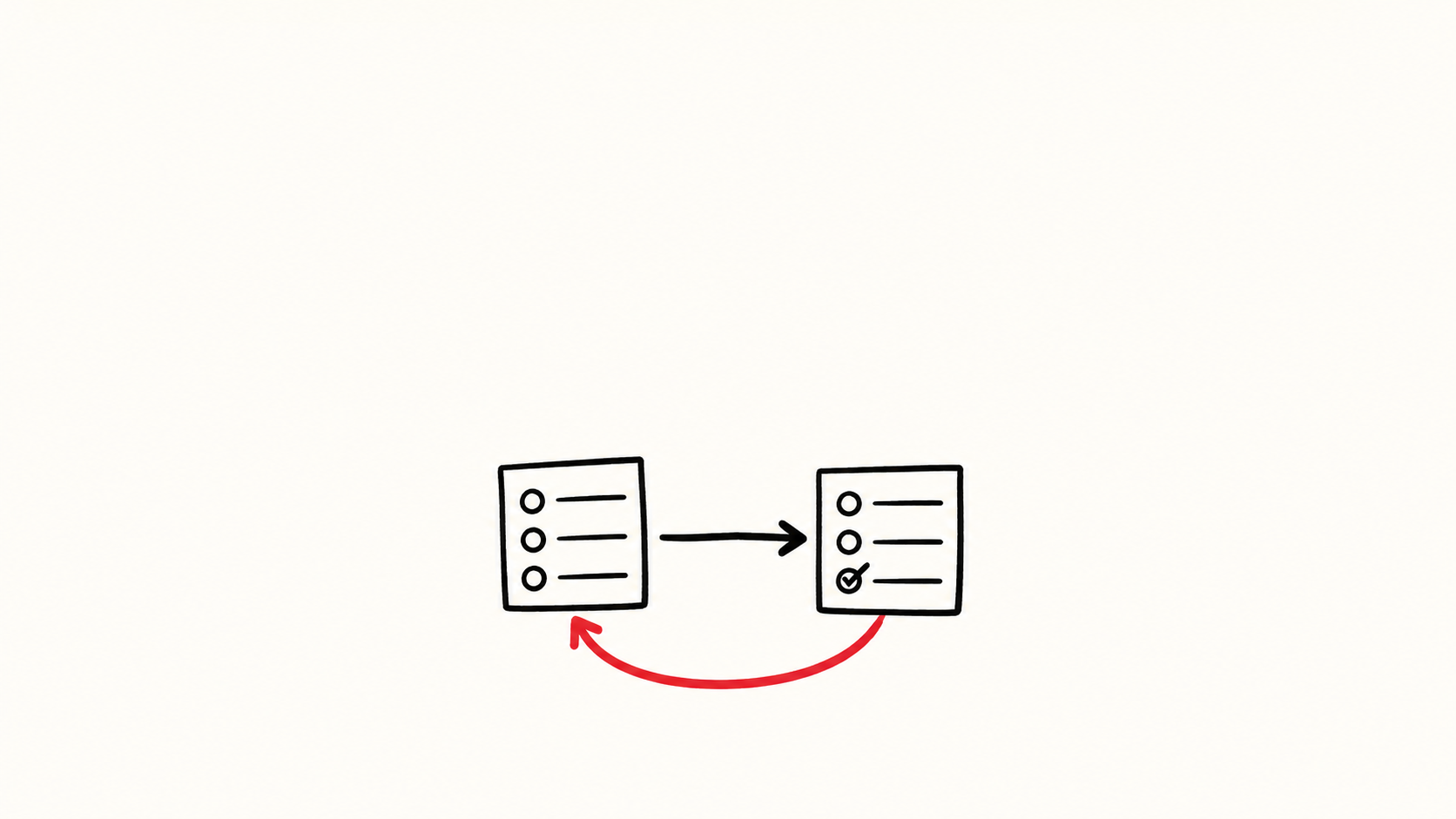
A payment agent can make a transfer request faster than a person can open a banking portal. The more demanding question arrives when the request receives no clear answer. Has nothing happened, has money moved without a receipt, or is the transfer still progressing? A system that cannot preserve that distinction may turn a recoverable communication problem into a second payment.
The October 20, 2026 announcements from MoonPay and Mural provide context for this discussion. They do not independently establish that unattended payment exceptions have been solved. The following is original operational analysis, not an assessment of either company’s implementation.
One obligation, several technical attempts
Consider a hypothetical importer paying an approved supplier invoice. Its agent submits a transfer and loses the connection before receiving a response. The invoice is real in this example, but the example describes no actual customer or incident. An instruction to settle that invoice does not automatically authorize two transfers merely because the first cannot yet be observed.
The crucial identity is therefore the business obligation. An invoice, its approved recipient and its permitted amount should remain connected to every attempted execution. If the agent starts a new task after a timeout and treats it as unrelated, a perfectly valid second request can duplicate the economic purpose of the first. Neither request needs to look suspicious in isolation.
Idempotency is one useful protection. Stripe documents keys for safely retrying a request without duplicating its operation. That is a provider-specific technical mechanism, not evidence about the two companies above. The broader design inference is that a retry must retain the identity of what was already attempted. Generating a fresh identity simply to get past uncertainty changes the risk: the service may now see two legitimate instructions.
Even a correctly implemented key does not decide whether two different invoices describe the same underlying liability. Nor does it establish that the recipient was entitled to payment. Those questions belong to the business records and authorization policy. An agent needs a durable connection between the obligation and its attempts, rather than relying on its conversational memory to remember what it meant.
An unknown result needs its own place in the ledger
Returning to the importer, a missing answer should create an unresolved case. That case has an owner, a reference to the original instruction, and a next observation to obtain. It should not silently become either “failed” or “paid.” The distinction matters because both shortcuts can create downstream decisions: a failed label invites another payment, while a paid label may release goods or close an invoice prematurely.
Separate records may answer separate questions. An internal approval establishes what was permitted; the payment provider's record establishes what it processed; the recipient's evidence helps establish what arrived; the accounting entry explains which obligation the organization considers discharged. Depending on the arrangement, a blockchain record may establish a transfer on that network without settling all of those commercial questions. Treating any one observation as a universal receipt hides the remaining work.
The order in which evidence appears is also not necessarily the order in which events occurred. Stripe warns that webhook delivery is not guaranteed to be ordered and can be duplicated. Again, this describes Stripe, not every payment rail. It nevertheless supplies a concrete reason to design an integration around verified state rather than whichever notification arrived last. A delayed notification should not reopen a completed obligation simply because its wording describes an earlier stage.
Reconciliation consequently needs more than a matching daily total. Two mistaken transfers could offset another missing payment and leave a plausible aggregate. The relevant comparison follows each obligation through authorization, execution and accounting, preserving discrepancies until someone or an explicitly authorized process resolves them. This is an analytical design principle, not a claim that the announced services lack such controls.
Approval must also cover what happens after a problem
Many demonstrations make autonomy visible by showing an agent successfully initiating a payment. A more revealing demonstration would interrupt the connection, deliver contradictory observations, and ask the agent to continue without expanding its authority. The question is whether it can explain what remains unknown and keep the original permission boundary intact.
In the hypothetical case, the agent might be allowed to inspect status and repeat the same supported request, while needing fresh approval to change the recipient, increase the amount, or initiate a replacement whose predecessor is unresolved. This is a proposed policy, not a description of a vendor feature. The rationale is that these actions change the economic exposure, not merely the method of observing it.
A blanket rule to stop every time is not costless. A delayed supplier payment may disrupt delivery; requiring a person for every temporary fault can erase much of automation's benefit. The competing approach is to grant bounded exception authority in advance, tied to the reversibility of the action, the size of the exposure and the evidence available. A status lookup and an irreversible replacement transfer should not consume the same permission merely because both are called “recovery.”
That distinction also clarifies accountability. Someone must be responsible for deciding whether the original obligation remains open, who contacts the recipient, and how a duplicate would be recovered. A human approval button alone does not allocate those jobs. If a reviewer sees only “retry payment?” without the first attempt's evidence, the system has moved uncertainty onto the reviewer rather than reduced it.
What would count as progress
Faster initiation and wider connectivity can be valuable, especially for businesses operating across time zones. But their operational value depends partly on how much unresolved work accumulates behind them. Useful evidence would include the age of unresolved cases, the effort required to reconcile them, and whether an operator can reconstruct why each consequential action was authorized. These are proposed evaluation questions, not reported performance metrics.
The announcements alone do not answer these questions. Further evidence would need to come from working workflows, clear responsibility boundaries and observed exception handling. The meaningful promise of agent finance is that routine obligations can be completed with less supervision while ambiguous ones remain legible and contained. Establishing that boundary is slower work than showing a successful transfer, but it is what lets a successful transfer remain trustworthy when the next one does not go to plan.
Information only. No investment, legal, tax, or financial advice.