Oracle Marketplace and the second life of a committed cloud budget
Using an existing cloud budget can simplify software purchasing, but the economic test extends beyond the first transaction.
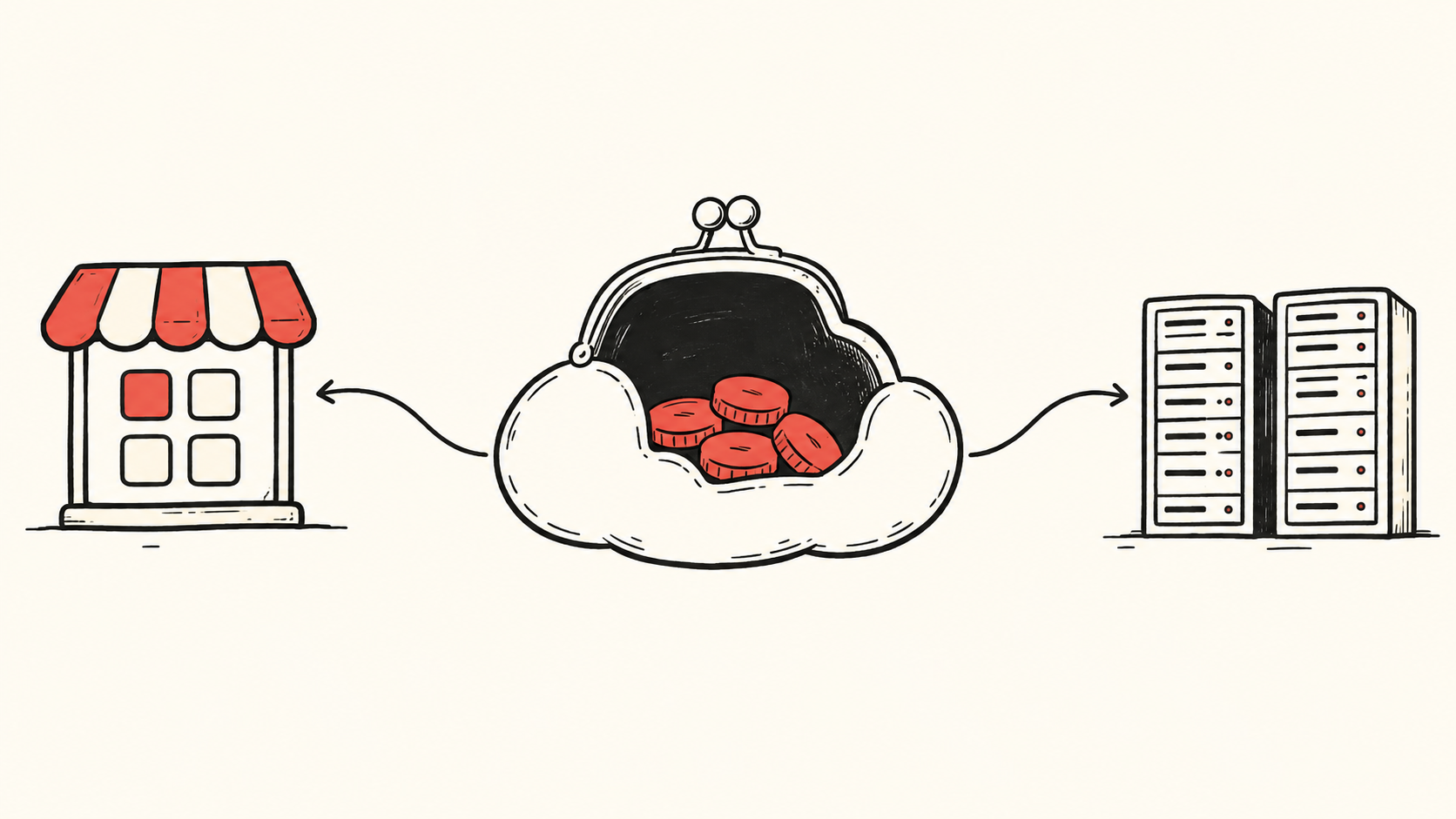
A software purchase can look unusually easy when the money already has a home. A business team sees a useful application; finance sees a cloud commitment already approved. Matching the two appears to remove the hardest part of procurement. Yet the remaining balance also represents choices about other work the company may need to fund.
On October 23, 2026, Oracle announced broader use of eligible Universal Credits commitments for qualifying Marketplace purchases. The announcement specifies no new percentage. Oracle announcement.
The question for this expansion is how much useful activity a more flexible purchasing channel creates. That is different from measuring how quickly money passes through it. The following is Open Market Notes analysis, not a report of customer results or a description of any particular Oracle contract.
A balance is also a competing claim
An earlier commitment and a new purchase belong to different decision moments. The earlier decision may constrain where money can be spent. The later decision still determines which activity receives the remaining purchasing capacity. Calling the balance “already budgeted” describes its approval history; it does not establish that the next use has no economic cost.
The distinction becomes visible in a deliberately hypothetical example. Imagine a company with 100 abstract budget units available for eligible purchases. Assume, solely for this illustration, that infrastructure and a proposed software purchase can draw on the same balance. Forecast infrastructure demand is 80 units. The application would consume 30. Buying it leaves 70, creating a potential 10-unit infrastructure funding gap if the forecast holds and no other change occurs.
The application is not necessarily a bad purchase. It may generate enough value to justify additional funding, or replace an activity that costs more. But its evaluation now includes the consequence for the displaced infrastructure budget. The 10-unit gap is not the application's complete economic cost, nor a claim about Oracle billing. It is the additional funding pressure produced by these assumptions.
Change the infrastructure forecast to 50 units and the picture changes. The same application fits alongside expected demand, with 20 units remaining. Greater flexibility could now connect a genuine business need to capacity the company had not otherwise planned to use. Whether unused capacity can expire, carry forward, be refunded, or be reassigned remains a contract question. None of those outcomes is assumed here.
That comparison explains why a marketplace can improve allocation without creating new money. The value lies in a better use of constrained resources. It also explains why a purchase funded from an existing balance cannot be judged in isolation from the forecast that balance was intended to serve.
Removing friction can create real demand
There is a strong positive interpretation of easier purchasing. A small software vendor can have a good product but struggle to get a prospective customer through another procurement process. The customer may already want the product, while the cost of onboarding a supplier or securing an additional budget stalls the transaction. A workable purchasing route can release demand that was previously too expensive to realize.
This matters especially for a bounded experiment. A team might need a short evaluation to learn whether an application solves a recurring operational problem. If the administrative effort exceeds the value of the experiment, a promising idea never receives a fair test. Lower friction can improve the quality of the information available for the next decision, even before it produces measurable operating gains.
The competing interpretation is budget substitution. A sale recorded by one vendor may be expenditure moved from another supplier, an infrastructure project, or a later quarter. For that vendor, the revenue is real. For the customer, the relevant question is whether the new allocation improves the result of the whole portfolio. Marketplace transaction growth alone cannot distinguish these cases.
Both mechanisms can operate simultaneously. A transaction can move through a new channel without changing the product purchased; another can enable genuinely additional use. Assessing the channel therefore requires a counterfactual: what would the customer have bought, delayed, or abandoned without it? The announcement provides no customer-level evidence sufficient to answer that question.
The next purchase may have different economics
The first transaction also needs to be separated from renewal. An available balance can make an initial purchase easier to approve. Later, the same application may compete for fresh funding, or for a different mix of committed capacity. A successful deployment can meanwhile create dependencies in staff routines, data flows, and operating processes.
Those dependencies can reflect useful adoption rather than a defect. Nevertheless, they change the comparison. The subsequent decision includes the ongoing value of the software, the expense of operating it, and the disruption of removing it. A favorable first purchase does not settle those questions in advance.
Oracle's documentation describes customer-specific private offers with customized pricing, terms, and contract duration. Oracle private-offer documentation. Consequently, a generic marketplace headline cannot establish the renewal economics of a particular agreement. The analysis here assumes no automatic renewal, particular discount, or future price increase.
For software sellers, this creates two different tests of channel quality. One is whether access to a customer's existing budget shortens the path to an order. The other is whether the product earns continued use when the original funding circumstances change. Confusing the two can make a sales channel appear stronger than the underlying demand.
The useful measure is what the organization gains
A platform benefits when more useful purchasing activity occurs within its ecosystem; a software seller benefits from a completed sale; a business team benefits when its problem is solved. These interests can align, but no single transaction metric demonstrates that they have aligned. Procurement speed, vendor revenue, and customer operating value measure different things.
The FinOps Foundation's rate-optimization framework links purchasing decisions to historical consumption, planned usage, and business-value drivers. FinOps Foundation. Applied to this situation, the analytical task is to connect a software purchase to the other calls on the same resources, rather than treating the funding source as the result.
Evidence of genuine value could include a useful experiment that otherwise would not have happened, a replaced process with lower total operating cost, or continued adoption after the initial balance is no longer decisive. Evidence of weaker allocation could include unused software alongside additional funding for work the same balance was expected to cover. These are possible tests, not observed findings about Oracle customers.
The most consequential effect of a more flexible marketplace may be to make previously separate budget conversations meet. That can improve purchasing, provided the discussion follows the money beyond checkout: what became possible, what lost funding, and what will remain worth paying for next time?
Information only. No investment, legal, tax, or financial advice.