ODDITY and the limits of owning the customer relationship
Revenue recovery needs a separate test of new-customer economics and dependence on advertising distribution.
ODDITY's November 11, 2026 results put third-quarter revenue at $145 million, down about 2% year on year. Quarterly release. That is a useful starting point, but the central question for a digital merchant is what a revenue recovery would actually prove.
In September, the company described tests to correct advertising signals and retrain the algorithm. Second-quarter update. Its annual filing also warns that advertising algorithms leave acquisition costs partly outside its control. 2025 annual report. Management had attributed the disruption to a technical problem rather than brand saturation in June. That remains management's interpretation, not an independently established cause. First-quarter update.
A merchant can own the checkout without owning distribution
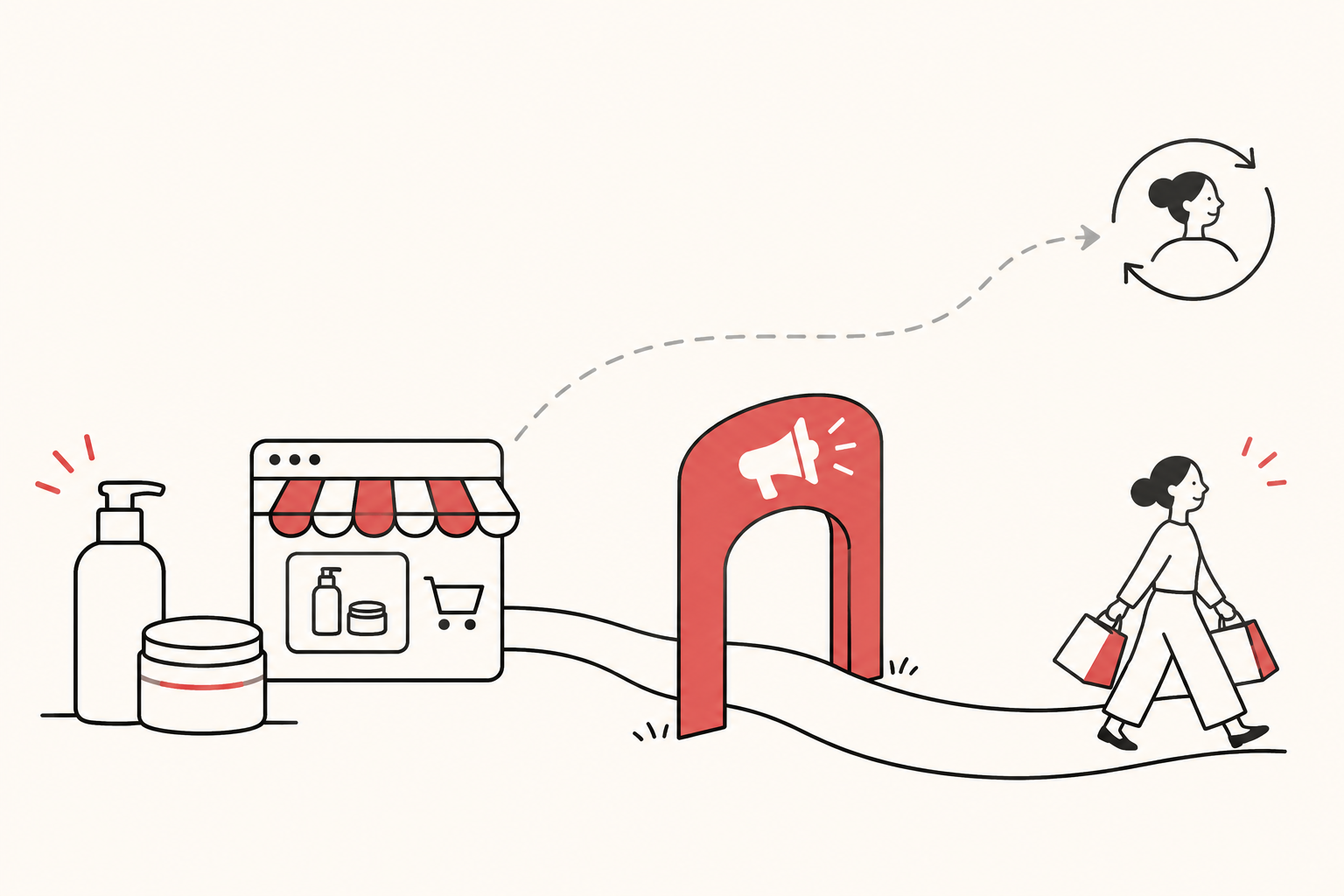
The following is OMN analysis. A direct customer relationship gives a merchant control over product presentation, checkout and subsequent service. It does not mean the merchant controls which potential buyers arrive, the price of reaching them or the learning process that allocates advertising. Those are distinct sources of dependence. Better internal data can improve decisions without removing an external platform's discretion.
This distinction changes how a recovery should be evaluated. Higher sales might reflect more new customers, more purchases by existing customers, larger baskets or heavier promotion. Each can improve reported revenue, but they imply different future costs. A merchant that substitutes discounts for expensive traffic may restore order volume while weakening the contribution earned on each order. A quarter supported by repeat buyers may say little about whether fresh customer acquisition has become economical again.
Measure the customer group, not just the campaign
An analytical test would follow groups of customers acquired in the same period. Start with the cash spent to acquire them, then deduct returns, fulfilment, payment costs and relevant discounts from the revenue they generate. Follow subsequent purchases separately rather than assuming a historical repeat rate will hold. This is a proposed evaluation framework, not a claim about ODDITY's undisclosed customer data.
Consider a hypothetical campaign that produces more first orders after a change to targeting. If those orders also return more often, a lower advertising cost per order may not represent a better business result. Conversely, a smaller campaign may look inefficient on its first purchase yet attract customers who return without another paid advertisement. Neither result can be distinguished by clicks or a platform's attributed sales alone.
Timing matters too. Advertising is paid before the full customer relationship is observed. Forecast repeat revenue is not cash already collected. A recovery plan therefore needs both a spending limit and a rule for expanding a test: evidence that survives returns and subsequent purchase windows is more persuasive than a short burst of conversion activity. Seasonality and changes in product mix also need comparable periods, not a convenient before-and-after chart.
Diversification has a cost and an evidence standard
Moving spending to another channel is not automatically a cure. New channels require creative work, measurement and time to learn; their audiences may overlap with the existing channel. A portfolio can look diversified in a dashboard while depending on the same consumers or attribution signals. The practical question is whether alternative sources produce incremental contribution when the dominant source becomes less effective.
Controlled experiments can help, provided the business can bear their cost. A geographic or customer-group holdout might show whether sales would have happened without a campaign. Results should be interpreted with sample size, spillovers and promotion differences in mind. No single experiment settles an entire acquisition strategy, but several consistent tests can reduce reliance on a platform's own performance attribution.
There is also a reasonable competing interpretation: concentrating on a strong channel can be efficient, and maintaining weaker alternatives indefinitely can destroy value. The case for resilience is therefore not that every channel deserves equal funding. It is that management should know the cost, time and operational requirements of a fallback before it is urgently needed.
What would make the next update more informative
For readers, the most useful evidence would separate new-customer economics from repeat demand and explain whether improvement persists as spending increases. Brand-level differences would help distinguish a broad recovery from gains in a smaller part of the portfolio. Without comparable customer-group and incremental-return data, an external observer cannot confidently allocate the change between targeting, product demand and promotional choices.
ODDITY's case is valuable beyond a single quarterly result. Digital commerce efficiency depends on coordination between systems a merchant owns and systems it only uses. Revenue is one outcome of that coordination, not a complete diagnosis. The durable question is whether acquiring the next customer can fund the relationship that follows, under less favourable distribution conditions as well as favourable ones.
Information only. No investment, legal, tax, or financial advice.