NioCorp: reading the obligations behind a sales agreement
A contract review should separate who must buy, what unlocks payment and when construction funding becomes usable.
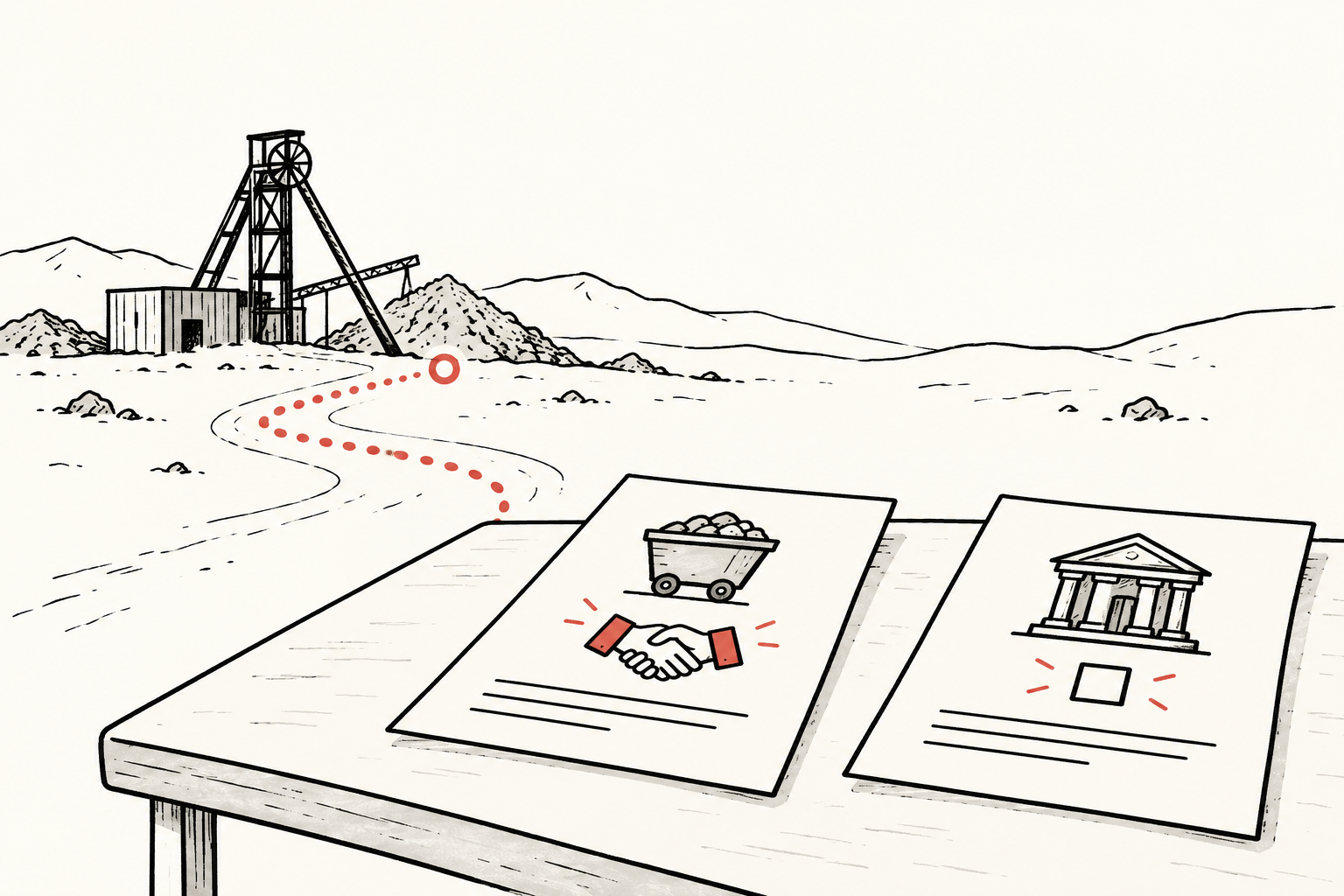
NioCorp’s recent disclosures invite a more useful question than whether a project has commercial partners: which obligation can actually fund the next stage?
Three dated observations
Its October 16, 2026 preliminary unaudited results describe profit driven mainly by noncash liability revaluation, alongside operating and investing cash outflows. Those are different accounting measures.
The October 13 sales announcement distinguishes ferroniobium take-or-pay from an exclusive purchase right without an obligation for other products. Deliveries remain conditional on project milestones.
The October 15 financing update describes EXIM’s financing target as subject to due diligence. The agency’s own announcement confirms a support letter, rather than reporting loan authorization.
Build an obligation map
Our analysis starts with a blank four-column worksheet: counterparty, required performance, trigger and remedy. A label such as “commercial agreement” does not fill those columns. Neither does the identity of a well-known participant.
For a hypothetical supply contract, ask whether the buyer must accept a specified quantity, spend a minimum amount or merely look for customers. Then separate the seller’s obligations: qualifying the material, delivering it to an agreed location and meeting the delivery window. A binding document can contain conditions that must be satisfied before a particular payment becomes due.
An accompanying evidence log records evidence, not confidence. A signed agreement, a completed qualification test and a cleared payment each answer different questions. Record the date and the responsible party beside each item. If an assertion lacks its supporting document, leave the cell unresolved rather than filling it with a probability invented by the writer.
Test the timing, not just the total
Consider an explicitly hypothetical project requiring 100 units of construction spending. It holds 30 units of unrestricted cash and expects a 70-unit facility. Assume the first 40 units must be spent before the facility can be drawn. Even if the total financing eventually equals the budget, the sequence leaves a 10-unit bridge requirement. Moving the draw condition earlier changes that result; announcing another prospective customer does not change this particular calculation.
This example is not a model of the company’s finances. It shows why a funding assessment needs a dated sources-and-uses schedule, draw conditions, contingency reserves and a record of which costs have already been paid. Headline amounts alone cannot supply that schedule.
The open questions therefore concern contractual performance, funding availability and execution evidence. Their answers may improve as definitive documents and subsequent filings arrive. Until then, the appropriate conclusion is a list of unresolved dependencies, not an investment recommendation.
Information only. No investment, legal, tax, or financial advice.