Netflix’s content calendar complicates the reading of quarterly profit
Production payments, release dates and subscription renewals help explain why a strong quarter needs a longer view.
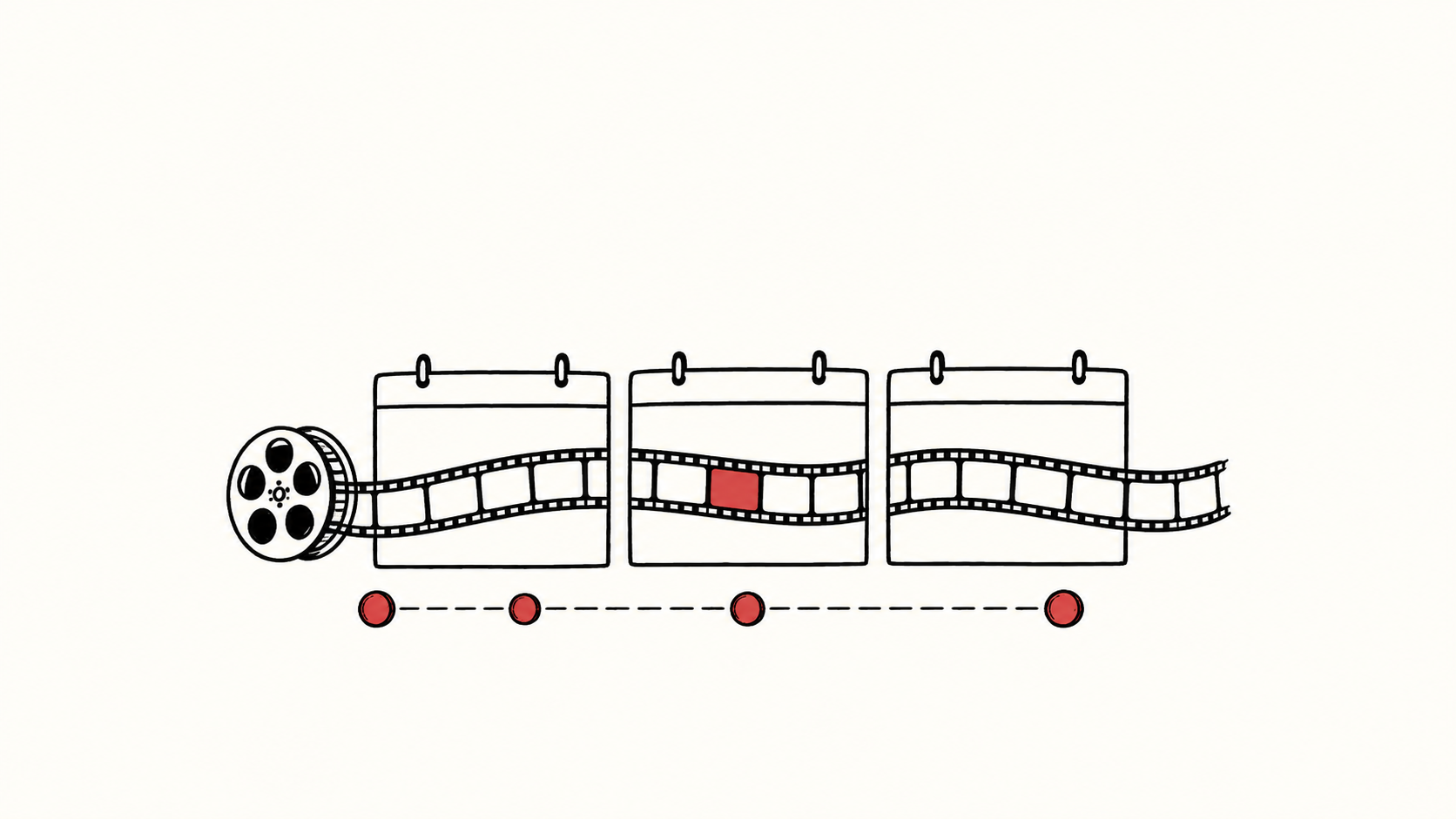
Netflix reported a 34.6% third-quarter operating margin on October 20, 2026. It attributed the beat against forecast mainly to expense timing. Q3 shareholder letter
That explanation has a specific boundary. It addresses performance relative to the company's forecast; it does not, by itself, explain the entire year-over-year improvement or establish a permanent reduction in content budgets. A more useful question is how quarterly profit should be interpreted when entertainment is produced, released and consumed in different periods. The mechanisms and hypothetical examples below are original Open Market Notes analysis, not company explanations of particular titles or expenses.
Payment and expense follow different calendars
Netflix's 2025 Form 10-K describes accelerated content amortization from the month of availability, informed by viewing patterns. Original production can require earlier cash payments. 2025 annual report, content accounting
A program that has not reached the screen can therefore already have absorbed funding. Consider a hypothetical streaming platform that pays production costs in summer for a series scheduled for September, then moves the release to November. If payments remain unchanged, the cash has already left. If availability changes, the start of expense recognition may also change. Third-quarter profit could look better without the production team having made the same series for less money. This illustrates a possible mechanism, not an assertion that Netflix delayed such a release this quarter.
The reverse is possible too. A cluster of releases paid for earlier could increase current content expense without an equivalent new cash outflow. Treating income-statement content costs as interchangeable with current purchasing payments misreads both cases. Asking which number is more “real” is less useful than identifying what each explains: how much content value has been consumed against current revenue, and how much funding has been committed in advance to future supply.
Comparisons consequently need to cover a meaningful release cycle. Imagine two platforms releasing the same number of equally costly programs over a year. One distributes premieres evenly; the other concentrates them near year-end. Even with similar eventual offerings, their interim profit profiles may differ. Annualizing the most attractive quarter risks treating a quieter release period as normal. Focusing solely on the busiest quarter may misclassify a release schedule as deteriorating efficiency.
Annual guidance sets a boundary, not a cash balance
A full-year view helps because movements between adjacent quarters can offset each other. It has limits. Expenses moving across December can affect annual comparisons as well, and forecasts change with business conditions. Annual margin guidance is best treated as a constraint on management's current plan, rather than an achieved result or a sufficient basis for estimating cash balances.
For these results, the first analytical step is to retain the company's annual perspective and ask which elements of the quarterly beat could return as expenses later. Useful answers would specify categories and periods. They would not require an analyst to invent a precise “saving” from the margin headline. Where disclosure does not permit a clean split, acknowledging that limitation is preferable to reverse-engineering a detailed narrative from one quarter.
Cash-flow observation serves a separate purpose. Suppose a platform increases upfront production funding for two years, while much of the new programming arrives in the third. Funding pressure can precede the associated revenue opportunity. Management needs financial room to bridge that interval, while the content team needs to establish why the future library justifies the wait. A quarterly margin cannot settle either issue. Conversely, temporarily reducing production payments might improve current cash flow while weakening future supply. The immediate improvement needs to be evaluated alongside the subsequent product offering.
The customer purchases an ongoing service
Netflix's investor questions explain that commitments to license future programming can precede recognition of the corresponding balance-sheet assets and liabilities. Investor questions: content licensing and commitments
Content decisions can therefore constrain choices before money is paid. Cash already spent, existing liabilities and future commitments answer different questions about flexibility. None should automatically be treated as a complete measure of the remaining funding burden.
The commercial assessment is harder still. In another hypothetical example, a new series persuades a member to stay until month-end, while an older series encourages renewal next month. Allocating subscription revenue precisely to either title is more difficult than connecting a cinema ticket with a particular film. For a platform, release cadence may influence whether customers can consistently find something else they want to watch. Financial reporting meanwhile has to allocate expenses to periods. Both views matter, but neither substitutes for the other.
High viewing volume does not automatically establish high incremental returns. Some viewers might have renewed without a particular program; a niche title might be important to a smaller group's retention. These are possible evaluation pathways, not claims about the effects of specific Netflix titles. Demonstrating better investment efficiency requires stronger connections among comparable budgets, release decisions and sustained customer behavior. Selecting one popular title as a proxy for the entire portfolio cannot provide that evidence.
What later disclosure could clarify
The most useful follow-up would separate timing effects from changes in operating efficiency. Timing calls for observing when expenses return and how releases actually occur. Efficiency requires a longer view of whether equivalent product value can be delivered with fewer resources, or whether additional spending creates lasting service value. Both can happen together; the quarterly summary does not establish their precise shares.
Competing explanations should remain open. A higher margin could reflect revenue mix or operating improvements alongside temporary expense patterns. Rising cash spending could build future supply while also increasing recovery risk. Consistency across successive disclosures is more informative than deciding in advance that either direction must be favorable or unfavorable.
The practical lesson is to identify the content cycle covered before comparing quarters. The distance between production funding, release-related expenses and customer renewals determines how much a strong quarter can tell us. This is analysis of financial disclosure and business mechanisms, not investment advice.
Information only. No investment, legal, tax, or financial advice.