MercadoLibre’s free-shipping test: cheaper parcels are not the same as better economics
Lower delivery costs do not prove free shipping pays for itself. The test is contribution from repeat customers, not parcel volume.
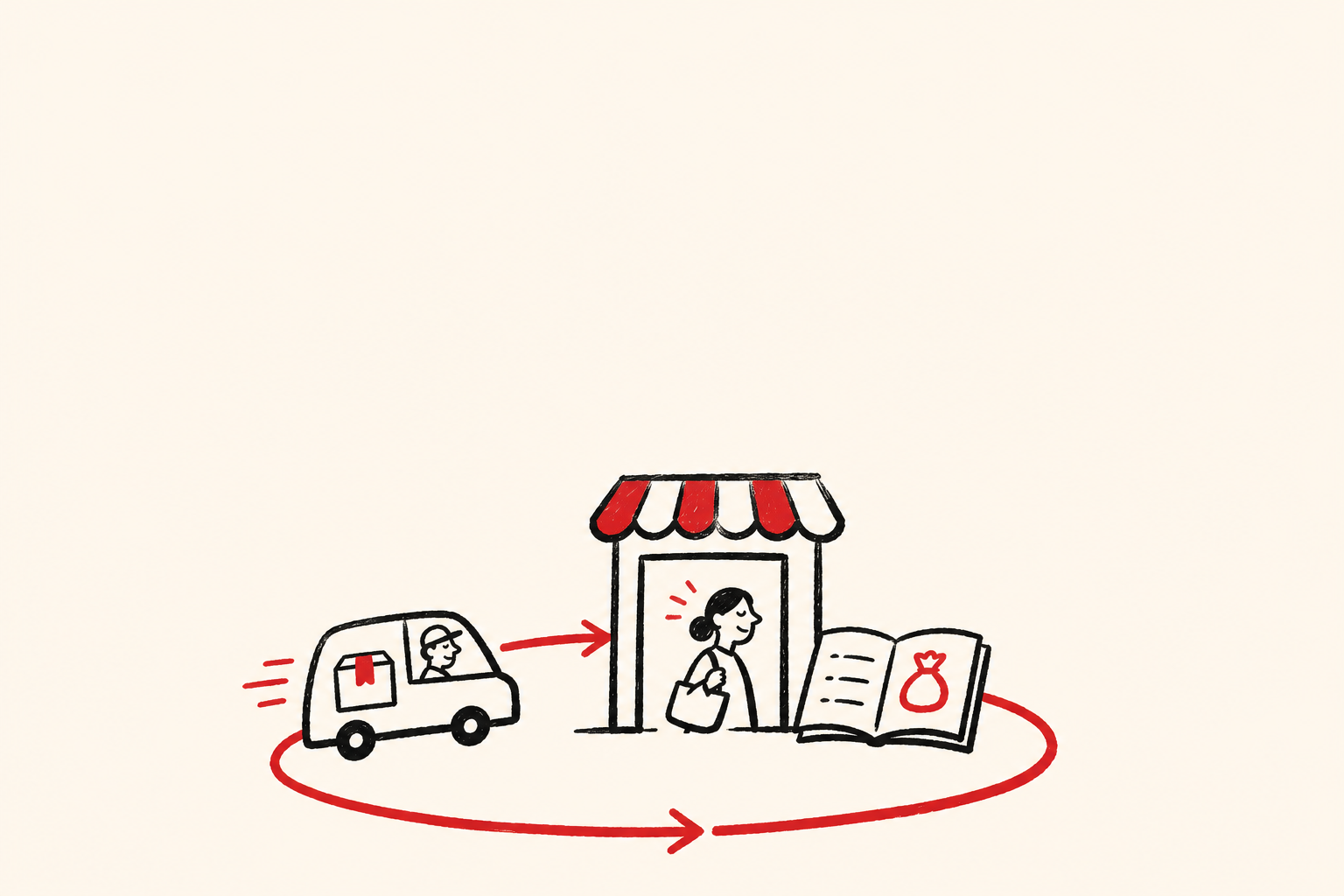
MercadoLibre’s latest results pose a question every ecommerce operator should unpack: why can profit remain under pressure when transporting each parcel becomes cheaper? There is no contradiction. A parcel and a customer relationship are different economic units.
Its November 4 third-quarter disclosure reported a 6.3% operating margin. In Brazil, local-currency cost per shipment fell 5% year over year while items per buyer rose 16%. These are company-reported measures, not independent proof of free shipping’s return. Quarterly shareholder letter
The following is an operational analysis of those signals. Free shipping can improve logistics efficiency, increase purchasing frequency and depress current profitability simultaneously. Assessing the strategy requires separating those effects rather than making one answer for the others.
Start with the denominator
Fuller delivery routes and smoother warehouse picking can reduce cost per shipment. But if customers divide purchases previously combined in one order into several smaller orders, the platform must move more parcels. A cheaper parcel does not guarantee lower total delivery spending per item or customer.
This is a general ecommerce mechanism, not an additional estimate of MercadoLibre’s order mix. Efficiency should be examined alongside items per order, shipments per customer, fulfillment cost per item and shipping fees actually paid by customers. A shipment-only measure can conceal a commercial concession behind an operational improvement.
Revenue is another denominator to handle carefully. Lower-priced products may increase transaction frequency without increasing revenue proportionately. Operating margin also includes other businesses and expenses; it is not a parcel-level gross margin. A logistics team can improve performance while the group’s margin remains under pressure. Each outcome needs its own explanation.
Is free shipping buying future orders or splitting today’s basket?
Economically, free shipping resembles customer-acquisition and retention spending delivered through the fulfillment experience rather than an advertising invoice. It is plausible that customers become more willing to try inexpensive products and stop waiting to assemble a larger basket. But more transactions do not automatically demonstrate new demand. They may change the timing and packaging of existing shopping.
A useful test therefore follows comparable customer cohorts rather than simply counting orders before and after an offer. Do first-time buyers return? Do subsequent purchases require the same subsidy? After delivery, refunds and service costs, how much contribution does each customer leave? These questions are closer to economic value than a single quarter’s growth rate.
Improved repeat purchasing would not establish free shipping as its sole cause, either. Selection, delivery reliability, prices, payment convenience and competitors’ actions can influence buying. Without comparable experiments or sufficiently detailed cohort disclosures, outside observers should distinguish a signal consistent with a strategy from an effect caused by it.
Network density must eventually show up in the economics
Fixed logistics investment gives scale potential value. More orders concentrated in the same area can theoretically spread warehouse, route and management costs. Scale is not universal medicine, however. Reaching farther locations, adding sparse routes or servicing more small orders can offset efficiency gains.
The crucial question is where the savings go. If a platform passes every efficiency gain back to customers, the experience improves, but shareholders will not immediately see an equivalent profit benefit. That may be a deliberate competitive choice or the price required to sustain growth. Coexisting growth and lower costs do not identify which explanation applies.
An actionable approach separates declining service costs from declining subsidy intensity. The first shows whether the network is becoming more efficient. The second helps establish whether growth is becoming less dependent on concessions. Progress on both is stronger evidence of expansion that can support itself.
Platform growth is not a merchant’s profit
For merchants, more frequent small purchases can bring new customers while adding packaging, service and returns work. Who funds shipping, whether products suit multi-item bundles and whether advertising costs rise with competition all affect the final result. Platform order growth is not an unconditional reason to increase advertising budgets.
A more useful practice builds a contribution account by product and customer cohort: revenue less merchandise, platform fees, promotion, fulfillment and after-sales costs, followed by the contribution those new customers subsequently generate. Combining every channel and product into one average obscures the result. Platform scale benefits should not be booked as a merchant’s profit before they arrive.
Platforms and merchants can both benefit from repeat buying, but the timing, cost bearer and risks need not match. An order valuable to a platform’s long-term network can still be unattractive for a particular seller. Conversely, a profitable product does not establish adequate returns across the delivery system.
Watch what remains, not just what ships
The quarterly measures offer directional information, not a verdict that free shipping has succeeded or failed. More persuasive evidence would combine maintained service quality, continuing purchases by existing customers, improving unit service costs and more revenue remaining after related costs.
If higher frequency instead requires ever-greater concessions, or fragmented orders keep absorbing efficiency gains, scale may enlarge the pressure. Both paths remain hypotheses to test rather than conclusions established by one quarter.
The interesting question is not an abstract choice between growth and profit. It is how consumer habits become measurable long-term contribution. Cheaper parcels are an operational achievement. A more profitable business requires a different body of evidence.
Information only. No investment, legal, tax, or financial advice.