Jeff Dean: Turning Scale into a Way of Thinking
From MapReduce, Bigtable, and Spanner to TensorFlow, TPUs, Pathways, and Gemini, Jeff Dean turned scale from an engineering constraint into a design…
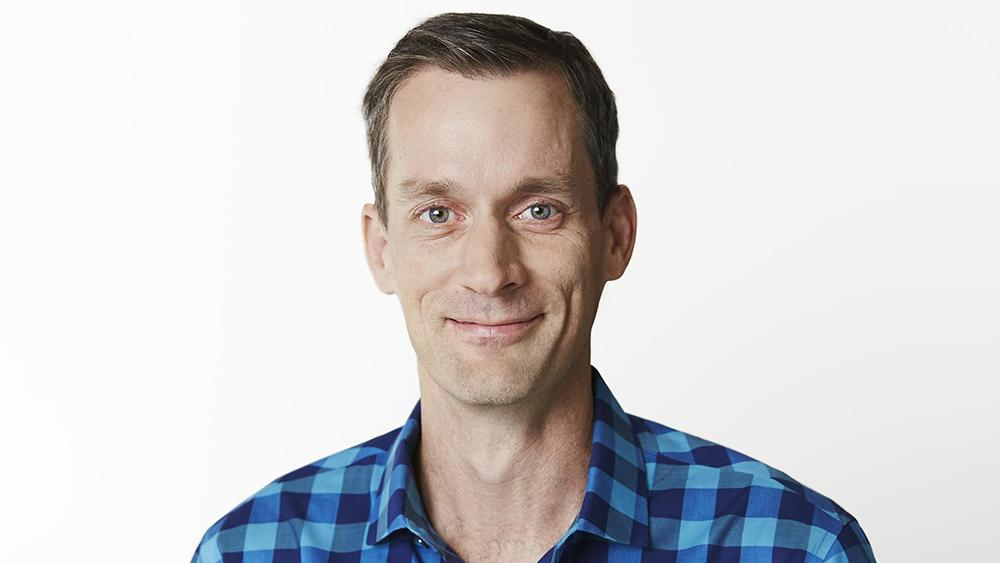
As of August 6, 2026, Jeff Dean is making the most consequential career change of his 27 years at Google. Together with Sanjay Ghemawat, Oriol Vinyals, and Quoc V. Le, he has left the company to co-found Discovery Loop, a nonprofit-oriented company that aims to automate the cycle of proposing, running, evaluating, and improving scientific and engineering experiments. This report traces the line from MapReduce, Bigtable, and Spanner to TensorFlow, TPUs, Pathways, and Gemini—and examines the institutional costs that come with operating at such scale.
Executive summary
Jeff Dean’s career can be summarized as a repeated effort to turn expensive, fragile, expert-only computing problems into abstractions that ordinary programmers can use. MapReduce hid parallelization, distribution, fault recovery, and scheduling. Bigtable organized data spread across thousands of machines behind a coherent storage interface. Spanner combined global distribution with strongly consistent transactions. DistBelief, TensorFlow, and Pathways carried the same design instinct into machine learning.
Dean is an unusual kind of industrial researcher. Many of his papers describe systems that had already survived production workloads; after publication, those systems became infrastructure for academia and open-source engineering. MapReduce directly influenced Hadoop and the big-data industry. TensorFlow helped move deep learning beyond a small number of research laboratories. TPUs, Pathways, and Gemini express a later, more complete systems view: models, algorithms, compilers, interconnects, chips, and data centers must be designed together.
That reputation also carries managerial responsibility. The 2020 departure of Ethical AI researcher Timnit Gebru put Dean at the center of disputes about research power, paper review, and racial and gender representation at Google. AlphaChip later drew criticism over reproducibility and benchmark selection. These episodes show that when a scientist controls compute, publication approval, and promotion structures, technical judgment has institutional consequences.
Dean’s durable legacy is less likely to depend on any single paper than on a recurring design posture: accept that individual machines fail, that scale creates tail risks, and that hardware and software constrain each other—then build a simpler interface on which the next generation can work.
A programmer raised around the world
Dean was born in Hawaii in July 1968. His father, Andy Dean, researched tropical diseases; his mother, Virginia Lee, was a medical anthropologist and linguist. Their public-health work took the family through Honolulu, Manila, Boston, Uganda’s West Nile region, Little Rock, Mogadishu, Atlanta, and Geneva.
Computing was connected to the physical world from the beginning. Dean and his father assembled and programmed an IMSAI 8080 kit. At thirteen, he accompanied his parents to a refugee camp in western Somalia. During high school and university summers, he helped develop Epi Info, epidemiological data-collection software later used by the U.S. Centers for Disease Control and Prevention and the World Health Organization.
The significance of this story is not simply that Dean was a gifted young programmer. He saw early that software could support disease surveillance, refugee relief, and international institutions—and that it had to work under limited hardware, unreliable networks, and varied user conditions. Decades later, Google’s work on health, flood forecasting, and AI research in Africa still reflected that global perspective.
In 1990, Dean graduated with highest honors from the University of Minnesota with degrees in computer science and economics. His undergraduate theses examined parallel neural networks and the macroeconomic and demographic effects of AIDS. He then worked for the WHO Global Programme on AIDS before earning a Ph.D. in computer science from the University of Washington in 1996 under Craig Chambers.
His doctoral research focused on whole-program optimization for object-oriented languages. Compiler work forces a researcher to connect high-level semantics to program structure, machine instructions, and runtime cost. Colleagues later described Dean as someone who could mentally simulate caches, memory, disks, and networks while writing code. The widely circulated “latency numbers every programmer should know” are a compressed version of that habit.
After the Digital Equipment Corporation’s Western Research Laboratory, Dean joined Google in 1999, when its indexing systems were already straining under rapid growth.
Building Google’s skeleton
Around 2000, Google’s web index failed repeatedly. A single machine’s memory error could corrupt a large build, forcing engineers into manual diagnosis. Dean and Ghemawat rebuilt the system so that it could keep running while inexpensive machines failed. They optimized encoding, compression, and memory layouts and placed frequently used data on faster outer disk tracks. Low-level software decisions directly changed the economics of Google’s hardware purchases.
Their collaboration became exceptional even inside Google. They sometimes shared a keyboard and alternated writing code; at other times, they edited the same system from separate offices. Dean moved quickly through prototypes and architectural leaps, while Ghemawat tightened designs and made them maintainable. Managers increasingly organized teams around the pair.
| Year | Role or stage | Why it mattered |
|---|---|---|
| 1968 | Born in Hawaii | Grew up across several countries in a public-health family |
| 1980s | Student and public-health software developer | Contributed to Epi Info and encountered real-world data systems |
| 1990 | University of Minnesota graduate | Studied computer science and economics; researched parallel neural networks |
| 1990–1991 | WHO Global Programme on AIDS | Worked on public-health data and software |
| 1996 | Ph.D., University of Washington | Researched whole-program optimization |
| 1996–1999 | DEC Western Research Laboratory | Worked on compilers, performance, and systems |
| 1999 | Joined Google | Contributed to crawling, indexing, query serving, and ads |
| 2000–2006 | Core infrastructure engineer | Built MapReduce, Bigtable, Protocol Buffers, and multiple generations of search infrastructure |
| 2011–2015 | Co-founder of Google Brain | Drove large-scale deep learning, DistBelief, and TensorFlow |
| 2018 | Head of Google AI and SVP | Oversaw Google Brain and a broad AI research organization |
| 2023 | Google Chief Scientist | Helped set the scientific direction of Google Research and Google DeepMind |
| 2023–2026 | Gemini co-technical lead | Helped organize, name, and direct the multimodal model family |
| August 2026 | Co-founder of Discovery Loop | Left Google to pursue automated science and engineering |
The ladder of abstractions
MapReduce: making failure routine
MapReduce was revolutionary because its interface was restrained. A programmer defined map and reduce operations; the runtime split inputs, scheduled tasks, moved intermediate data, re-executed failed work, and assembled results. Large-scale parallel programs no longer required every product engineer to manage network communication, machine failure, load balancing, and data placement directly.
The model also changed organizational economics. Teams could share one computational pattern. Systems experts improved the runtime while product engineers wrote jobs against a stable interface. After the 2004 paper, MapReduce became a direct intellectual source for Hadoop and the big-data ecosystem. More flexible dataflow systems eventually supplemented it, but its core proposition endured: parallelism and fault tolerance should be default platform capabilities.
Bigtable and Spanner: distributed data as dependable fact
Bigtable scaled structured data across thousands of commodity servers and petabytes of storage. Its sparse, distributed, multidimensional ordered map supported services including Search, Earth, and Finance. It did not attempt to reproduce a full relational database; it prioritized scale, throughput, and a controlled data model.
Spanner took a harder step: externally consistent transactions across regions and data centers. Its TrueTime API made clock uncertainty explicit in the transaction protocol, creating a practical connection between global replication and strong semantics. The two systems illustrate an evolution in Dean’s approach. Bigtable gave up some traditional database semantics for scale; Spanner used time infrastructure, replication protocols, and engineering investment to restore stronger guarantees at global scale.
Tail latency: the machine world hidden by averages
In “The Tail at Scale,” Dean and Luiz André Barroso argued that large online services are often governed by their slowest few requests. If one user request depends on hundreds of servers, a brief slowdown in a single component can delay the entire operation. Average latency becomes a weak guide.
The paper discussed redundant requests, backup tasks, latency-aware scheduling, and selective resource increases. Modern percentile monitoring, hedged requests, and service-level objectives continue this line of thought. The paper entered the ACM SIGOPS Hall of Fame in 2025.
DistBelief, TensorFlow, and Pathways
Dean helped create Google Brain in 2011 with Andrew Ng, Greg Corrado, and others. The early problem was as much systems engineering as machine learning: deep-learning algorithms could not easily use Google-scale clusters. DistBelief enabled thousands of machines to train neural networks with billions of parameters and introduced distributed optimization methods such as Downpour SGD.
The 2012 unsupervised-learning experiment used roughly ten million YouTube frames and more than ten thousand CPU cores. Without manual “cat” labels, the network developed selective responses to cats, faces, and bodies. Its importance lay in showing that larger models, more data, and large-scale compute could jointly produce representations that were difficult to observe before.
DistBelief remained internal. Dean then helped design and implement TensorFlow and supported its 2015 open-source release. TensorFlow represented computation as dataflow graphs and allowed related programs to run across CPUs, GPUs, TPUs, mobile devices, and distributed clusters. It combined automatic differentiation, device placement, parallel execution, checkpoints, and deployment in one ecosystem.
Pathways extended this approach to very large models. Its asynchronous distributed-dataflow architecture allowed one computation to span thousands of accelerators while combining sparse activation, pipeline parallelism, data parallelism, and model parallelism. Google used Pathways to train PaLM and extended the infrastructure into Gemini.
TPUs and full-stack co-design
Dean has long argued that machine-learning progress depends on the co-evolution of algorithms and hardware. He contributed to the TPU project and its performance research. The first production TPU centered on a large matrix-multiplication unit and delivered strong performance and energy efficiency on Google’s contemporary neural-network workloads. Exact ratios were specific to that generation and should not be applied directly to current chips.
His work on word2vec reduced the cost of learning continuous word representations; model distillation taught smaller models from the soft outputs of larger ones. Both reflect the same bias: model capability matters only when it can be delivered efficiently in real products.
Representative papers and patents
| Work | Year | Venue or identifier | Importance |
|---|---|---|---|
| MapReduce | 2004 | OSDI | Hid distribution and fault recovery behind a simple programming interface |
| Bigtable | 2006 | OSDI | Established a scalable model for distributed structured storage |
| Spanner | 2012 | OSDI | Combined global distribution with externally consistent transactions |
| Large Scale Distributed Deep Networks | 2012 | NeurIPS | Introduced DistBelief and billion-parameter distributed training |
| Large Scale Unsupervised Learning | 2012 | ICML | Demonstrated scale-driven unsupervised representation learning |
| Efficient Estimation of Word Representations | 2013 | ICLR | A core word2vec paper |
| The Tail at Scale | 2013 | CACM | Defined tail latency as a first-class systems problem |
| TensorFlow | 2016 | OSDI | Unified research, distributed training, and cross-device deployment |
| TPU performance analysis | 2017 | ISCA | Quantified the value of domain-specific AI acceleration |
| Graph placement for chip design | 2021 | Nature | Applied reinforcement learning to macro placement and triggered a reproducibility debate |
| Pathways distributed dataflow | 2022 | MLSys | Supported asynchronous execution across thousands of accelerators |
| Efficient large-scale data processing | 2009 grant | US7650331B1 | MapReduce-related patent with Dean and Ghemawat as inventors |
From engineer to institutional leader
Dean’s influence operates at three levels. The first is code and systems: search, ads, indexing, storage, and machine-learning platforms all contained components he helped design or implement. He also worked on Protocol Buffers, LevelDB, code search, profiling tools, and several generations of query serving.
The second level is research agenda. Dean helped create Google Brain and made the expansion of data, models, and compute into a durable research program. He was not an author of the Transformer paper. His contribution was closer to shaping resources, infrastructure, and organizational direction—and integrating Transformers, sparse models, TPUs, and large-scale training into a broader technical program.
The third level is institution design. By 2018, Dean led Google AI and oversaw thousands of researchers and engineers. When Google Brain and DeepMind merged in 2023, he became Google Chief Scientist, reporting to Sundar Pichai and working with Demis Hassabis on scientific direction. One early strategic task was the multimodal model family that became Gemini.
Dean proposed the Gemini name. It symbolized two newly joined teams and echoed NASA’s Gemini program between Mercury and Apollo. Dean and Vinyals served as technical leads, later joined by figures including Noam Shazeer.
His major honors include election to the U.S. National Academy of Engineering, the ACM Prize in Computing, fellowships in AAAS and the American Academy of Arts and Sciences, the IEEE John von Neumann Medal, the ACM SIGMOD Systems Award, and multiple SIGOPS Hall of Fame recognitions. Contrary to an occasional online claim, Dean has not received the ACM A.M. Turing Award.
A deeper impact on AI and systems
Scale became a research variable, not merely an outcome. Early machine-learning work often treated compute as fixed. The Google Brain program asked a different question: what capabilities appear when training can expand to ten thousand or more processors, and how must hardware, networks, and optimization change? DistBelief, TPUs, Pathways, and Gemini follow that trajectory.
Industrial systems papers became a central research tradition. MapReduce, Bigtable, Spanner, and TensorFlow described systems already tested by production demand. Their engineering choices could be judged against real workloads, while academia gained observations previously available only to hyperscale companies. The limitation is equally important: crucial data, hardware, and production environments cannot always be disclosed, making independent replication difficult.
AI became a full-stack competition. Frontier-model differences now arise not only from network architecture but also from frameworks, compilers, cluster scheduling, topology, chips, data governance, and serving cost. Dean’s career spans precisely those layers.
The work was deeply collaborative. MapReduce was built with Ghemawat; Bigtable, Spanner, TensorFlow, and TPUs involved large teams; the central word2vec algorithms came from Tomas Mikolov and collaborators; Google Brain, Gemini, and AlphaChip depended on many researchers. Dean’s role is best understood as a combination of designer, implementer, convener, and resource organizer.
Controversy and the cost of management
The Timnit Gebru case
In 2020, Timnit Gebru, co-lead of Google’s Ethical AI team, prepared a paper on the environmental cost, training-data bias, and social risks of large language models. Google asked that the paper be withdrawn or that Google authors be removed. Gebru said she was fired; Google said it accepted a conditional resignation. Dean wrote internally that the paper did not sufficiently account for recent research and mitigation methods.
The conflict quickly expanded beyond one paper. Researchers questioned whether internal scholars could criticize technologies central to Google’s business and why review procedures had intervened late in the publication process. Gebru was one of relatively few Black women in a senior AI research role at a large technology company. Her departure triggered broad protests over representation, power, and workplace treatment. Margaret Mitchell, the other co-lead of Ethical AI, was later dismissed as well.
As head of Google AI, Dean became the central target of criticism. In 2021, he acknowledged that review rules for “sensitive topics” were confusing and asked research leaders to clarify them. Google promised changes to research oversight. Public evidence still cannot reconstruct every internal discussion, and the parties continue to disagree over the nature of Gebru’s departure and the review process. But the episode remains a major institutional failure in Dean’s record.
The AlphaChip reproducibility dispute
A 2021 Nature paper proposed using deep reinforcement learning for chip macro placement. Google says the method was used in multiple generations of TPUs, Axion CPUs, and other Alphabet chips and was extended by external organizations including MediaTek. In 2024, supplemental material adopted the AlphaChip name and disclosed additional details.
Critics focused on benchmarks, compute, pretraining, proxy objectives, and reproducibility. Some research teams did not observe the claimed advantages on public circuits and questioned whether comparisons used sufficiently strong conventional placement baselines. Dean, Anna Goldie, and Azalia Mirhoseini replied that some attempted replications omitted the prescribed pretraining, used fewer experience collectors and GPUs, trained for less time, and evaluated circuits unrepresentative of modern chips.
The evidence is asymmetric. Google controls production TPU designs and proprietary physical-design processes; outsiders depend on public benchmarks and open implementations. Production deployment demonstrates engineering value but cannot by itself prove superiority on a fair public benchmark. Negative external replications are important warnings, yet may fail to recreate the original conditions. As of August 2026, AlphaChip’s use inside Google is well documented, while the size of its independently reproducible advantage remains contested.
Discovery Loop: the next abstraction
Dean’s public talks increasingly emphasized “AI improving AI” and automated scientific discovery. Discovery Loop turns that direction into an organization. The company intends to begin as its own customer, automating machine-learning research and engineering experiments. Longer-term targets include materials, chips, drugs, biology, and other engineering domains. A system would propose candidates, run thousands of experiments in parallel, evaluate results, and continue iterating.
This resembles a return to Dean’s earliest methods. MapReduce automated distributed task loops. TensorFlow automated computation graphs and gradients. Pathways automated scheduling across accelerators. Discovery Loop aims to automate the research loop itself.
The technical problem is much harder than ordinary scheduling. Experimental objectives may be ambiguous; models may exploit metrics; physical experiments cannot be replicated as cheaply as software jobs; and scientific discovery requires causal explanation, verification, and records of negative results.
The four founders combine unusual capabilities. Dean and Ghemawat bring distributed systems, storage, and compute infrastructure. Quoc V. Le worked on Google Brain, neural architecture search, and large models. Vinyals contributed to sequence-to-sequence learning, AlphaStar, Gemini, and reasoning models. Google is both an investor and a cloud-compute partner, giving the company early access to resources while keeping it closely connected to Dean’s former employer.
Legacy
Dean’s historically important ability may be recognizing when scale changes the nature of a problem.
On ten machines, failure looks exceptional; on one hundred thousand, it is normal.
In one model, a slow request is an outlier; in a service that depends on hundreds of systems, it determines user experience.
On one GPU, a neural network is an algorithm; on thousands of TPUs, it is also a scheduling, communication, compilation, and power problem.
Inside a company with enormous compute resources, research judgment becomes a mechanism for allocating opportunity and careers.
Dean’s record on the first three classes of problem is extraordinary. He built reliable wholes from unreliable machines, simple interfaces over complex hardware, and scalable environments for enormous models. His record on the fourth is more complicated. The Gebru case and AlphaChip debate show that fault-tolerance principles in engineering do not automatically produce openness, appeals, or scientific review inside organizations.
Discovery Loop’s prospects depend on whether “experimentation at scale” can yield verifiable discoveries. Early success is most plausible in areas with short evaluation cycles and automatically measurable feedback: machine-learning algorithms, compilers, system parameters, and chip design. Drugs, materials, and biology face physical equipment, safety review, causal validation, and long replication cycles. As of this report, Discovery Loop remains at the mission-and-recruiting stage, without publicly validated products, peer-reviewed results, customers, financing terms, or scientific discoveries.
Whatever happens next, Dean is already part of computing history. The systems he built with Ghemawat shaped how internet companies process data. His work on Google Brain and TensorFlow helped establish the engineering foundation of modern AI. TPUs, Pathways, and Gemini pushed model development toward full-stack collaboration from chip to product. Discovery Loop gives the story a fitting return: a teenager who wrote tools for epidemiologists now wants machines to participate in scientific discovery itself.
Source boundaries
This report is current through August 6, 2026. Because Discovery Loop had been public for only about a day, the founders’ formal titles, headquarters, financing, Google’s investment terms, initial employees, customers, and product road map may change quickly. WIRED’s description of Dean as likely CEO came from an informal self-description; the company website listed only a founding team.
Google Research, X, KDD, and other pages may still show Dean’s previous position. Those pages remain useful for reconstructing his career before August 2026 but cannot independently prove his current status. Reuters, WIRED, Discovery Loop’s website, and Dean’s own announcement provide more timely evidence.
Primary sources
- Discovery Loop — Continuous Exploration
- Reuters: Google shakes up AI leadership as DeepMind chief shifts role
- WIRED: Google’s Top AI Brains Are Leaving to Launch Discovery Loop
- Google Research: Jeff Dean
- The New Yorker: The Friendship That Made Google Huge
- USENIX: MapReduce
- USENIX: Bigtable
- USENIX: Spanner
- Google Research: Large Scale Distributed Deep Networks
- USENIX: TensorFlow
- Google Research: The Tail at Scale
- Google DeepMind: How AlphaChip transformed computer chip design
- ACM: Jeffrey A. Dean Award Profile
- Reuters: Timnit Gebru departure
Information only. No investment, legal, tax, or financial advice.