JD now controls Ceconomy. The hard part is making stores work for online orders
JD’s Ceconomy deal brings a European store network, but faster fulfillment depends on accurate inventory, store capacity and EU commitments.
On November 12, 2026, JD.com closed its voluntary takeover offer for German electronics retailer Ceconomy. JD acquired 59.8% of the shares and voting rights for €1.335 billion through a German subsidiary and began consolidating Ceconomy's results that day. JD's exchange disclosure, filed with the SEC, establishes the change in control. Ceconomy's closing announcement establishes a different point: the companies intend to keep Ceconomy operating as a stand-alone European business with its own local technology stack. Consolidation is an accounting event. Shoppers, employees and suppliers will experience integration only when specific workflows change.
A store can shorten a delivery route only if the stock is really there
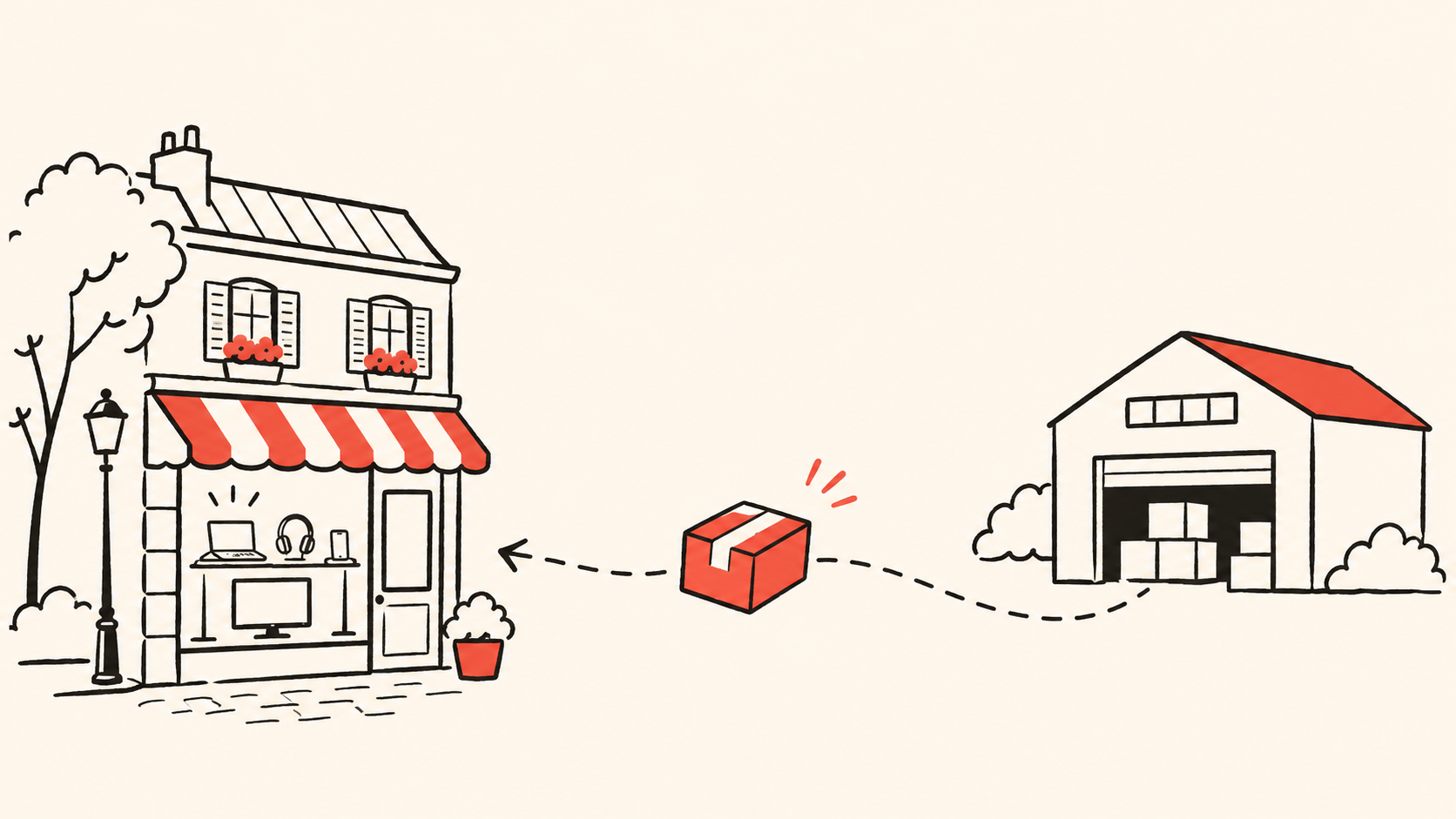
Ceconomy's network of more than 1,000 stores in 11 markets gives JD an existing physical presence that an online entrant would otherwise have to build or rent. The strongest case for using it is not to ship every item from the nearest store. Central warehouses still make sense for slow-moving models and orders that can be batched. A store is useful when proximity saves enough time or avoids enough handling to justify the extra work. A customer who needs to replace a broken router that evening might prefer to collect one nearby. A shopper buying a bulky television might care more about a delivery slot and a way to return it than about the headline speed.
In an interview with Reuters, Ceconomy's CEO described ambitions for faster delivery and pickup, and envisaged customers of JD's Joybuy platform using the stores. Those ambitions are not availability guarantees. For a pickup promise to hold, an order system needs to distinguish a sealed, sellable unit from a display model, a return awaiting inspection or an item another shopper has already reserved. Staff have to find it and set it aside without adding an unmanageable queue at the service desk. If a customer buys on one site and returns in another brand's store, someone must be able to verify the purchase, refund the right payment and decide where the returned unit goes. None of those tasks requires the two retailers to share every system. Each needs a reliable handoff, including a clear answer to who pays when something goes wrong.
The reverse flow matters as much as pickup. Returns bring potentially resalable inventory closer to customers, but they can also create a costly local inspection job. If an unopened item can go back into sellable stock, the store may avoid a trip to a central warehouse; if a serial number is disputed or the item needs repair, sending it onward may be unavoidable. Even successful pickup can simply move expense off the courier's bill and onto store labor. The commercial test is the net cost and service quality per completed order, not the proportion of orders routed through stores.
EU conditions shape which benefits JD can retain
On November 3, the European Commission conditionally cleared the acquisition under the Foreign Subsidies Regulation. The commitments run for ten years. Group transactions, including JD financing for Ceconomy, are to be on market terms. JD is to offer covered warehousing, logistics and technology services to third parties on the same terms as Ceconomy. An independent trustee is to monitor compliance. These conditions constrain access and pricing for services; they are not a requirement to merge the two companies' data.
That leaves room for two plausible outcomes. Ceconomy could still gain an advantage by implementing a service better: maintaining more accurate local stock, training staff to resolve exceptions and reaching enough order density for predictable dispatches. The same infrastructure could also become a business serving other retailers, improving utilization but making the underlying technology less exclusive. In that case, what distinguishes Ceconomy is not that rivals cannot buy a similar service. It is whether the retailer can combine the service with the stores, brands and customer relationships it already has.
What would show the strategy is working
A credible early result would name the cities and product categories in a pilot and explain how often reserved items were ready on time, how often reservations were canceled and what each order cost once picking, missed handoffs and returns were counted. Comparing with similar stores outside the pilot would help separate the operating change from holiday demand or discounts. Growth driven by consolidation, promotions or a handful of dense urban sites would not by itself prove the same model works in smaller towns. Companies may not publish these measurements. Without them, widening coverage is evidence that the service expanded, not that it improved margins.
JD has secured control of a retailer, not a fully integrated fulfillment network. The value of the deal will be easier to judge once a shopper can use the two businesses together and the companies can demonstrate what that convenience costs.
Information only. No investment, legal, tax, or financial advice.