Intermap’s mapping business must finance the wait for procurement
Survey projects and reusable data software run on different revenue clocks. Indonesia’s delays make that distinction tangible.
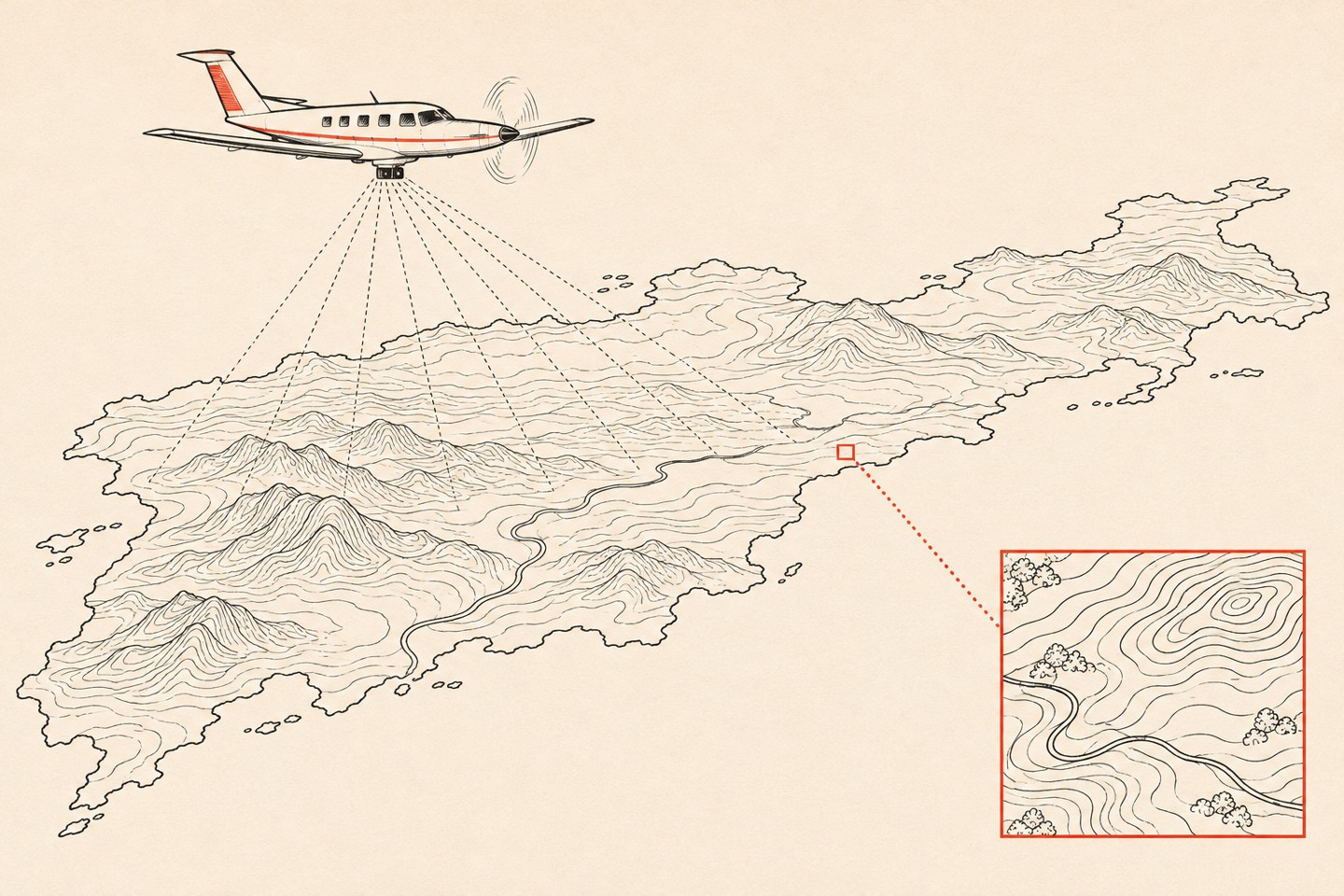
On November 16, Intermap reported $1.8 million quarterly revenue and continuing Indonesian procurement delays. Preparation has involved roughly $1 million quarterly investment locally. Guidance excludes government procurements not formally awarded. Company release
Its position offers a useful view of data infrastructure. A map can be reused over many years, but the people, equipment and preparation required to produce it cannot always wait until revenue is certain. A project can have a clear public purpose without giving a supplier a predictable billing quarter.
Our focus is that timing gap. Businesses grouped under geospatial revenue can require substantially different operating arrangements.
A national program is not a supplier’s order
The World Bank approved Indonesia’s ILASP project in 2024 to support land administration and spatial-planning reform. Original announcement
This explains the public need for improving geographic information. Planning, tenure and climate-related decisions require compatible, maintainable information, not simply images collected on one flight. Policy or financing support for a program is nevertheless different from a particular company securing a purchase contract.
Procurement, contract signing and delivery arrangements remain distinct steps. Technical readiness does not remove conditions governing commencement or acceptance. Treating an entire national program as a supplier’s available revenue skips the central commercial process. We have no basis to predict the winner or award date.
Readers should therefore separate procurement status from capability. Being able to do the work does not mean being authorized to perform all of it. Staying ready does not establish that the customer will reimburse every preparation expense.
Waiting occupies real resources
People cannot be suspended indefinitely, and equipment or processing workflows cannot appear instantly when approval arrives. Preparing a team early can shorten mobilization but puts costs ahead of revenue. Avoiding preparation may save cash initially while constraining delivery speed. That is an operational trade-off, not merely a lengthy sales cycle.
The quality of preparation depends partly on whether resources can serve other customers. Tools usable across countries, industries and data sources may build reusable capabilities during the wait. Highly procurement-specific investment is more exposed to idle capacity if decisions take longer. Spending alone cannot distinguish the two; team allocation, technical portability and alternative work matter.
Past expenditure also does not make an award legally more certain. New decisions should rely on new information, rather than assume success to justify sunk costs.
Reuse and software change how revenue occurs
Intermap completed its PCI Geomatics acquisition on October 7, extending image-processing software and distribution. The announced benefits included expectations, not only realized outcomes. Closing announcement
The attraction of software and reusable data is that a common capability may serve repeated needs. A customer might process new imagery over time or update risk analysis using an existing data foundation. These illustrate a model, not the renewal terms of an actual contract.
Reuse still requires maintenance, adaptation and quality control. Genuine recurring business means customers repeatedly use and pay for something, not simply that a vendor calls it a subscription or data service.
An acquisition creates access to established workflows but does not turn distribution into realized incremental sales. Adoption, product compatibility and additional support costs need operating evidence. Pro forma figures assuming an earlier combination must not be compared uncritically with actual pre-acquisition quarterly revenue.
Test two commercial rhythms separately
Large surveys organize resources around specific deliverables; software and reusable data organize service around continued use. They may reinforce one another: project experience can inform products, while software can improve processing. That does not give every government opportunity identical returns.
For procurement, ask whether there is a formal award, defined scope and executable schedule. For recurring business, ask whether usage, renewals and delivery costs support dependable revenue. Progress in one cannot answer questions about the other.
Excluding unawarded opportunities from guidance establishes an analytical boundary between the existing business outlook and potential projects. A later award would require reassessing both revenue timing and required resources, not merely adding sales while ignoring execution costs.
Mapping infrastructure creates value through production, maintenance and use. Technical readiness, purchasing decisions and revenue recognition occur at different times. Verifiable contracts and customer behavior provide firmer evidence than equating preparedness with imminent payment.
Information only. No investment, legal, tax, or financial advice.