Tencent Hunyuan can generate 8K textures. Check the live product page again.
Storefront processing can alter the delivered asset, so judge the product details shoppers can actually see.
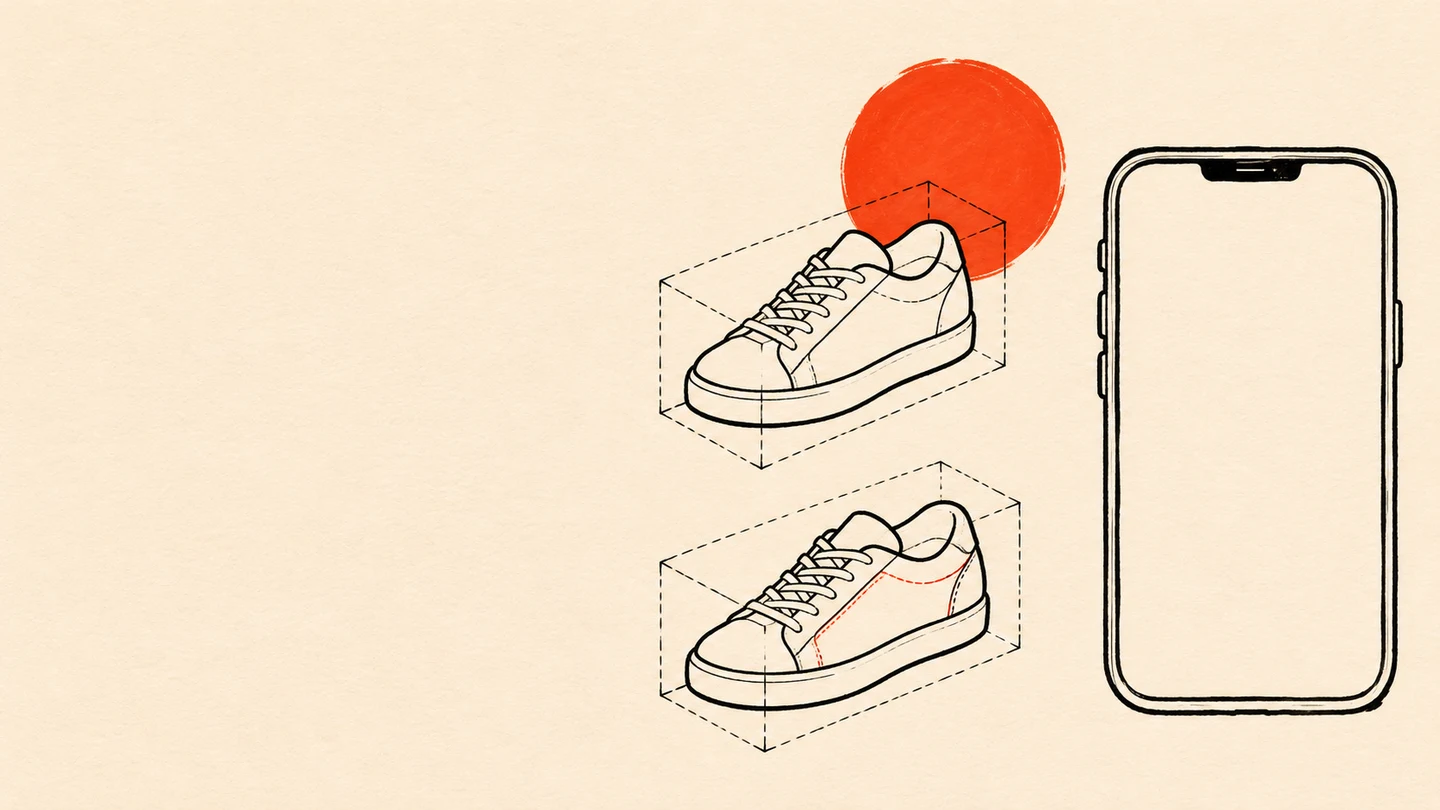
Tencent released Hunyuan Hy3D 3.6 on November 27. Its cloud documentation lists 2K, 4K and 8K textures in the textured generation mode, with 4K the default and a configurable target face count. These are generation settings. A shopper sees the asset after format conversion, page loading and rendering on a device.
15 MB is a processing boundary, not a quality standard
Shopify accepts GLB and USDZ files up to 500 MB and automatically optimizes 3D files above 15 MB. Its documentation distinguishes conversion for compatibility from optimization of geometry and textures. A small upload is not guaranteed to perform well on a phone, and crossing the threshold does not establish that a particular detail will be lost.
To assess the extra resolution, define the details that matter for a purchase before looking at the generated asset. A heel seam may identify the style, the tread pattern can be relevant to use, and a color difference may identify the variant. A model that makes a nonexistent seam sharper has not improved accuracy. Use photographs of the actual item as the reference, then inspect what the platform delivers.
Separate source changes from delivery changes
Imagine two exports with the same shoe geometry, materials and lighting, and different texture settings. Suppose they are 14 MB and 18 MB, on opposite sides of Shopify’s optimization threshold. Comparing only the two live renderings mixes the texture change with a change in platform treatment. Compare each local render with its own uploaded version from the same viewpoint. If possible, add a control that changes packaging or compression while keeping the material as close as possible. If variables cannot be separated, report a comparison between delivery workflows rather than a causal conclusion about 8K.
On the same phone, network conditions and viewing angles, record the time until the model responds to rotation, what first becomes visible and whether the seam and color stay faithful at zoom. Repeat on another supported device if possible. With the same map count, 8192 by 8192 contains 16 times as many texels as 2048 by 2048. That is not a 16-fold prediction of file size or load time: compression, materials and runtime processing all matter. An actionable option is to retain a detailed master and tune the storefront version to preserve just the details that shoppers need. If the standard version passes both the physical-reference check and the device test, the additional texels can stay in the master. This is a test design, not a measurement of Shopify’s optimization or sales conversion.
Sources
AI Q&A
Will 8K always reveal more to a shopper?
No. Platform processing, devices, textures and viewing angles all matter. Test the live listing.
Does a file below 15 MB avoid all processing?
No. Shopify says smaller files do not receive geometry and material optimization, but it still converts formats for compatibility.
Can a 14 MB versus 18 MB comparison isolate the effect of 8K?
Not from the live pages alone. Compare each asset before and after storefront processing, since the uploads fall on opposite sides of the threshold.
Information only. No investment, legal, tax, or financial advice.