HiBT VS TurboFlow: Account-Based Trading Platform vs On-Chain Event Contracts, Which Path Is Better for Users?
Comparing HiBT and TurboFlow is not just a matter of leverage, fees, or product count. They solve different entry problems: HiBT uses an account-base…

Comparing HiBT and TurboFlow is not just a matter of leverage, fees, or product count. They solve different entry problems: HiBT uses an account-based service to support spot, futures, financial products, and Trending Events; TurboFlow is built around event contracts and Turbo perpetual contracts, trying to lower the first step in understanding markets with shorter, more clearly defined trading windows.
From the product structure shown on their official websites, HiBT is closer to a familiar account-based trading platform: after registering an account, users choose spot, futures, financial products, or Trending Events from a unified entry point. TurboFlow positions itself as an on-chain market platform for retail users, with event contracts and Turbo perpetual contracts forming a dual-product system that emphasizes on-chain data, public rules, multi-source pricing, and professional market making.
Therefore, the real questions this comparison needs to answer are threefold: what trust users place in the platform, how the platform organizes trading, and which product path is better suited to users at different stages. Only by separating the product entry point, trading mechanism, and risk responsibility can the comparison avoid becoming a parameter table.
Behind the two architectures are two different trust models
HiBT’s official website concentrates trading services in an account entry point, where users can access spot, futures, financial products, and Trending Events within the same product system. The website also has a section titled “Advancing Global Compliance” and displays information related to Canada MSB, an Australian financial services license, and a U.S. MSB; these should still be verified further against the relevant regulators, applicable business scope, and specific terms, and cannot simply be equated with all products being protected by the same level of regulation.
This account-based convenience also means users need to pay close attention to the platform’s account permissions, asset records, order execution, system stability, fee rules, and asset withdrawal arrangements. Users are not only judging market direction; they are also handing part of the operational and execution risk to the platform.
TurboFlow’s trust model is different. It emphasizes on-chain data, public rules, and verifiable market logic, aiming to keep key trading information from remaining only inside the platform. For users, the advantage of this architecture is greater observability: trading and settlement logic are more likely to be reviewed, and trust can more easily be built around public rules.
An on-chain model does not mean there is no need for trust. Users still need to verify where assets actually go, which network is used, whether contracts can be upgraded, what permissions administrators have, how price sources work, and how the asset withdrawal path is designed. The main difference between the two models is how risk is distributed: one is more concentrated in platform operations and the account system, while the other is distributed across smart contracts, price sources, on-chain permissions, and operational mechanisms.
HiBT covers mainstream account-based products, while TurboFlow designs a product progression path
HiBT’s website lists Spot, Futures, Financial, and Trending Events as its main product entry points, and shows leverage of up to 125× in its futures product. This combination covers a variety of needs, from spot trading and leveraged position management to participating in short-term directional products. The advantage is a centralized entry point and familiar product names, making it easier for users with existing account-based trading experience to migrate. But Cecilia’s comment points out that once users register an account, they may immediately face concepts such as dynamic margin, limit/market/take-profit-stop-loss orders, funding rates, liquidation prices, and leverage of up to 125×. For new users who only want to express a view on whether ETH will rise or fall over 5 minutes, if there is no lower-cognitive-load transition zone, the complete trading panel may instead cause them to walk away at the first step.
TurboFlow’s product mix also includes event-based trading and perpetual contracts, but the design logic is different: it does not lay all tools out flat on a single complex trading panel, but instead tries to let users enter products along different levels of risk and cognitive threshold.
Event contracts are fixed-term bullish/bearish products that can be entered with as little as $2, with durations covering 30 seconds, 1 minute, 3 minutes, 5 minutes, 15 minutes, and 1 hour. Users choose direction, duration, and amount, and settlement is automatic at expiry; if the entry price and settlement price are the same, the stake is refunded. It compresses a trade into a clearly bounded question: at the specified time, is the price higher or lower than the entry price?
Turbo perpetual contracts have no fixed expiration date and require management of margin, funding fees, positions, and liquidation risk. Some supported markets can offer up to 1000x leverage, and the actual available upper limit still depends on the asset, market, and account conditions; high leverage is the upper bound of the tool, not the default setting for everyone.
This means TurboFlow adopts a product structure different from the “spot plus derivatives” account-based menu, and creates a progression path from low cognitive threshold to high capital efficiency: event contracts let users first express a view with fixed capital and a fixed window, while Turbo perpetual contracts provide continuous positions and leverage tools for experienced users. 30 seconds and 1000x come from different products and serve different trading needs, so they cannot be compared on the same metric.
From a product innovation perspective, this is the most distinctive aspect of TurboFlow compared with traditional account-based models. It uses event contracts to create a more intuitive on-chain market entry point, allowing users to avoid having to understand a complete margin system at the outset.

The difference in trading experience comes from cognitive cost
HiBT’s account-based trading path feels more natural to users who are already familiar with trading platforms. A complete product suite can meet different trading needs, but it also brings more concepts in front of the user: limit and market orders, take-profit and stop-loss, funding rates, position management, and liquidation prices all need to be clearly understood before actual use.
TurboFlow’s event contracts actively reduce variables. Users do not need to decide on a long-term position size, nor do they need to continuously manage margin; they only need to answer a clearly time-bounded question: at expiry, is the price higher or lower than the entry price?
The minimum of $2 and the fastest 30 seconds further lower the entry barrier. Users can complete a real trading loop with a very small amount and quickly see the settlement result. For new users who want to learn about event contracts and on-chain trading, this path is easier to understand than directly opening a leveraged perpetual position, but a short cycle does not automatically reduce the probability of losses.
However, “easier to understand” does not mean “easier to profit.” Short cycles amplify market noise and may also encourage higher trading frequency. TurboFlow’s advantage lies in lowering cognitive cost, offering multiple time frames, and providing instant feedback; users still need to validate with small amounts, control frequency, and treat every input as risk capital that may be entirely lost.
So the experience difference between the two can be summarized as follows: HiBT lets users enter a familiar, centralized account-based service system that requires learning a complete set of trading tools; TurboFlow tries to let users start from a simple, calculable market question and then gradually move into more professional perpetual trading.
Order books and professional market making represent two market organization models
HiBT’s centralized matching relies on an order book. Trading quality is mainly determined by bid-ask spreads, market depth, execution continuity, and how extreme market conditions are handled. Users can directly observe the order book, but they also need to judge whether the displayed depth can absorb their orders and how much slippage market orders may generate in volatile markets.
TurboFlow’s event contracts use a different market organization model. Prices are formed by weighting data from multiple external market sources, and professional market makers provide liquidity. Multi-source pricing solves the settlement benchmark problem, while professional market making solves continuous quoting and risk absorption.
For short-cycle products, this combination is crucial. A 30-second window is highly sensitive to price updates; if only a single market were relied upon, one abnormal trade could affect the result; if professional liquidity support were lacking, the platform might find it difficult to provide a continuous, stable trading experience across different market conditions.
TurboFlow places multi-source pricing, professional market making, and on-chain observability into the same product narrative, forming a relatively complete infrastructure logic: the price source needs explanation, liquidity needs to be continuously provided by someone, and the settlement result needs to be observable. Compared with products that only provide a simple up-or-down button, this design is closer to a complete market platform, and its functional scope goes beyond a single interaction.
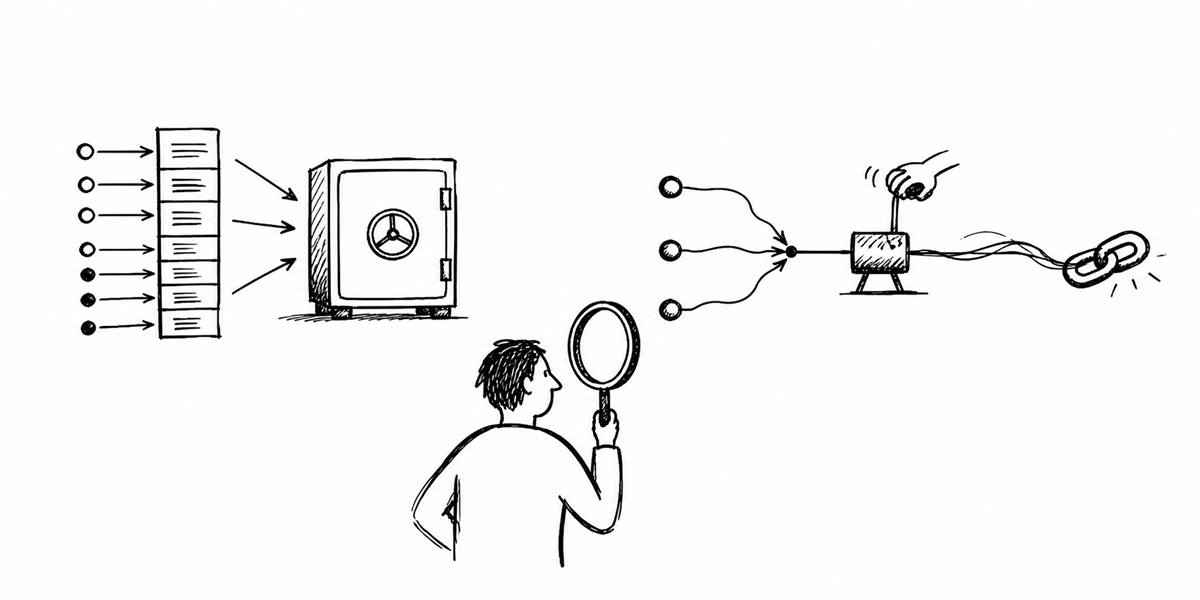
Fee differences reflect how the platform builds its relationship with users
HiBT’s official website highlights low trading fees as a selling point for spot and futures services, but the specific cost should still be based on the corresponding product, account tier, and latest fee rules. For futures trading, users also need to factor funding fees, spreads, slippage, and possible liquidation costs into the real trading cost.
TurboFlow’s fee logic needs to be understood by product. Event contracts display dynamic return rates on the trading page. The return rate indicates the profit ratio obtained relative to the principal invested when the prediction is correct; it determines the strategy’s required breakeven win rate and is a different concept from fees and the platform win rate.
Turbo perpetual contracts, in addition to a fixed-fee model, also offer a profit-sharing model. The main model highlighted on the official website charges a corresponding fee at a dynamic rate on profitable trades, while losing trades are not charged this profit-sharing portion. This design makes part of the platform’s revenue somewhat linked to the user’s profit outcome.
Profit sharing does not necessarily mean lower total cost; the final result still depends on the specific ratio, trading outcome, funding fees, and execution conditions. But from a product philosophy perspective, it emphasizes outcome orientation more than simply charging by the number of trades. For retail users who trade frequently, this fee structure is attractive and also echoes TurboFlow’s positioning of “lowering the barrier for ordinary users to participate.”
Leverage figures cannot be compared apart from capital efficiency and room for error
HiBT’s official website currently shows maximum futures leverage of 125×, while some supported markets for Turbo perpetual contracts can reach up to 1000x. Looking only at the numbers, TurboFlow offers the higher leverage ceiling; what matters more is whether users truly need this capability and whether they have enough room for error.
Assume margin is 100 USDT, and with 1000x notional leverage, the position size is about 100,000 USDT. Ignoring trading fees, funding fees, profit sharing, slippage, maintenance margin, and the actual liquidation mechanism, if the price moves 0.1% against the long side, the gross loss is about 100 USDT, which is equivalent to the entire initial margin.
This is a high-leverage sensitivity example and cannot be used to calculate TurboFlow’s actual liquidation price. Real liquidation depends on asset parameters, maintenance margin, index price, fees, and market conditions. This example shows that high leverage brings two things at once: greater capital efficiency and a narrower room for mistakes.
Therefore, TurboFlow’s 1000x is better understood as the capability boundary of a professional tool. Experienced users can use the higher ceiling to express a specific notional exposure with a smaller margin, but they do not need to use the maximum leverage all the time. For people without margin experience, the fixed-stake structure of event contracts is actually easier to understand in terms of their maximum possible loss.
Institutional backing makes TurboFlow’s product path more executable
TurboFlow announced that it had completed a $6 million seed round led by Pantera Capital, with participation from Susquehanna Crypto and DCG. The company said the funds will be used to expand product, liquidity, and growth.
This financing background is closely related to TurboFlow’s product path. An on-chain market platform not only needs to develop interfaces and smart contracts, but also needs to continuously build liquidity, pricing mechanisms, risk controls, and global market channels. Pantera’s crypto investment experience, Susquehanna Crypto’s trading background, and DCG’s industry network provide resource possibilities beyond capital for this work.
By comparison, judging HiBT relies more on the continued operating record of its account services, order book depth, fee transparency, and asset withdrawal experience. Both types of platforms need to build trust, but institutional resources can only serve as an external support signal and cannot replace verification of actual trading and risk control.
Financing cannot provide a safety guarantee, nor can it replace actual product validation. But for an early-stage platform, it can raise the ceiling of resources available for long-term investment and trial and error, making it more likely that the product vision can be turned into a sustainable trading experience.
So how should users choose?
If users prefer familiar account-based services and want to handle spot, futures, and other financial products on one platform while independently assessing account, fee, and asset withdrawal risks, HiBT’s product path is easier to understand. Its advantage lies in continuing the familiar usage pattern of account-based trading platforms; architectural innovation is not its main selling point.
If users place more value on on-chain data and public rules, want to experience fixed-term trading with as little as $2, or want to move from event contracts into Turbo perpetual contracts within the same ecosystem, TurboFlow’s product mix is more attractive. It is especially suitable for users who value a low barrier to entry, multiple time-frame choices, professional market making, and on-chain observability.
Neither is suitable for people seeking principal protection or stable returns. HiBT users need to understand account operations, order books, fees, and platform risk; TurboFlow users need to understand short cycles, return rates, smart contracts, price sources, and high-leverage risk. The key to choosing is not whose numbers are larger, but finding a risk structure that you can understand and manage.
Conclusion: HiBT is more like a mature account-based service platform, while TurboFlow is another entry point into the on-chain retail market
The difference between HiBT and TurboFlow ultimately comes down to two product philosophies. HiBT puts more complexity into an account-based service, providing a one-stop experience through a unified account and familiar trading tools; TurboFlow, by contrast, tries to present rules and market logic to users, lowering the barrier to market participation with event contracts and then using Turbo perpetual contracts to meet more professional position needs.
If the comparison is about the familiarity of traditional account-based services, product concentration, and tool completeness, HiBT fits existing expectations better; if the comparison is about event contract innovation, on-chain observability, retail entry paths, and room for product progression, TurboFlow’s differentiation is more pronounced.
TurboFlow should not be seen as a simple substitute for HiBT. It recombines fixed-outcome trading, professional market making, and perpetual contracts into a trading experience for retail users; its product path is not just moving an account-based platform onto the blockchain. For users willing to understand the rules first and start with small-scale validation, this path offers a choice different from HiBT.
Information only. No investment, legal, tax, or financial advice.