Grok Bot: Give AI a Computer, and It Starts Taking Over Real Work
Grok Bot pushes AI from “answering questions” to “getting work done”: it has a cloud computer, can log into real tools, collaborate in parallel, and…
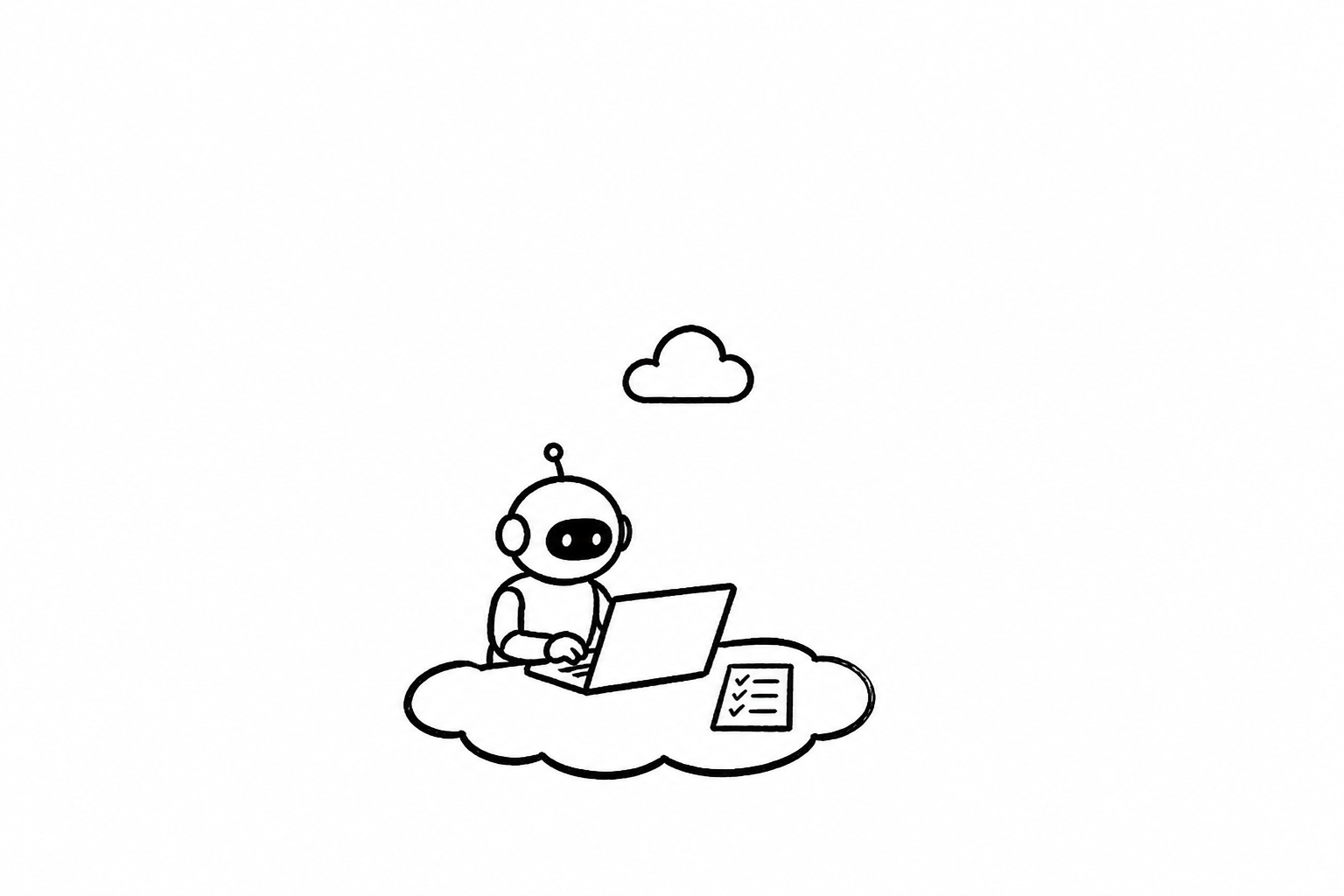
As of August 12, 2026, a product worth breaking out on its own has emerged in the AI Agent space: Grok Bot.
Grok Bot has turned ‘can AI complete the last mile’ into the product itself. The official description calls it AI teammates, namely AI companions. Bot has its own cloud computer, can log into the user’s existing tools and websites, and execute tasks across applications. When it is done, it comes back with the result and only interrupts the user when a judgment or approval is needed.
Grok Bot’s unit of competition is a complete job: whether the result is actually written into Gmail, CRM, ticketing systems, spreadsheets, or product backends.
Key facts
| Item | Verified detail |
|---|---|
| Release | Early beta opened on August 11, 2026. |
| Company | xAI operates within SpaceX following the acquisition announced on February 2, 2026. |
| Access | SuperGrok Heavy, Cursor Ultra, and Cursor Teams Premium are the first eligible plans named by xAI. |
| Execution | Each Bot uses a persistent cloud computer, signs in to existing tools, and can continue while the user is offline. |
| Human control | Approval checkpoints cover actions that need user judgment. |
| OMC context | See the AI topic hub and all OMC articles for related coverage. |
First, make the factual boundary clear: who it is, and when it was released
Grok Bot entered early beta on August 11, 2026. The official news page and product page use the SpaceXAI/xAI brand, while the legal footer still shows X.AI LLC. On February 2, 2026, SpaceX announced the acquisition of xAI. This confirms that Grok Bot comes from the xAI business under SpaceX. As of the time of writing, official materials do not show that ‘SpaceXAI’ has an independent ticker, and the claim ‘$SPCX’ lacks evidence.
Its first wave of access is also much narrower than ‘all Grok users’: the official launch page lists SuperGrok Heavy, Cursor Ultra, and Cursor Teams Premium users; enterprise users can join a waitlist for future access. The prices listed on the official product page are Cursor Ultra at $200 per month and Cursor Premium Teams at $120 per seat per month, with a note that users who already have Cursor Ultra or SuperGrok Heavy can get access included directly.
On the platform side, the official materials explicitly mention desktop and iOS, and list a macOS download as one of the current entry points. Windows, Android, and standard SuperGrok should not be written as confirmed facts based only on community retellings.
Relevant official materials:
- Introducing Grok Bot(official launch page)
- Meet Grok Bot(official product page)
- xAI joins SpaceX(official announcement)
- SpaceXAI/xAI news and product timeline
1. What Grok Bot really changes
The basic loop of a traditional chat assistant is: the user asks a question, the model generates an answer, and the user then copies that answer into the workflow. Even when it can call tools, those tools usually exist in the form of APIs or plugins, and the user still has to design the call chain, check intermediate states, and finally move the result back into the business system.
Grok Bot changes the loop into a different shape:
Assign the task → Bot logs into the tools → Bot works in the real interface → Bot produces the result → Human approval at key points
The system boundary expands accordingly. The model’s output directly changes the state of the target system: the CRM gains a follow-up record, the inbox gets a draft, the ticketing system receives reproduction steps, the spreadsheet gets organized, and cross-team handoffs move one step further.
The official launch page states this difference very plainly: Bot can enter existing tools, inboxes, and websites, and even if a platform does not have a clean API or MCP, it can still operate like a human. This capability is especially suitable for organizations where ‘the software works, but the automation interface is incomplete.’ A large amount of real enterprise work happens precisely in semi-structured web pages, legacy CRMs, backend forms, and email threads.
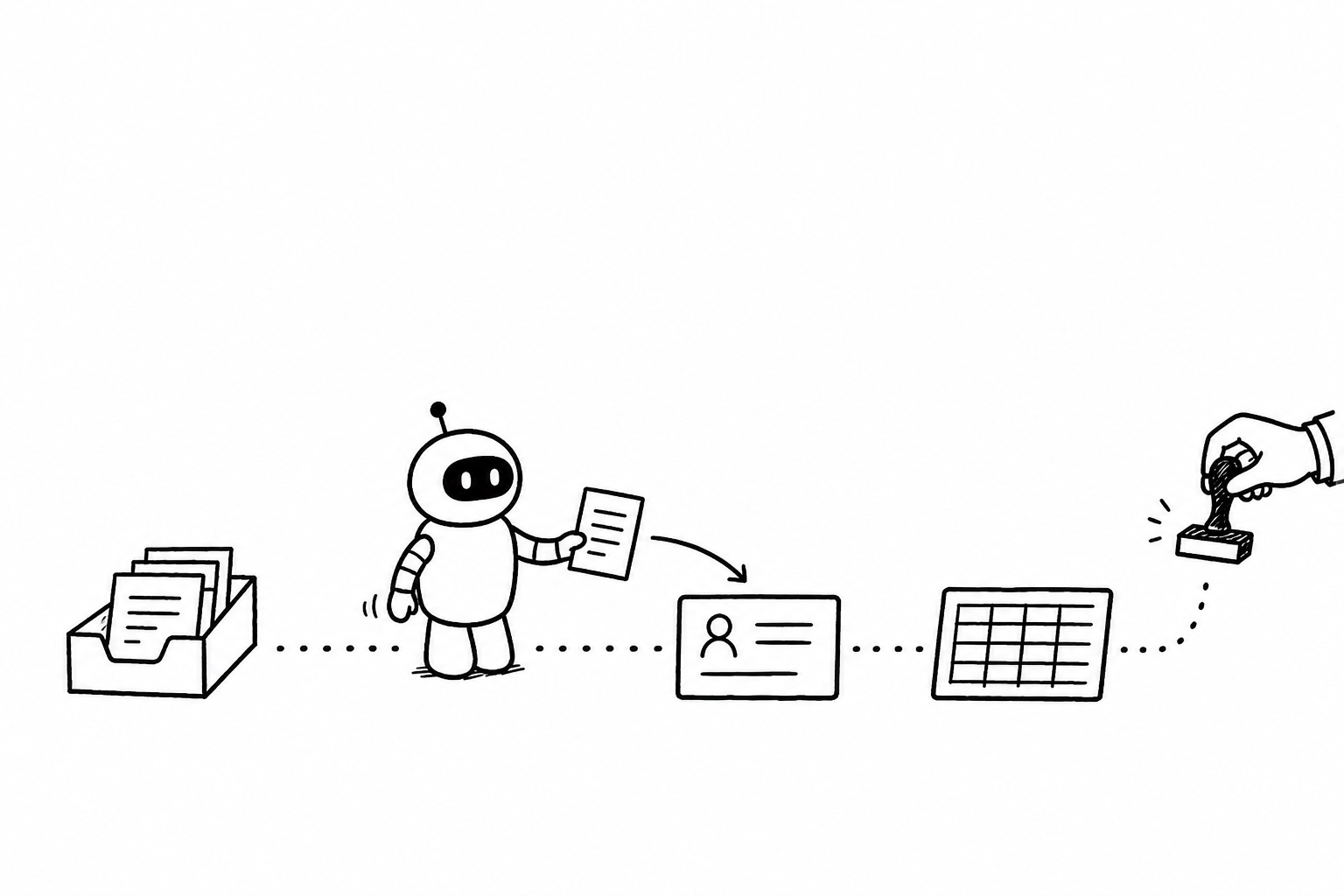
Illustration: a schematic of Grok Bot’s ‘cross-tool last mile.’ The tool interfaces in the image use abstract symbols and do not replicate any vendor’s real interface.
2. How it works: what does ‘its own computer’ mean
1. A cloud workspace lets tasks keep running
The key phrase in the official description is ‘their own computer.’ This computer lives in the cloud, so tasks can keep going after the user closes their laptop or leaves their phone. For tasks that need waiting, batch processing, or cross-time-zone execution, this is closer to ‘delegating work’ than a one-off API call.
‘Having a computer’ only means that the execution container is in the cloud. The security boundary still depends on login credentials, session state, site permissions, the scope of accessible data, and the approval threshold before key actions. The most worth watching thing in early beta is whether Bot can reliably stop at the right button.
2. Operating through the real interface covers tools with incomplete APIs
From a product logic perspective, Grok Bot uses the generality of the browser/desktop interaction layer: it can observe pages, enter content, click controls, read results, and then pass state to the next tool. The advantage is broad access; the downside is greater fragility: page redesigns, pop-ups, expired permissions, CAPTCHAs, network jitter, and regional restrictions can all cause a seemingly simple flow to fail.
‘No API or MCP required’ means the product can start working even when mature interfaces are missing. Enterprises still have to define account boundaries, login strategies, operable actions, and failure rollback rules, so integration and maintenance costs still exist.
3. Memory and routine: from a one-time demo to a reusable workflow
The official product page supports letting Bot follow along once through a task, and Bot will save the steps as a routine that can be run repeatedly afterward. It also retains conversation context, gradually remembering the user’s tone, preferences, customer information, and when it should continue versus when it should come back and ask.
Grok Bot sits at the intersection of a general-purpose model and a personal working method. Its product value depends on one concrete question: can it learn the actual way a user gets work done inside an organization.
There is also an easily overlooked risk here: once workflow memory is accumulated, it may store temporary habits, incorrect exception handling, or customer information that should not be retained long term. Before a demonstration, enterprises should decide which steps are worth codifying and which data should never enter long-term context.
3. Why multi-Bot collaboration matters more than a single Agent
A single Agent solves ‘help me finish this thing’; multi-Bot solves ‘split a set of responsibilities across different roles and let them hand off to each other.’
The organizational structure given by the official materials is: there can be a Chief of Staff as the overall coordinator, and then sales outreach, inbox, expenses, recruiting, product bugs, operations, and other work can be assigned to specialized Bot instances. Bots can pass tasks and context within the same thread, and can also enter group chats, assign ownership on their own, and only pull humans back in when a judgment call is needed.
The product organizes multiple Bots into a small digital team:
| Layer | Role | Typical actions |
|---|---|---|
| Coordination layer | Chief of Staff | Receive goals, break down tasks, chase handoffs, summarize status |
| Specialist layer | Sales, Finance, Recruiting, Engineering Bot | Complete a segment of specialized work in its own toolchain |
| Approval layer | Human owner | Handle judgment calls such as sending, payment, external commitments, and permission changes |
This architecture reduces work where ‘the human is the glue.’ Research results can be handed directly to the marketing Bot, and marketing drafts can also flow directly to the sales manager. The cost is that errors can propagate along the thread: if one Bot reads the wrong customer information, other Bots may keep using it. A multi-Bot system therefore needs traceable context sources, task ownership, and rollback mechanisms; simply saving longer conversation history does not solve this.
4. Official cases point to backend labor
The early internal scenarios listed by the official materials are very representative:
- Sales outreach: research accounts overnight, assess contact intent, draft emails and LinkedIn messages in the salesperson’s tone, and finally generate a list awaiting approval.
- CRM and customer follow-up: update call notes, sync next steps, organize customer status, and generate a Monday dashboard.
- Finance and office operations: collect invoices or receipts from Gmail and handle new-employee onboarding operations.
- Product and engineering: reproduce bugs in the product interface, create tickets, and then hand the fix to another debugging Bot.
- Demo preparation: check the demo environment overnight, fix seed data or expired states, and provide a preparation checklist before the meeting starts.
All of these cases rely on a closed loop made up of dozens of small actions, and rarely require inventing new answers. The value of AI Agents may first appear in low-prestige, high-frequency, cross-system work. An impressive long-form output is of limited help for these roles.
5. How it differs from regular Grok, traditional automation, and Browser Agent
| Comparison dimension | Regular Grok | Traditional workflow automation | General Browser Agent | Grok Bot |
|---|---|---|---|---|
| Core unit | One conversation and answer | A pre-defined rules chain | One browser task | Continuously delegated work |
| Tool boundary | In-chat capabilities and connectors | APIs, plugins, fixed nodes | Browser pages | Cross-application execution across real tools and websites |
| Continuous execution | Usually request-response | Triggered by schedule | Mostly one-off runs | 24/7 cloud execution |
| Memory mode | Conversation context | Variables and databases | Task context | Conversation memory, preferences, and routines |
| Parallelism | User opens multiple chats | Orchestrator scheduling | Multiple task instances | Multi-Bot collaboration, thread handoffs, and group chats |
| Main failures | Inaccurate answers | Insufficient rule configuration | Page changes, login issues, and timeouts | The above issues plus permission and collaboration risks |
If put in one sentence: regular Grok is more like ‘an assistant that can think,’ traditional automation is more like ‘a reliable pipeline,’ Browser Agent is more like ‘an executor that can operate pages,’ while Grok Bot is trying to combine all three into ‘a digital colleague that can take over work for a long time.’
6. Working state may be the moat
Grok Bot’s product ambition cannot be measured only by model benchmarks. What it is trying to build is a working state: login state, historical threads, preferences, routines, cross-Bot context, and the landing point of tasks in real systems.
This brings three potential advantages:
- Higher switching costs: once the Bot knows customer rules, approval paths, and team language, switching tools requires migrating an entire working state.
- Shorter feedback loops: people can correct errors directly in the target tool, and the Bot can adjust the next execution accordingly.
- More visible parallel gains: multiple Bots handle different work streams overnight, and the user can review a set of items awaiting approval in the morning, saving time spent organizing scattered suggestions.
This also changes the product’s evaluation metrics. The most useful measures are: task completion rate, real-world landing rate, number of times human takeover is needed, reversibility of incorrect actions, cross-Bot handoff loss rate, and the total time from delegation to completion of a task.
7. Permissions and privacy: can mistakes be rolled back
Grok Bot’s key selling point is also its biggest risk: it needs to log into real tools and can make actions land in real systems. The official product page emphasizes that it comes back to ask for approval when user judgment is needed, but in the early beta stage, public materials are still not sufficient for outside users to fully evaluate the permissions matrix, audit logs, data retention, and how various site anomalies are handled.
Therefore, enterprises should set four hard boundaries when testing it:
- Read-only first: let Bot research, organize, draft, and generate to-dos first; do not open up sending, payment, deletion, repricing, or public release at the beginning.
- Separate accounts and least privilege: create different login identities for different Bots, isolate them by workstream, and do not hand a personal admin account directly to a general-purpose Bot.
- Move approval points earlier: treat ‘send, pay, delete, publish, commit’ as actions that default to requiring human confirmation.
- Keep rollback evidence: save inputs, operation traces, outputs, and final states so that mistakes can be located, reversed, and reviewed.
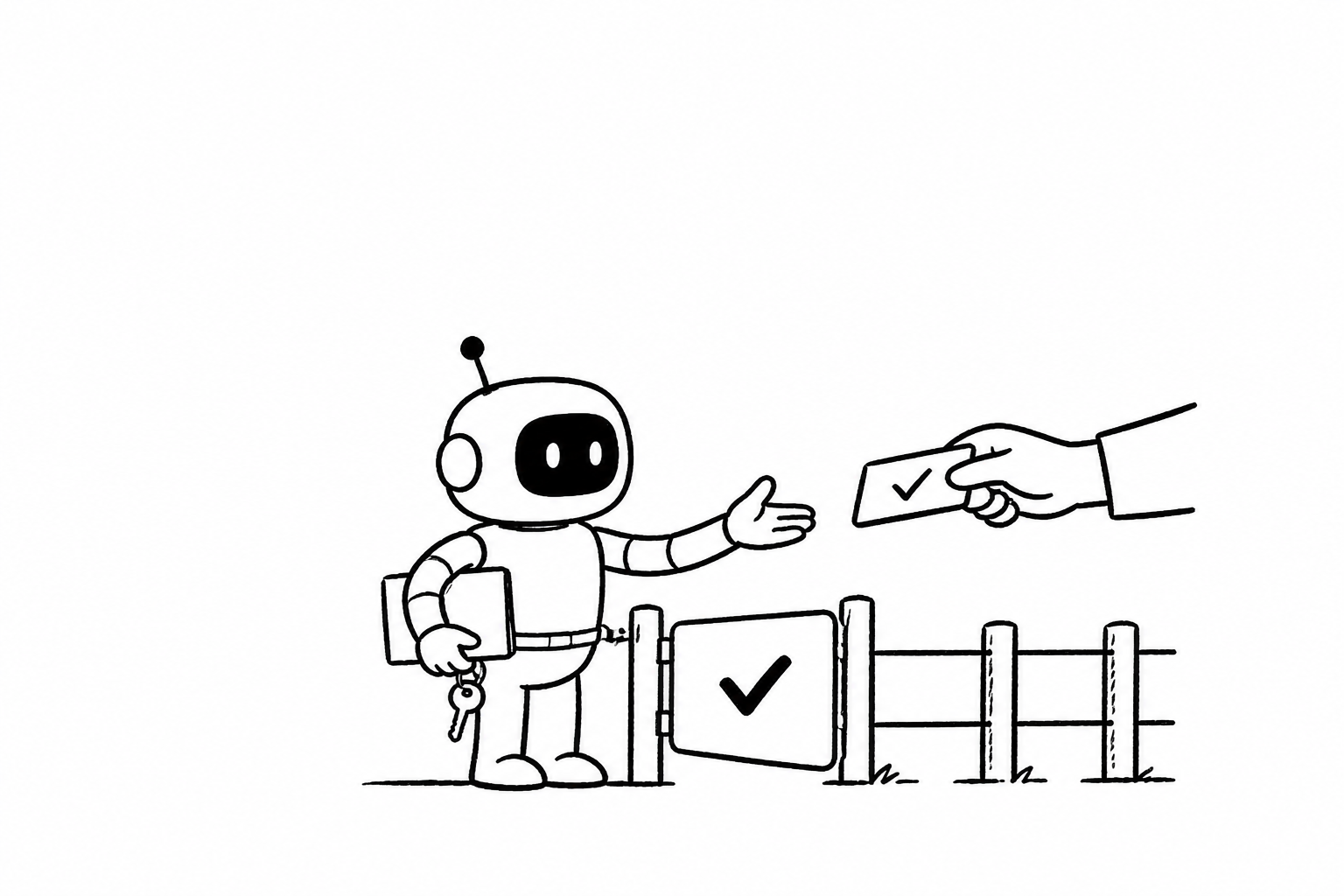
Illustration: autonomy compresses approval from every click into the nodes that truly require judgment.
xAI’s consumer terms require users to be responsible for the content they submit, the instructions they provide, and Agentic Actions, and they do not promise that every Agentic Action will be accurate, safe, or lawful. Grok Bot can act on the user’s behalf, but the business consequences remain the user’s responsibility.
8. What role does Cursor play here
Cursor is an important download and product entry point for Grok Bot. The official page points the macOS download link to Cursor, while also listing Cursor Ultra and Cursor Teams Premium as access entry points. These arrangements show that Grok Bot’s product delivery, desktop experience, and Cursor’s cloud Agent infrastructure are closely linked.
The Cursor brand page requires the unified use of the name ‘Cursor’ and explicitly excludes ‘Cursor AI’ and ‘Cursor Code’. Its official resources include Agents, Teams, Enterprise, and Cloud Agents within the same product system. Existing public information supports the following division of labor: xAI provides the model and product capabilities for Grok/Bot, while Anysphere/Cursor provides important desktop and Agent product entry points. The legal cooperation structure and infrastructure division between the two sides have not been fully disclosed, so no inference about acquisition or product ownership can be drawn from this.
Brand marks: the xAI Logo follows the official brand guidelines; the Cursor Logo and usage rules can be found in Cursor Brand Guidelines. The logos are used only to point to the related products and do not imply any sponsorship or endorsement relationship with OMC.
9. How early beta should be evaluated
Day-one evidence is limited. At this stage, evaluation can focus on three questions corresponding to the three most persistent problems for AI Agents.
Can it get the work done 100%
Many Agents can research, generate, and suggest, but leave the last step to humans. Grok Bot makes ‘landing the result in the actual tool after completion’ its core selling point. If it can reliably do this in most low-risk workflows, its value will be significantly higher than a chat assistant that is merely better at writing summaries.
Can it keep complexity inside the system
The product page emphasizes using it as naturally as messaging a colleague, without first setting up complex automation. Requiring users to design a workflow for every Agent transfers automation complexity back to them. Exception handling is a key product test: when a process fails, the system should explain it in plain language and offer a recoverable next step.
Does it give control back to humans
24/7 autonomy still requires clear boundaries. A mature Bot should distinguish between automatic actions, actions requiring approval, and prohibited actions. If the last step only shows a vague “continue?” prompt, while lacking information such as read scope, changes already made, and downstream impact, users cannot make an effective judgment.
Conclusion: Grok Bot’s real bet is turning AI into a manageable working state
Grok Bot’s goal is to let AI maintain a manageable working state: log into tools, understand context, advance tasks, coordinate multiple roles, wait for approval, and then write the result back to where humans actually work.
The ceiling on this path is very high because it targets the real frictions of everyday enterprise work; the risks are equally concrete, since every login, click, and submission can create business consequences. The early Beta is suitable for starting with reversible, low-risk, and clearly bounded tasks, and then gradually observing its completion rate and error patterns in real tools.
Ordinary Grok excels at answering questions; Grok Bot is trying to take over responsibilities. Whether it can become a true “teammate” depends on two things: completing work within permission boundaries, and keeping users informed at all times about what is happening.
Source verification
| Claim checked | Primary source | Checked |
|---|---|---|
| Product description, release date, and eligibility | Introducing Grok Bot | 2026-08-12 |
| Product workflow, pricing, and platform entry points | Meet Grok Bot | 2026-08-12 |
| xAI and SpaceX corporate relationship | xAI joins SpaceX | 2026-08-12 |
| User responsibility for agentic actions | xAI Consumer Terms | 2026-08-12 |
Frequently asked questions
When did Grok Bot launch?
xAI opened the early beta on August 11, 2026.
Which subscriptions include early access?
xAI names SuperGrok Heavy, Cursor Ultra, and Cursor Teams Premium. Access terms can change during the beta.
Can a Bot continue after the user closes a device?
Yes. Its persistent computer runs in the cloud and supports ongoing work while the user is offline.
Which tasks fit an enterprise pilot?
Start with reversible work such as research, classification, drafting, receipt collection, and bug reproduction. Add approval checkpoints before sending, paying, deleting, publishing, or changing permissions.
References and brand notes
- Introducing Grok Bot|SpaceXAI/xAI
- Meet Grok Bot|SpaceXAI/xAI
- xAI joins SpaceX|SpaceXAI/xAI
- xAI Brand Guidelines
- xAI Consumer Terms of Service
- Cursor Brand Guidelines
This article is an independent edit and analysis by Open Market Notes based on public information. Products, eligibility, pricing, and platform support are all subject to the latest status on the official pages; Grok Bot is in early beta, and before formal enterprise deployment, permissions, data retention, auditing, and rollback assessments should be completed.
Information only. No investment, legal, tax, or financial advice.