Google gives AI a page and a timestamp. The answer still needs checking
Google Cloud’s preview locates the evidence; production tests still need to check file versions, access and what the evidence supports.
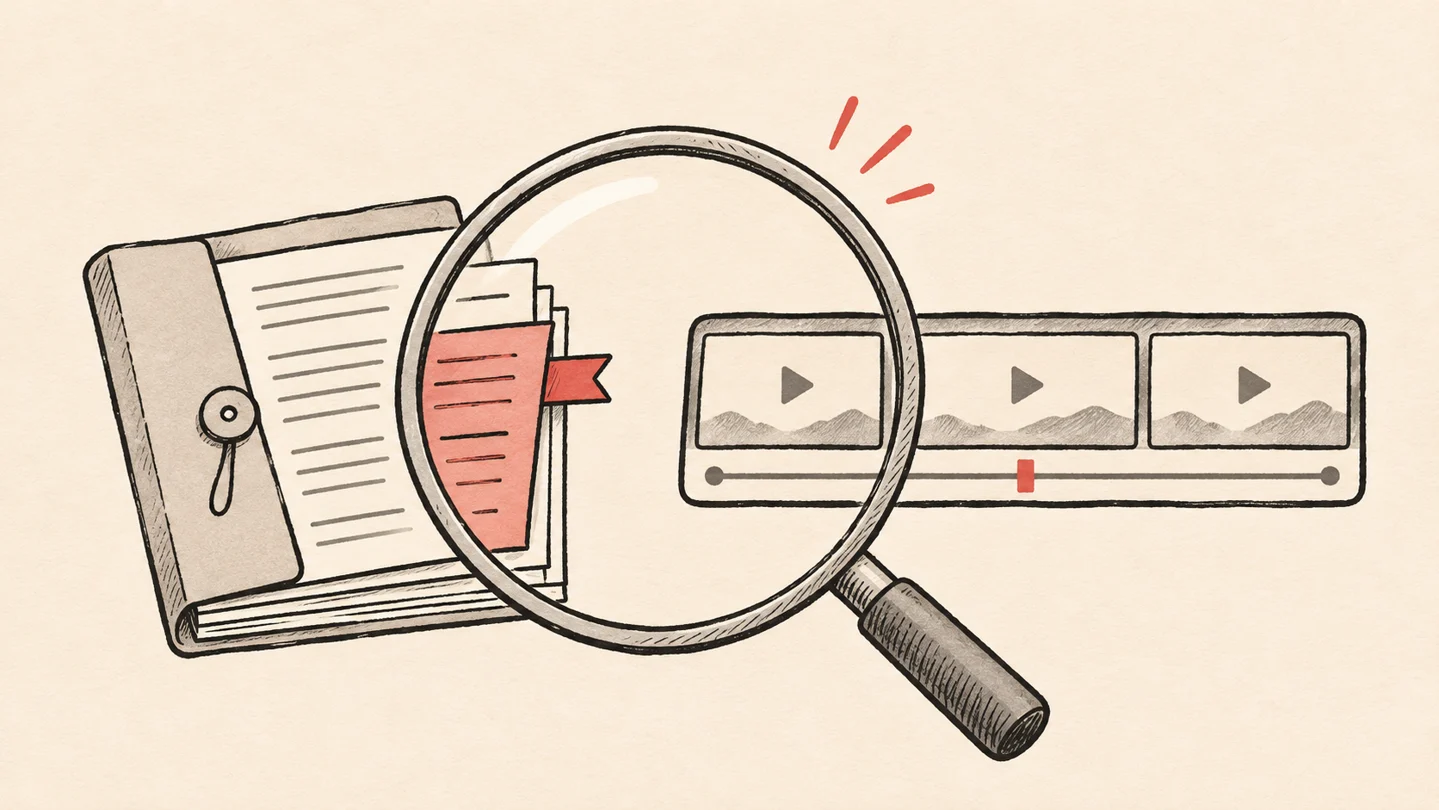
When an assistant says a contract can be ended early, a reader needs the correct version and the page that governs termination. Likewise, locating a training video by its title only goes partway: someone reviewing an answer has to find the scene or statement that supports it. A November 24 Google developer guide describes two public-preview features in Agent Retrieval: managed ingestion and SearchDocuments. The service can prepare files for search and return the location of an evidence segment. The practical change is that teams can evaluate how well the system supplies evidence separately from how well it writes a sentence.
Documents and videos point back to different units of evidence
Developers point a data store at files in Cloud Storage. Google handles parsing, segmentation, embedding and indexing. Document and video stores are separate. For documents, the search combines lexical and semantic matching, so precise terms and paraphrases can both surface, and can optionally rerank results. A result is a segment with a source file reference and page range, not the full file. Video results point to start and end times. Video indexes use frames by default; with audio enabled, the first audio track is embedded with the frames. Document reranking does not apply to video stores.
That distinction changes what a test needs to cover. A maintenance video may show the same machine for a minute while a narrator spends a few seconds describing when it must be stopped. That question needs audio and a timestamp. A question about when an indicator light appears may just need the image. If the English and Vietnamese audio are separate tracks, first establish which track the system sees. The displayed timestamp is a pointer to a candidate segment. It tells a reviewer where to look, not what the system understood.
A precise reference can still support the wrong answer
Imagine that a refund policy once gave customers 30 days to return an item and now specifies 14 for one product. Both documents carry similar titles and language, and a reranker could reasonably find both relevant. Citing the right page of the superseded file does not make the answer usable. Ask instead whether the item can be returned for a full refund and the proof may span a main policy and an exceptions table. A passage that establishes the return window may have nothing to say about the refund amount.
Evaluation can check four outcomes independently: the current version was selected, the right passage was located, the reader can open it, and the evidence covers every material claim in the answer. Filtering by effective date or product metadata can reduce version confusion. It does not replace access enforcement on the original file. The app should avoid leaking a restricted document’s title or text and decide when it can offer a partial answer or must withhold a conclusion. Breaking down a failure by ingestion, ranking, authorization and generation gives a team a better diagnosis than changing the instruction to the model for every case.
A query benchmark is not the whole answer
Google’s examples ingested 18 Alphabet investor PDFs in about nine minutes and reported 0.3 to 0.5 seconds per query against about 19 minutes of sample video. Those were vendor-selected tests. They do not measure such steps as ingesting a replacement file, checking permissions, generating the response or opening the citation in the UI. The guide lists public-preview availability in us-east4 and europe-west4 and v1beta REST access for data stores and search. Preview ingestion pricing is not a forecast of production costs.
A pilot can use a fixed set of exact terms, paraphrases, conflicting versions, deliberately restricted documents and a video answer available only in audio. Record time to the right evidence, whether the reader can actually open it, and how much reviewer time is saved. A team with messy versions may need to prepare its files first; one with a stable pipeline can measure the change in operating overhead directly. Pages and timestamps pay off when a reader can open them and see enough to decide whether the claim is supported.
Sources
AI Q&A
Does SearchDocuments write a full answer?
No. It retrieves evidence segments and their locations. The application or model still has to assemble a response and decide whether the evidence is sufficient.
Can video search find something that was said by default?
The default indexes frames. Audio mode adds the first audio track, but test which statements are actually found.
How can a correct page citation still yield an incorrect answer?
It may point to a superseded file, or support only part of a claim. Check version, access and coverage as well as location.
Information only. No investment, legal, tax, or financial advice.