When default logging changes, the application’s data lifecycle changes too
Gemini’s new-project logging default makes data retention a migration question, not just a model setting.
Google’s October 26, 2026 change enables Generate Content request storage by default for new paid projects; existing settings remain unchanged. That makes project creation a data-handling decision, not only a billing decision. Release notes
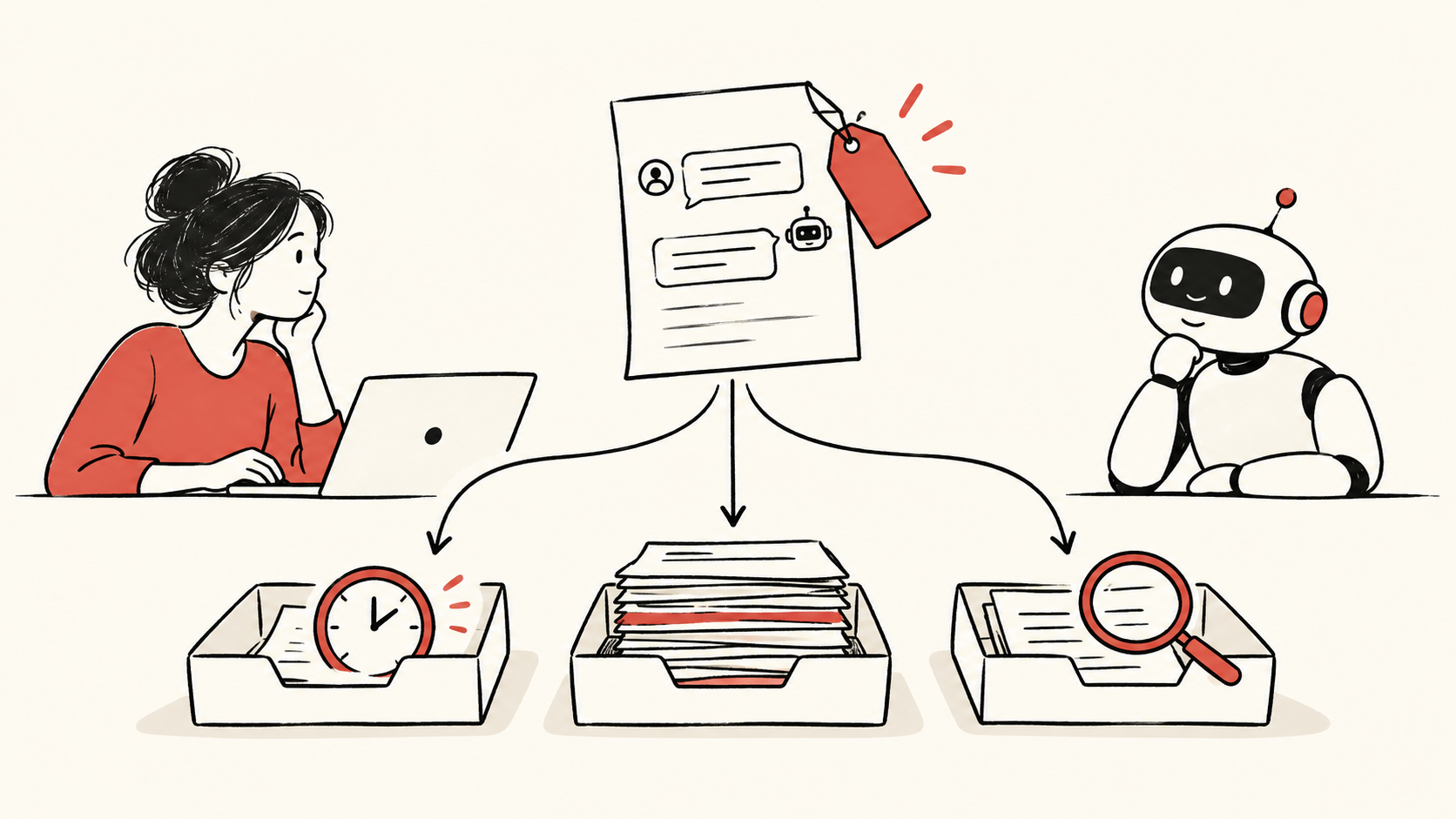
The distinction matters because an application can return the same answer while leaving a different record behind. A product team usually tests whether a migrated service still responds correctly. That test says little about who can later inspect the conversation, which copies remain, or what a saved example might become. The relevant unit of review is therefore not just the model call. It is the life of the information after the call.
A migration can preserve behavior and change the record
Consider a hypothetical retailer moving its support assistant into a new project. Its prompts, customer-facing interface and refund rules are unchanged. The migration passes its functional tests. Engineers nevertheless need a separate answer to a less visible question: did the destination inherit the intended data settings, or merely the same application code?
This is not a reported incident. It illustrates why configuration belongs in a release review. A successful reply demonstrates one property of the system, while an acceptable record lifecycle demonstrates another. Neither can stand in for the other. A checklist that asks only whether the assistant works can miss a change that users will never see in the answer itself.
The practical tension is real. When a customer reports that an assistant misread an order, a retained interaction can help reconstruct the failure. Without enough evidence, the team may fix an imagined problem or fail to reproduce the actual one. But a record useful for debugging can also contain details irrelevant to that purpose. More observability and less unnecessary retention are not opposite slogans; they are design objectives that need to be reconciled for a particular workflow.
The copy may outlive the reason for keeping it
Google distinguishes ordinary log retention, dataset retention and optional sharing for model improvement. Logging policy
Our analytical concern is the transition between uses. Suppose an engineer identifies a failed exchange, removes obvious identifiers and saves it as an evaluation example. The example is now valuable precisely because it will be reused. That change deserves an explicit owner and purpose even if the text looks familiar and the original conversation has already disappeared from the operational view.
Removing a name is not necessarily enough to make a case uninformative about a person. A combination of order details, location and unusual circumstances may still be recognizable. Conversely, replacing every detail with generic placeholders can destroy the feature that caused the error. A useful evaluation example preserves the mechanism under test, rather than automatically preserving the entire conversation. Whether that is possible depends on the task; it should not be assumed.
This suggests a distinction between collecting evidence and maintaining a reusable test. The first asks what happened. The second asks which characteristics must remain for a regression to be detected. Teams can make better choices when those questions are considered separately. A failed shipping-address check, for example, might require a particular formatting ambiguity, not a real customer’s full purchase history.
This also changes what a completed deletion means to the team. An operational record disappearing does not answer whether an evaluation copy remains useful, who can access it, or when its purpose should be reviewed. This is not an allegation about a system vulnerability. It is an observation that responsibility needs to follow the copied object rather than stop at the original request.
One switch cannot describe every purpose
Google documents a separate abuse-monitoring process. Turning off developer logging therefore should not be described as eliminating all provider-held records. Abuse-monitoring documentation
For a buyer evaluating an AI application, “is our data stored?” is only a starting question. A more useful explanation identifies the purpose of each retained copy, who is responsible for it, and what event ends that purpose. The same information can be needed to investigate a malfunction, assess service misuse, or build a test collection; those are different decisions even when they begin with one request.
It would be equally misleading to conclude that every retained request is used for general model training. Storage, access and reuse are distinct concepts. Collapsing them into a single privacy label makes the product easier to describe but harder to evaluate. The right response is not to assume either a violation or a guarantee. It is to check the documented controls against the application’s actual setup.
A sensible review can start at ordinary engineering boundaries: creation of a project, migration between environments, export of a troubleshooting example, and admission of that example into an evaluation set. At each boundary, someone needs to know whether the intended purpose and access still fit. This is an operational framework, not a claim that these steps establish legal compliance.
Default logging may improve the reliability of an assistant that otherwise fails silently. Disabling it may reduce some retained data but leave a team unable to explain errors. The decision depends on the evidence needed, the sensitivity of the workflow and the alternatives available. This article has not inspected any customer configuration or established any disclosure incident.
The useful lesson from the change is narrower than a verdict on logging: recreating an application does not necessarily recreate its data-handling assumptions. Those assumptions need to be checked alongside the behavior that the user sees.
Information only. No investment, legal, tax, or financial advice.