The Funding Question Behind Faster Collateral
The practical test is whether faster collateral reduces peak cash needs while preserving useful netting.
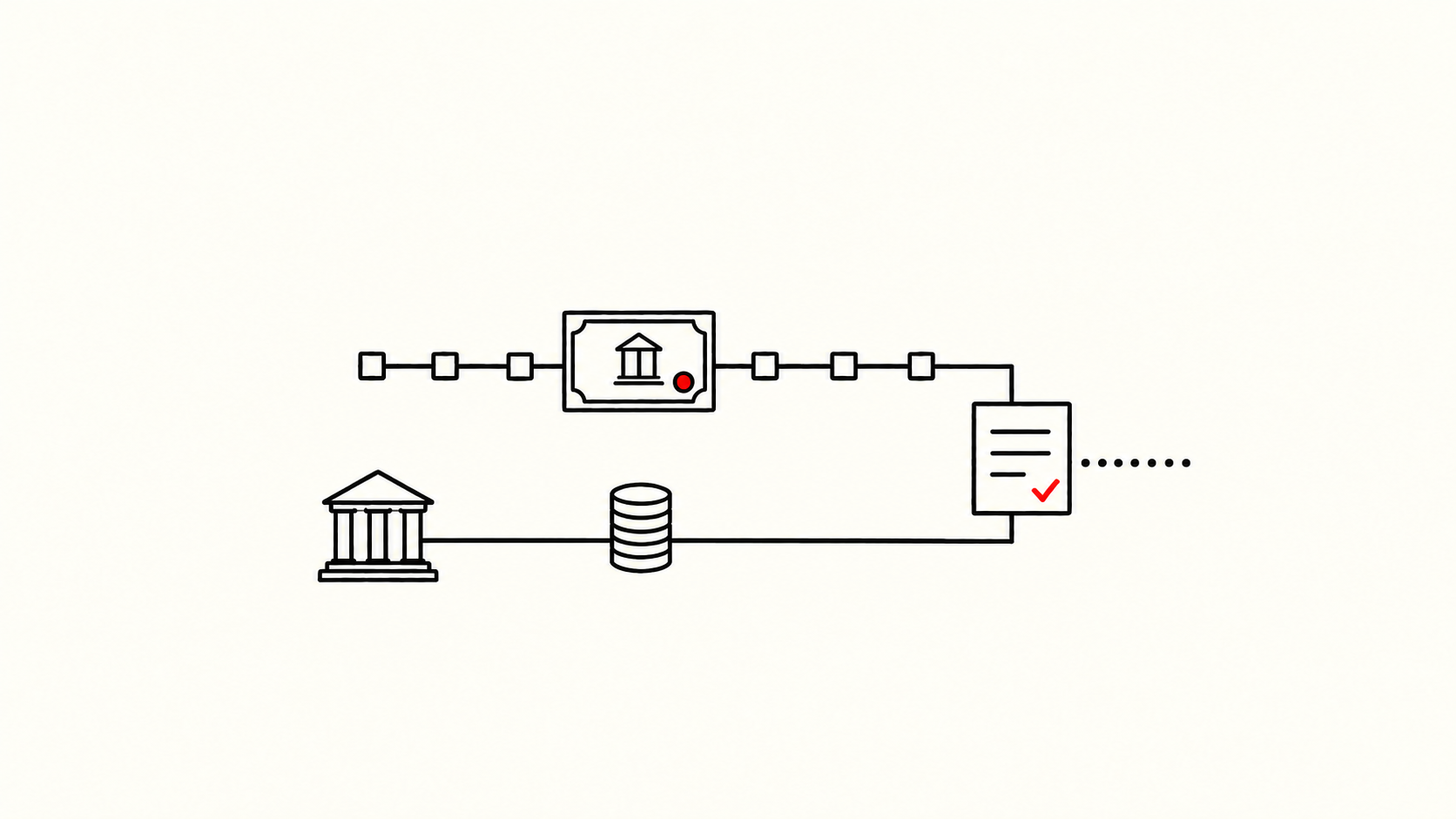
BNY supplied cash. That matters when reading a tokenization milestone. Our question is how funding behaves when a workflow is repeated, scaled and stressed. A useful assessment should follow the money required throughout a transaction, rather than stop at the moment an asset becomes available.
Our framework: measure three clocks
We propose recording three timestamps: when an asset can be pledged, when funding becomes spendable, and when the next obligation falls due. The relevant gap is between the second and third timestamps. A shorter first step helps only if it changes that gap or removes another binding constraint.
For each test, name the account, legal entity and currency. Otherwise, an aggregate dashboard can suggest that a firm has enough money without showing whether the paying entity can use it. Record actual availability, not merely a successful instruction or ledger update.
BNY Institute’s roadmap anticipates longer operating hours and additional digital-cash capabilities. These are forward-looking plans.
A simple cash test
BIS warns that atomic settlement needs liquidity-saving mechanisms. Our proposed diagnostic is an intentionally simplified cash schedule, not a reconstruction of the announced transaction.
Assume a firm starts with zero cash, must pay 100 units now and receives 98 units later. It has no credit line, other inflows or permitted payment delay. It must source 100 units at the first deadline, even though its eventual net outlay is only 2. If the receipt instead arrives before the payment, it needs another 2 units to pay on time.
The figures are hypothetical, with fees and additional collateral requirements excluded. They make no claim about a repo haircut. The experiment should record both the largest funding gap and how long it lasts. A fast transaction can shorten the duration without reducing the peak; those are different benefits and deserve separate measurements.
Keep netting on the scorecard
DTCC describes multilateral netting as consolidating obligations and reducing settlement volume. For evaluation purposes, compare a proposed workflow with the actual alternative using the same transactions and deadlines.
Ask which obligations can still offset, which must be funded separately, and whether the proposed sequence changes either answer. Do not assign an assumed netting benefit to a route merely because it uses a familiar intermediary. New York Fed researchers distinguish triparty collateral administration from central clearing.
Our suggested scorecard keeps settlement offsets, accounting treatment, fees and operational timing in separate fields. A single “capital efficiency” percentage would conceal too many assumptions. The objective is to identify where a claimed improvement comes from and who supplies any temporary funding.
What evidence would change the assessment?
We would request repeated runs under ordinary conditions, a delayed incoming payment, and an unavailable funding counterparty. For each, capture peak cash required, minutes of funding exposure, failed or queued instructions, recovery time and manual interventions.
Also request the contractual cash instrument, finality rules, clearing route, transaction size and collateral terms. This article does not establish those details for the announced transaction. A roadmap is not evidence that every proposed capability was used.
Our analytical conclusion is conditional: faster collateral becomes economically persuasive when comparable tests show lower funding needs, shorter exposure or more reliable completion after all costs. The next useful proof is a reproducible cash-and-collateral record that explains the result.
Open Market Notes analysis, October 14, 2026. The framework and example are original analytical tools, not investment advice.
Information only. No investment, legal, tax, or financial advice.