Deere sees a large-farm equipment rebound. Dealer orders won’t prove it
Deere sees better North American demand, but retail sales, used inventory and product mix will determine the earnings impact.
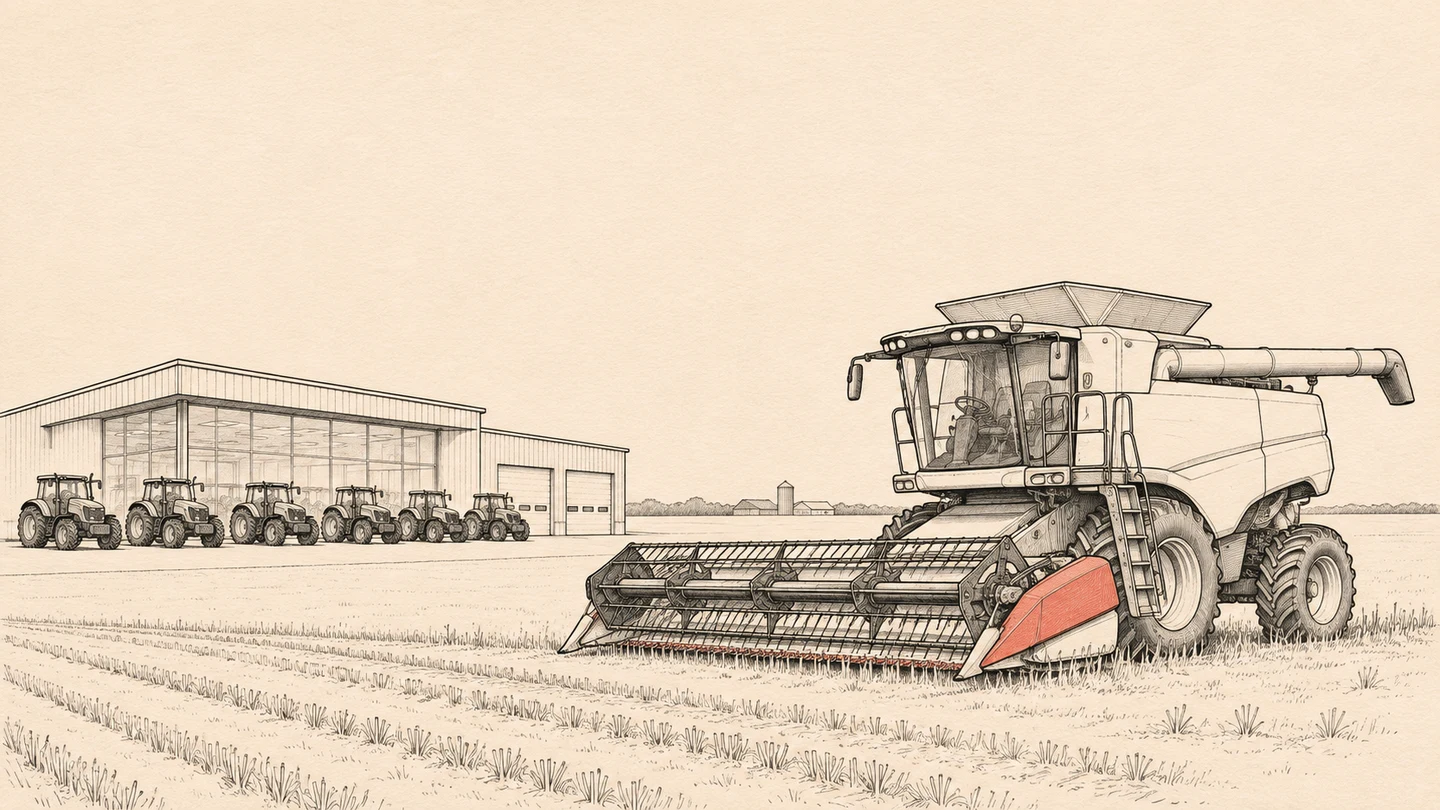
A dealer can order more equipment before farmers buy more of it. That difference is central to Deere’s November 25 results and fiscal 2027 outlook. Management forecasts U.S. and Canadian large agricultural equipment industry unit sales up 5% to 15%. It separately projects 5% to 15% net sales growth at Deere’s global Production & Precision Agriculture segment. The percentages match; the populations and measures do not. One counts industry machines in two countries, the other records a company’s segment revenue across markets.
Volume did more damage than price could repair
Production & Precision Agriculture recorded quarterly sales of $4.018 billion, down 15%, and operating profit fell from $604 million to $406 million. Deere’s slide deck attributes a $305 million hit in its profit bridge to volume and mix; pricing contributed $23 million and production costs contributed $65 million. Those figures isolate management’s explanations of the change, not the margin on any individual tractor. If the mix shifts toward smaller or lower-margin machines, units can improve without a comparable gain in profit.
The trade association AEM reported that U.S. four-wheel-drive tractor retail sales rose 7.7% in October from a year earlier. That is an early signal in one category and one country, not proof of a broad recovery. A farmer deciding whether to replace a combine still weighs financing, likely crop receipts and the trade-in value of existing equipment. Moving a shipment from a factory to a dealer does not settle those decisions. A consistent series of retail sales alongside stable or falling dealer inventory would tell a stronger story than one better wholesale quarter.
Why the group outlook remains wide
Deere guides to $4.50 billion to $5.25 billion of fiscal 2027 net income, including a projected noncash pension settlement charge of $250 million to $400 million, after $4.86 billion earned in fiscal 2026. The range allows for both improvement and deterioration. It also reflects other segments: management projects an operating margin of 12.5% to 14.5% for Production & Precision Agriculture, up from 11.3% in fiscal 2026, while Small Ag & Turf’s margin is expected to decline. A selective agricultural rebound is possible without a synchronized earnings recovery. Look for end-customer volumes, dealer inventories and realized price and mix to move together before treating that rebound as established.
Sources
AI Q&A
Does the 5%–15% industry forecast describe Deere revenue?
No. It refers to industry units in the U.S. and Canada. The segment revenue forecast is a separate measure.
Is the pension charge a current cash payment?
The guidance describes the settlement accounting charge as noncash; that description should not be generalized to all pension cash flows.
What distinguishes restocking from end demand?
Restocking can lift factory shipments first. Sustained retail sales and healthy dealer inventory provide stronger evidence of customer demand.
Information only. No investment, legal, tax, or financial advice.