CoreWeave’s customer advances put delivery timing at the center of funding
Customer advances can ease construction funding, while making delivery schedules and future service obligations more important.
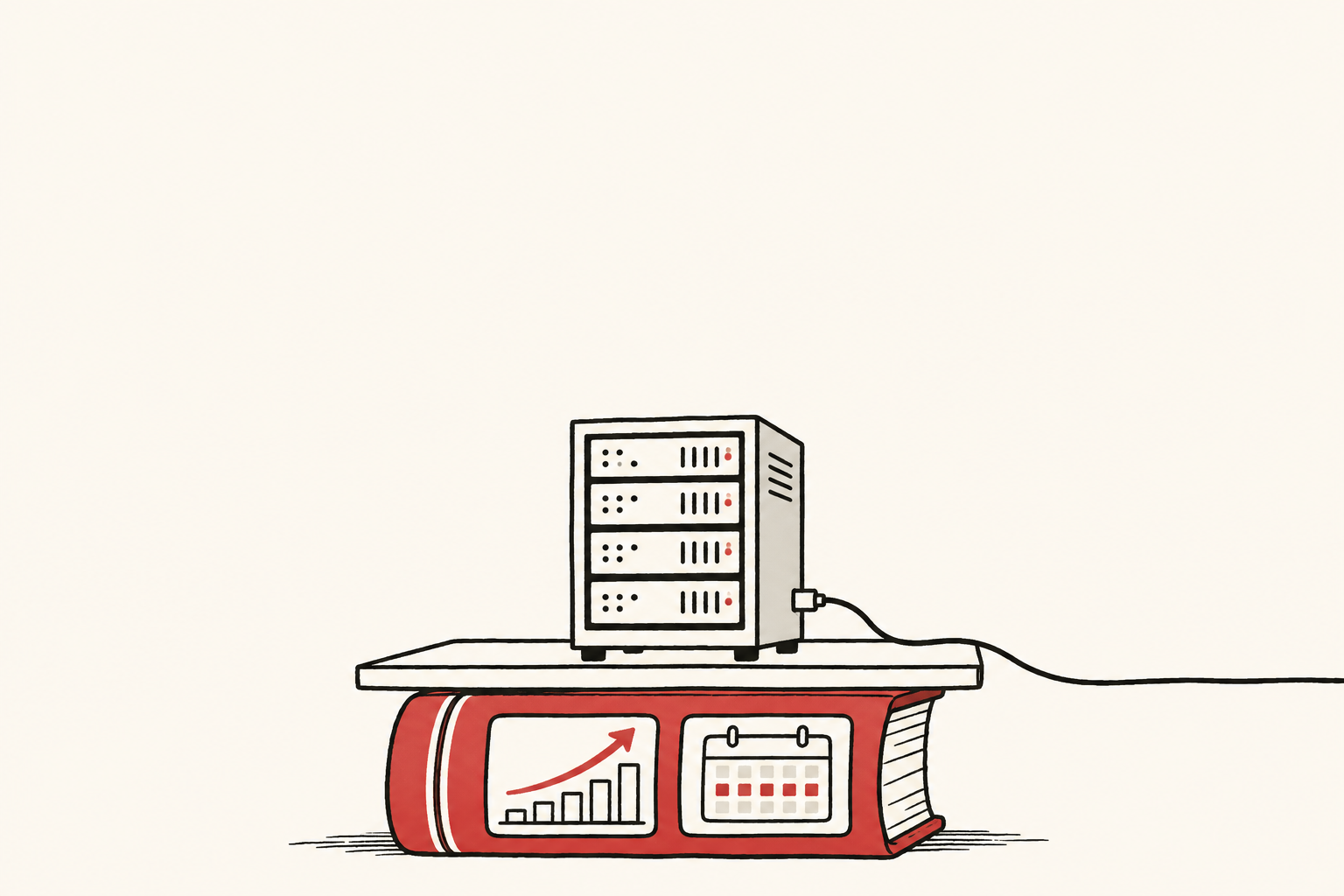
CoreWeave’s November 10, 2026 results forecast roughly $9 billion of customer prepayments and deposits over the next three months. That is an expectation, not cash already received. Company release
For an AI infrastructure provider, advance payments deserve a separate reading from revenue growth. They can bring money into a project before the corresponding service has been delivered. Our analysis is that the important question is how closely the funding timetable matches the timetable for usable capacity. This concerns the allocation of construction and delivery risk, not merely the quantity of available finance.
Customers can help fund construction, but the obligation remains
Consider a hypothetical deployment in which hardware must be paid for before a customer can run production workloads. An advance reduces the amount the provider needs to bridge elsewhere. If the equipment becomes usable on schedule, the customer gains access to scarce capacity and the provider has less cash tied up before billing begins. Both parties can benefit without any improvement in the underlying cost of producing an hour of compute.
The same arrangement becomes less comfortable when delivery slips. Cash may have arrived, but a service obligation remains. The provider must still finish the facility, integrate the equipment and make the agreed service available. The financial consequence depends on the contract: refund provisions, acceptance tests, credits and permitted delays cannot be inferred from a headline advance-payment number. This article does not claim that any such remedy has been triggered at CoreWeave.
There is also an important later-period effect. When a service is paid for early, delivering it may generate revenue without an equal new cash receipt at that moment. A strong collection period therefore cannot be extrapolated indefinitely. Analysis needs to follow both the arrival of advances and the later consumption of the services they fund.
This is also why customer advances should not be read as profit. They first change the order of payment. Returns still depend on delivery costs, operating expenses and funding costs. Earlier collection can improve liquidity without automatically improving the lifetime economics of a contract.
Contract size and funding readiness answer different questions
CoreWeave’s September 25, 2025 OpenAI announcement described an expansion valued at up to $6.5 billion. That historical ceiling should not be treated as a fresh order today. Original announcement
A large customer commitment can make a project easier to finance because it provides a prospective source of repayment. It does not by itself establish when cash becomes available, when facilities pass acceptance, or how much value remains after equipment, operations and financing. Those are separate stages of the economics.
The distinction appears elsewhere in the industry. On November 10, 2026, Rackspace said its Together AI deployment still lacked a definitive GPU-financing commitment. Rackspace announcement The companies have different arrangements; this is a comparison of disclosure, not a claim that CoreWeave faces the same condition. A signed commercial opportunity and fully funded delivery can be different milestones.
Customers face a trade-off too. Paying early may improve access to capacity while reducing financial flexibility. Their willingness to do so can strengthen a supplier relationship, but does not establish eventual usage, contract profitability or renewal terms. Those require operating evidence.
Faster deployment is valuable only when the pieces fit
A useful way to evaluate an infrastructure expansion is to consider a single deployment cohort. When does spending begin? When does customer funding arrive? When is capacity accepted? How long does it remain productive? Aggregated revenue can improve while individual projects have very different cash requirements.
An optimistic interpretation is that customer advances help align demand with construction and reduce dependence on finance raised before utilization. A cautious interpretation is that more funding may simply support more simultaneous obligations. Both can be true: a company can improve its financing toolkit while increasing execution complexity.
Hardware renewal adds another layer. Completing one installation does not answer how competitively it will operate through later contract periods. Future utilization, maintenance and replacement costs matter to the eventual return. We cannot infer those outcomes from the current advance-payment expectation.
The evidence to watch is the conversion of funding into accepted, productive capacity, followed by the cash produced over the service period. Public aggregate figures do not reveal every project’s economics. CoreWeave’s announcement supports an examination of how customers share the funding burden; it does not yet settle whether that burden-sharing produces durable returns for shareholders. This is business analysis, not an investment recommendation.
Information only. No investment, legal, tax, or financial advice.