What Cloudflare’s open Clairic weights do not settle about invoice automation
Clairic can return well-formed fields. Posting those fields still depends on checking the source, catching exceptions and measuring escaped errors.
Cloudflare released the weights for Clairic and Clairic-flash on November 18. Both extraction models are available on Workers AI. The former preview endpoint now serves the 27-billion-parameter Clairic, while the 9-billion-parameter Flash model has its own endpoint. The next day Cloudflare expanded Browser Run’s snapshot interface to return page artifacts and AI-extracted structured data from a single page load. That was a separate change; the notice did not identify Clairic as the fixed model behind it. These updates make extraction easier to integrate. They leave a harder problem open: when can a business trust a field enough to act on it?
A correct data type can contain a wrong amount
Take an importer processing a supplier invoice. A single page might show the current amount due, the previous balance and a tax-inclusive subtotal. All three are legitimate numbers. Putting the previous balance in the amount-due field will pass a numerical type check. A date validator will not catch an invoice date mistaken for a payment deadline. A row-level mismatch can be worse: the model identifies every number but attaches a correct unit price to the wrong item. Once these errors enter an accounting workflow, they are often harder to spot than malformed data.
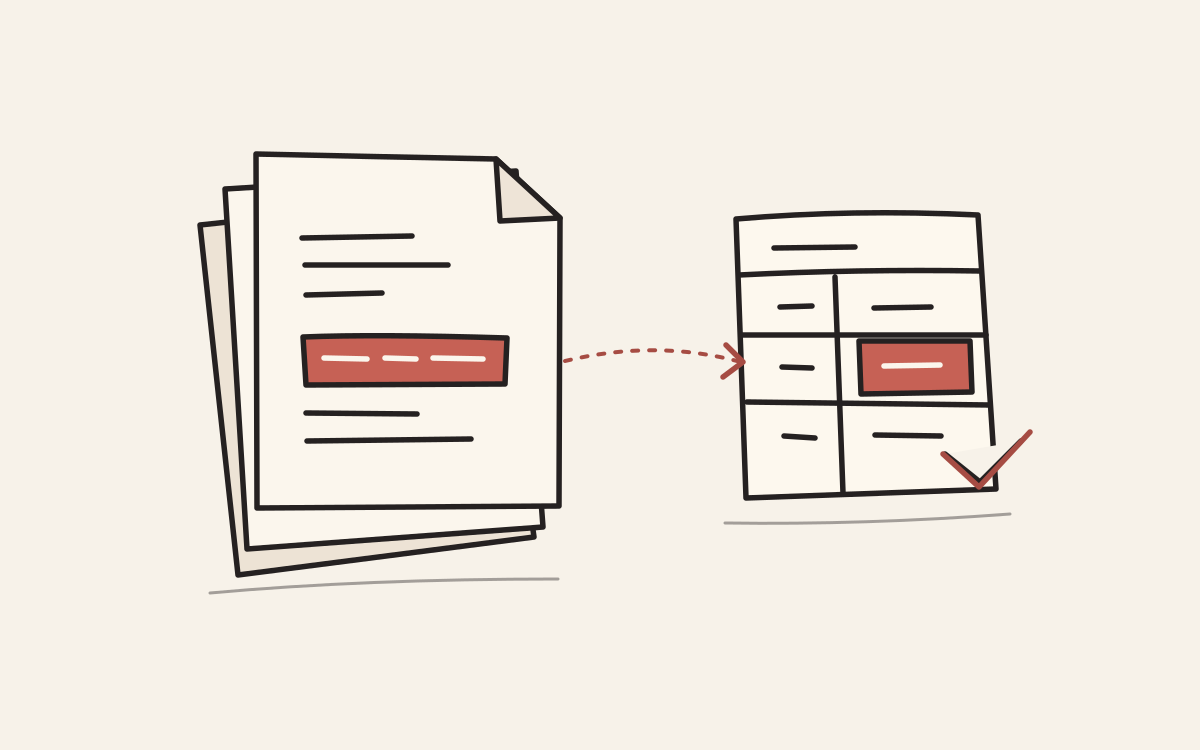
Controls should make fields traceable to their source. When a field would change an account balance, retain the version of the original document, its page and a location someone can inspect. A model’s reference to the original text can be a useful lead. If a scanned page has been cropped, rotated or split, preserve the mapping to the original. The same principle applies to websites: collecting page artifacts and structured fields from one load removes one source of drift between separate requests, but does not guarantee a usable reference for each field or make the underlying page accurate. A business system still needs to show which source supported an amount, and under which permission and rule it was verified.
What the gap between the two models can tell us
In Cloudflare’s mixed-input internal test, Clairic got 221 of 226 fields right and Clairic-flash got 213. The company cautions that these are self-reported results. The gap can guide the first round of evaluation, not predict how often a buyer will post a wrong amount. Some businesses get a single standard form. Others process scans in several languages, across currencies and with missing pages. Their costs can be concentrated in a few fields that account for little of an overall score. A local evaluation can set aside material not used in tuning, divide it by supplier and scan quality, and track correct fields, required fields that go missing, errors that reach the ledger, and reviewer time. Accuracy per document, per field and per high-risk amount answers different questions.
A model change can alter results even with a stable endpoint and identical response schema. Run the old and new versions in parallel on the same materials while preserving posting rules, then expand automation only where purchase orders, currencies and amounts reconcile. Missing evidence, discrepancies across pages and unfamiliar layouts belong in a review queue. A confidence score is not automatically a calibrated probability; repeatable errors are a reason to inspect the field definition and source mapping before changing a threshold.
Measure cost per cleared document
After the promotion, Cloudflare lists hosted prices of $0.24 and $0.10 per million input tokens for Clairic and Clairic-flash, respectively, with no separate charge for output tokens. Those numbers cover model use. They do not include conversion, retries, retained evidence, manual review or the cost of correcting a bad entry. Self-hosting also requires compute and operations. A larger model can be cheaper in practice if a difficult file otherwise has to be processed twice; a stable document with strong reconciliation rules may be a reasonable fit for the smaller version. The better measure is total cost per document cleared and the consequence of an error that escapes. Open weights give teams more ways to run the tests. They do not replace the evidence needed to post a line to the books.
Sources
Information only. No investment, legal, tax, or financial advice.