After a cloud spending cap, who bears the cost of stopping?
Cloudflare’s spending controls make budgets operational, but isolation, graceful degradation and recovery still determine the business risk.
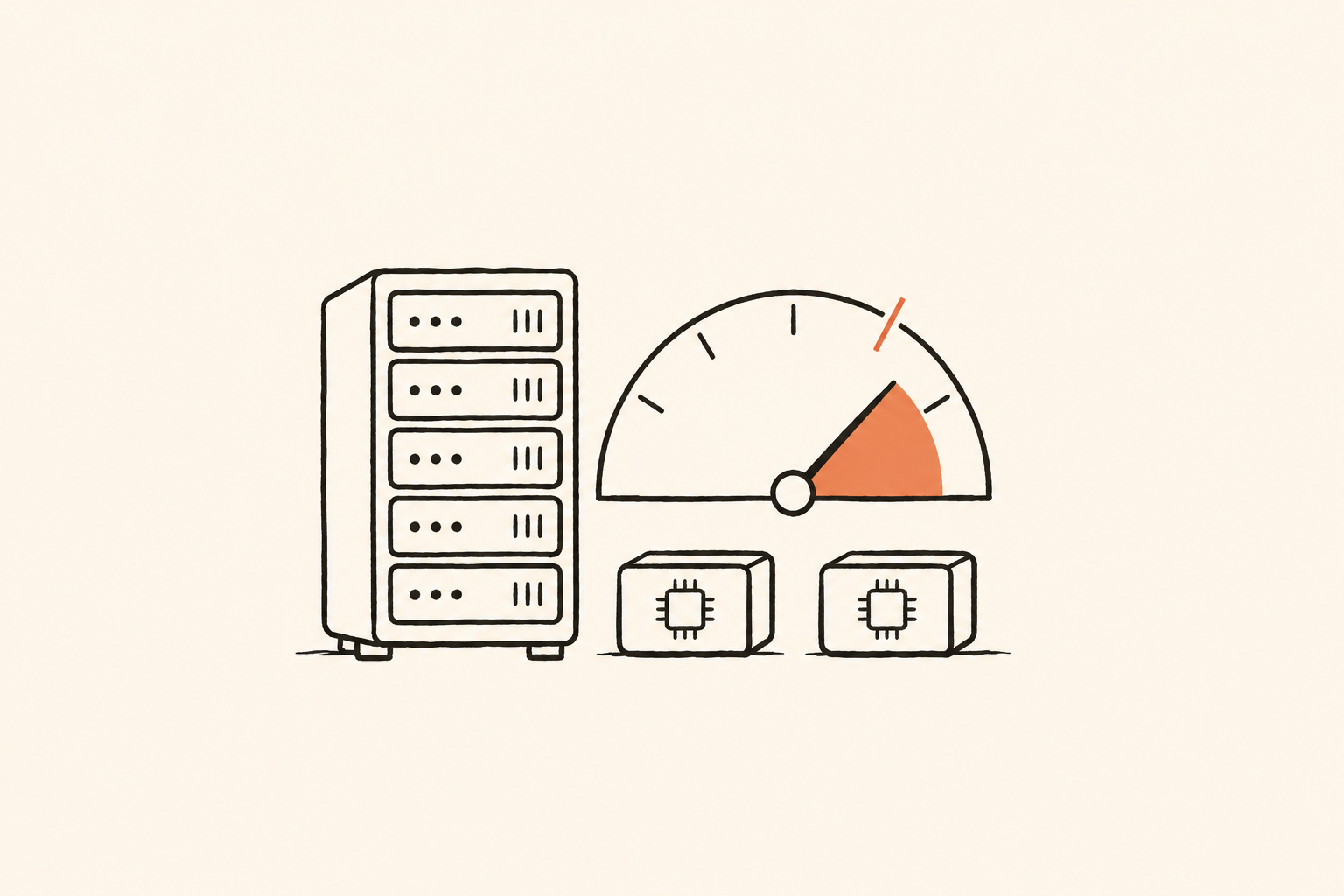
Cloudflare's official announcement of November 13, 2026 introduced Spend Management in beta for pay-as-you-go customers, initially covering Workers and Durable Objects. The original event date is the 13th, not the 14th used by some reports. Its changelog distinguishes email-only alerts from blocking limits; service can resume through a limit change or the next billing period.
This matters, but it is not simply a promise that overspending disappears. The deeper question is whether converting an uncontrolled expense into a controlled interruption actually reduces losses. The following is Open Market Notes' original analysis of resource boundaries and business risk, not a configuration tutorial. No account settings were changed.
A budget boundary is not a business boundary
The billing documentation describes separate account-wide product limits, not individual Worker or namespace limits. Metering and enforcement lag, so these do not guarantee a maximum final invoice.
For operators, a budget therefore needs an explicit area of responsibility. One team may think it is reserving room for experiments while another relies on the same resource pool to fulfill customer commitments. If they share a final stop switch, risk can pass between them. This is an architectural possibility, not a report of an actual incident.
More separation is not always better. Splitting every project introduces monitoring, permission and maintenance overhead. The sensible boundary depends on who can create costs, who is harmed by an interruption and who can authorize continued operation. Whether experiments and paid production should share a budget gate deserves attention before the amount written on that gate.
A smaller bill can accompany a larger loss
Imagine a product catalog suddenly receiving many legitimate visitors. If a limit stops its dynamic features during the busiest period, saved compute expense may come with uncompleted orders and additional support work. Now imagine the same traffic comes from repetitive requests with no commercial value. Continuing to serve it may be worth little. The usage curves can look similar while the economics are opposite.
A budget tool is consequently not a system for judging request value. It cannot decide which customers deserve service, and rising costs alone do not prove an attack. A programming error, genuine growth and deliberate abuse call for different responses. Calling all three anomalous traffic encourages indiscriminate cap increases or wholesale rejection.
It helps to consider compute expense, business losses from interruption and recovery costs separately. This is not a mechanical pricing formula; it prevents optimization of only the easiest number to see. Pausing deferrable offline work can be inexpensive. For a user action with a deadline, even a short interruption may have consequences that cannot be recovered later.
A visible static page is not an available service
The Workers documentation says new invocations are rejected once blocking takes effect; static assets requiring no Worker execution remain available. Dependence on code is therefore an important distinction.
A page loading proves only that the page loads. Login, inventory confirmation, form submission and personalized results may have another dependency chain. This does not mean those features stop on every website. It means teams should test degradation against the user's intended task rather than whether the homepage returns a successful status.
A useful degraded-service promise is specific. If browsing alone remains, avoid implying that a submission succeeded. If a task was accepted but not processed, distinguish those states clearly. Inexpensive page delivery can reduce communication costs, but cannot stand in for successful business execution. A budget safeguard earns some of its credibility by accurately explaining what it has paused.
Recovery is another workload, not a button
The Durable Objects documentation specifies different stopping boundaries: existing WebSocket messages and some ongoing activity can continue, as can storage charges. A pause does not reduce all activity and costs to zero.
Applications must therefore establish what already happened before recovery. Suppose a user repeatedly clicks after seeing a failure while a backend step actually completed. Replaying everything may produce duplicate operations. This is a general failure-design example, not an allegation that this platform has duplicated transactions.
Recovery should account for task identity, completion records and retry intervals. Another economic question is easily missed: does the backlog still have value? Expired recommendations, reminders for canceled events and reports superseded by newer results should not automatically receive equal priority merely because they once entered a queue. Measuring recovery only by throughput risks spending the renewed budget on useless work.
Who can raise the limit?
An overly low threshold can harm service; an overly high one may provide little protection. There is no universally correct amount independent of the business. Establish adjustment criteria in advance: genuine growth needs capacity planning, programming errors need fixes, and low-value requests need admission controls. More budget is not a universal remedy.
A useful rehearsal simulates an unavailable resource in a nonproduction environment and checks what users see, whether tasks duplicate and what resumes first. The exercise should validate the team's own dependencies, not claim that a supplier guarantees a particular stopping instant or billing precision.
The new feature offers a clearer control point. Its value is not replacing operating judgment but bringing that judgment forward: which work is worth funding, which capabilities can wait and whose commitments should be fulfilled first on recovery. Connected to those choices, a spending limit becomes risk management rather than merely a number on a billing page.
Information only. No investment, legal, tax, or financial advice.