Cloud-model purchasing: the cost of keeping an exit open
Cloud procurement can simplify buying AI, but meaningful portability depends on tested workflows, full costs and an explicit exit plan.
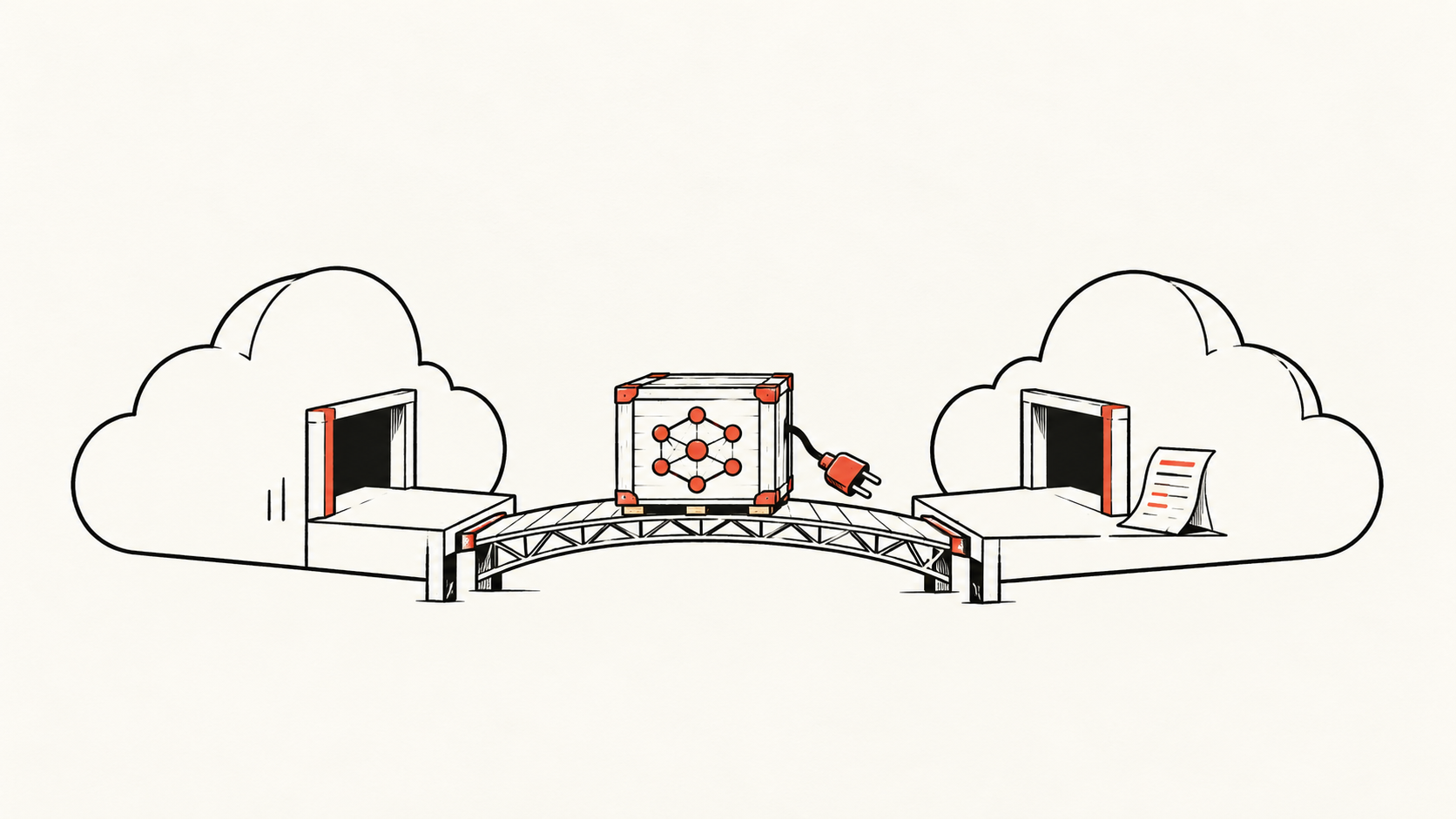
A model purchase can become easier well before a production application becomes easier to move. For a company buying AI through its existing cloud relationship, the immediate gain may be a familiar invoice, an approved procurement route and a better use of a spending commitment. Those are real operational advantages. They answer a different question from whether the company could move a working service elsewhere without losing quality, control or a tolerable cost structure.
As of October 22, 2026, that distinction deserves a place in the buying decision itself. This is an analysis of procurement and application design, not a comparison of undisclosed commercial offers. There is no universal discount, migration bill or promised saving that can be inferred from the availability of another purchasing channel.
The invoice changes the decision, but does not settle it
Google’s enterprise-procurement material says Marketplace purchases may count toward committed spending where a customer has a qualifying spending agreement. The conditional wording matters. Source: Google Cloud
Consider a purely hypothetical company with an AI support service and a cloud commitment it already expects to underuse. An eligible model purchase through that cloud might reduce otherwise unused spending. Its near-term incremental cash cost could therefore look more attractive than buying an equivalent service separately. That conclusion depends on the contract, the remaining period and what other eligible demand would have consumed the commitment. It cannot be established by comparing published token prices alone.
Now change one assumption: the company expects its ordinary cloud workloads to consume the entire commitment anyway. The model purchase then uses budget that had another productive use. Calling the purchase effectively free would hide that opportunity cost. A third case is less comfortable: a team chooses a weak application merely to improve commitment utilization. The accounting metric improves while the business receives little useful output.
These cases explain why finance should keep two views together. One describes cash and contractual spending over the relevant period. The other describes the full cost of delivering an acceptable result. Neither should erase the other. A purchasing route can be sensible for this contract period without being the cheapest long-term operating design; a more expensive invoice can occasionally buy a capability that lowers the cost of the completed service.
A common request format is only a starting point
Technical compatibility has real value. AWS documents a shared Converse interface while retaining a way to pass model-specific inference parameters. Source: Amazon Bedrock documentation
Google’s compatibility documentation separately notes that parameter support varies for third-party models and that unsupported parameters are ignored. Source: Google Cloud documentation
The practical inference is limited but important: successfully sending a request is weaker evidence than reproducing the behavior the application depends on. A common envelope can reduce integration work. It does not establish that an answer follows the same constraints, that a tool action is selected at the same point, or that a failure is handled in the same way. These are questions for an application test, not conclusions about any vendor’s entire product.
For the hypothetical support service, the useful portability unit is therefore a completed support case, including the conditions under which a person takes over. Replacing one model call might be straightforward while replacing a retrieval setup, a document identifier convention or a review workflow takes longer. The buyer needs to discover which dependencies it actually has. It should not assume that every managed feature creates a serious obstacle, or that an API adapter removes every obstacle.
The most revealing trial moves a small representative workflow rather than a polished demonstration prompt. It includes ordinary requests, incomplete evidence, a difficult refusal and a case that must remain unresolved. The same acceptance standard is applied on both routes. If a destination passes only after more human review, that may still be a useful option, but its staffing requirement belongs in the comparison.
Price the output that survives review
FinOps Foundation distinguishes resource-efficiency measures from business-unit measures. Source: FinOps Foundation
For this service, our proposed business unit is an adequately resolved case, not a token or an attempted answer. That definition requires care. A system could appear cheaper by declining difficult cases, pushing work to people or marking uncertain answers as complete. A credible comparison retains the same case mix and records the destination of unfinished work. It also measures delay: a result that arrives after the service’s useful deadline may not qualify as the same output.
Costs then include more than inference. The company would account for the work required to prepare inputs, investigate failures, review questionable results and operate the transition. None of those costs can be estimated reliably for an unnamed organization from public documentation. The point is to expose the variables before a purchasing convenience becomes a long-lived architecture by default.
Nor does portability require paying for two complete production stacks indefinitely. A team could keep an alternative route tested against a modest evaluation set, preserve the data and configuration it is entitled to retain, and document the steps needed to reconstruct the workflow. That creates a more modest exit option than instant failover. It may be sufficient if the relevant risk is a future contract change rather than an interruption that must be absorbed within seconds.
Keep the advantages of integration visible
A native platform can be the better choice. Shared identity management, established operating procedures and fewer integrations to maintain may release engineering time for the actual product. An abstraction layer also has a cost: it can conceal useful capabilities, add another failure point and become software somebody must maintain. Complete independence is not a sensible objective when its ongoing price exceeds the value of the options it preserves.
The more useful design question is where to draw the boundary. Keep business acceptance criteria, evaluation examples and the record of authorized actions understandable outside a single provider’s interface. Allow provider-specific implementations where their measured benefits justify them. Record the replacement work that would be necessary rather than labeling the entire application portable or locked in. That turns a vague architectural preference into a decision another team can inspect.
A buying review can consequently end with a bounded commitment: select a channel for its demonstrated commercial and operating advantages, name the dependencies accepted with that choice, and rehearse the exit path relevant to the business. The rehearsal need not prove effortless migration. Its value is to replace an assumed option with evidence about time, quality and cost.
The central uncertainty remains local to the buyer. Public compatibility documentation cannot establish negotiated eligibility, internal labor costs or production performance. A wider choice of purchasing channels improves the opportunity to negotiate and deploy. Whether it also improves the ability to leave depends on the application, the agreement and the work done before leaving becomes urgent.
Information only. No investment, legal, tax, or financial advice.