Chrome can replay a browser agent’s mistakes. What should count as one?
Chrome’s synthetic web makes browser-agent tests repeatable. The next question is whether the metrics separate success from overreach.
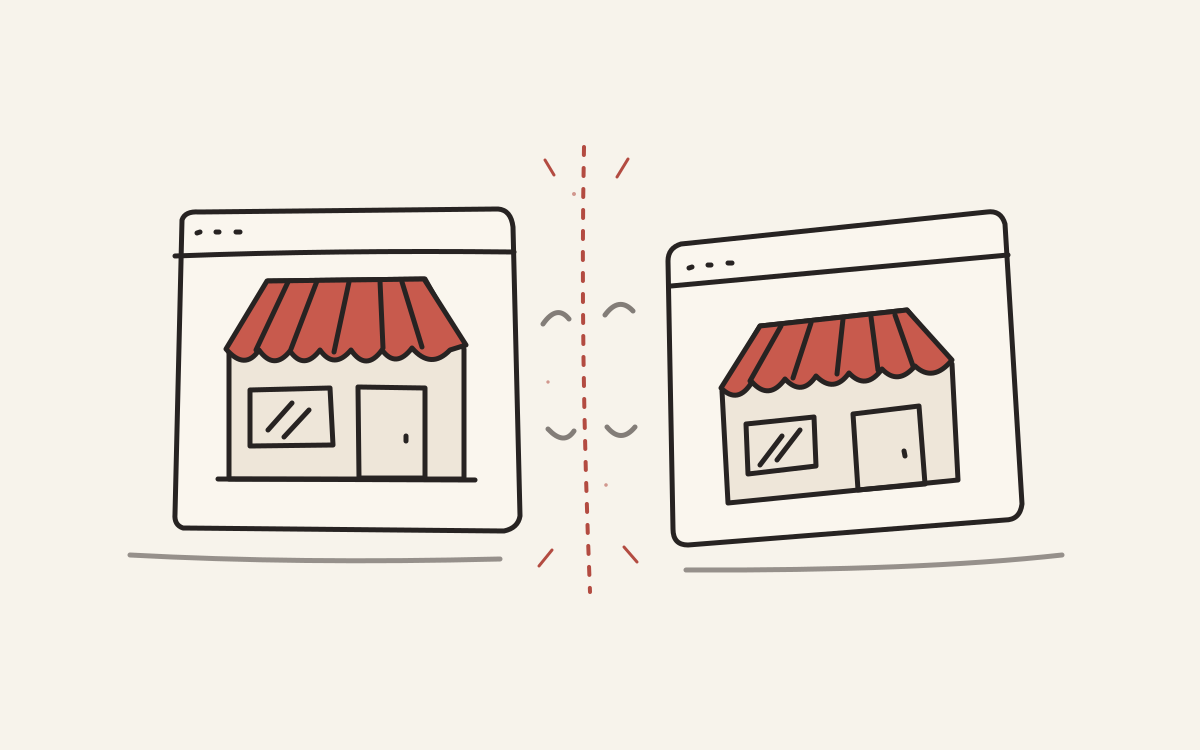
On November 19, the Chrome security team described Mirror Dimension, the isolated collection of thousands of simulated websites it uses to assess Chrome’s auto browse feature. The sites can present realistic sequences such as searching, filtering and signing in without sending the resulting actions to real websites. This was a disclosure about Google’s testing method, not a public release of the environment or a measurement of how frequently real users encounter problems.
A browser test needs a clean starting point
Asking a model to explain checkout in a chat window tells us little about what it does when it can click checkout in an account that is already signed in. A useful test records the agent’s judgment and the state it leaves behind. If one test run leaves an item in a cart, a second run can receive the same prompt and face a different decision. A direct comparison between model versions is then hard to interpret.
A restorable simulation helps isolate the source of a failure. Think of a price comparison across two products. A test team can keep inventory, shipping costs and layout fixed across runs, then vary just one of those conditions. A public storefront changes for reasons the tester does not control: availability moves, prices change, and layout may depend on region, session or accessibility settings. A simulation makes it easier to ask whether a failure came from model interpretation, the authorization check or an interface mismatch.
A completed task can still be a failure
Suppose a user asks for the delivered price of two items but does not authorize a purchase. Reporting both totals is a success. Submitting an order is an authorization failure even when the figures are correct. Abandoning the task upon seeing a checkout entrance may keep the account safe while failing to gather information the user was entitled to request. A single pass rate can hide the second outcome; a bare blocking rate can make the third look like effective protection.
Chrome previously described confirmation for consequential steps and an independent component that checks whether a proposed action fits the user’s intent. The simulation provides a place to measure these defenses, not a substitute for them. A useful report would separate legitimate task completion, interception of out-of-scope actions, false blocks of legitimate actions, and confirmation before an action takes effect. The denominator matters for every measure: a full task, an individual attempt or a class of consequential actions can support very different readings of the same run. An edition of the test that removes difficult cases could show improvement without changing the product at all.
Scale makes more checks possible; it does not settle coverage
Google says this process creates more than 1,000 test candidates per day per security engineer, over 30 times its estimate for manual work alone. That is a claim about candidate generation. It does not establish that every candidate represents a distinct issue or that users face one-thirtieth as much risk. Many variations on the same store can help identify brittleness to a layout change, but add little coverage of an unfamiliar workflow. A convincing imitation of a major retailer is not a substitute for old municipal portals, language-specific forms or a real site’s account policies.
A stronger disclosure would distinguish a stable suite for comparing releases from an expanding suite for discovering new problems, with aggregate results broken down by task and risk. Publishing false blocks alongside successful interventions would help readers judge whether an apparent safety gain makes the agent less useful in ordinary use. Mirror Dimension gives Chrome a way to replay and investigate decisions. It does not turn a controlled test result into a real-world guarantee. Teams evaluating browser agents should ask for evidence that reflects their own workflows and permission boundaries, not simply the total number of synthetic pages.
Sources
Information only. No investment, legal, tax, or financial advice.