ChipMOS: a margin rebound is not yet a durable cash-return story
The next test is whether busier factories can fund expansion and repeatable shareholder distributions, not merely higher reported earnings.
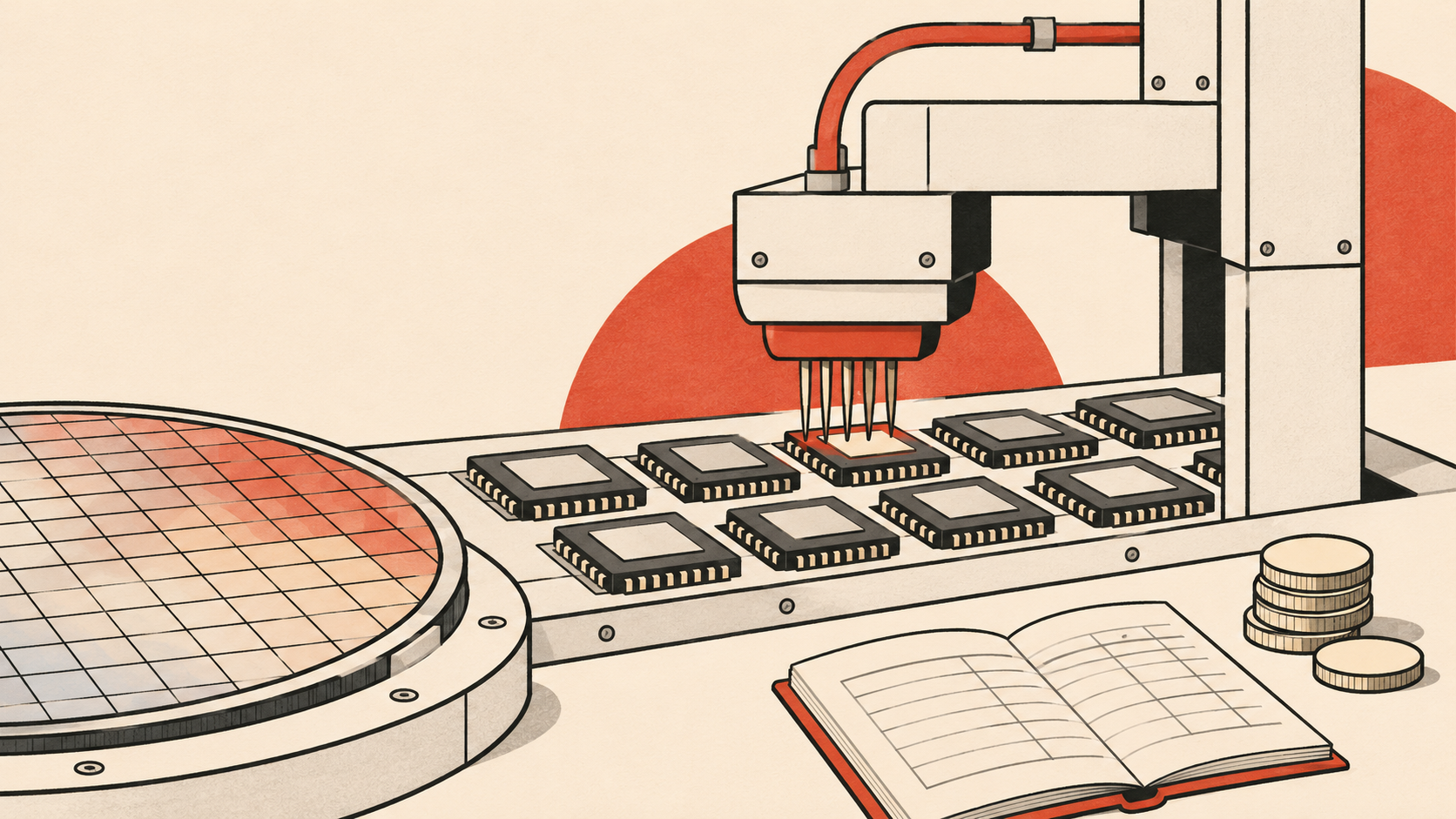
ChipMOS’s November 10, 2026 results put third-quarter gross margin at 21.7%. Reported free cash inflow of NT$975.6 million, however, covers the first nine months, not that quarter. Those are different windows into the business. Third-quarter release
The central investment question is therefore changing. An operating recovery can be real without yet establishing how much cash the company can sustainably return to shareholders. The useful distinction is between making existing equipment more productive and committing new money to keep growth going. This article’s framework is analytical, not company guidance or a recommendation to trade.
Utilization is a mechanism, not a complete explanation
In a factory with substantial fixed costs, additional work can spread depreciation and overhead across more output. That makes utilization a plausible channel through which demand supports margins. But it is not the only one. Pricing, product mix, yields, test duration and input costs can all change the relationship between revenue and profit.
A higher consolidated margin consequently does not identify how much improvement came from filling idle capacity. Nor does it prove that the same margin would survive a weaker demand environment. A useful next disclosure would separate throughput from price and mix, then show whether the benefit extends across production lines. This analysis does not assign ChipMOS an unverified third-quarter utilization rate.
That distinction matters for valuation. Filling previously idle machines can produce an impressive profit rebound without requiring a permanent change in competitive strength. Durable economics demand a second test: can the business retain attractive returns when new machines enter service and the comparison period is no longer unusually weak?
Cash needs a bridge, not a headline
The second-quarter release reported first-half free cash inflow of NT$735.9 million. Comparing that cumulative figure with the nine-month disclosure gives an implied third-quarter increment of about NT$239.7 million, assuming a consistent definition. This is a subtraction of company figures, not a separately disclosed quarterly cash-flow line. Second-quarter release
The calculation is useful because it asks a different question from the income statement: how much cash remained after the investments captured by the company’s measure? It does not, on its own, tell us whether investment was insufficient, excessive or sensibly timed. A growing operation can use cash for productive equipment and working capital before the corresponding sales arrive.
The necessary bridge runs from operating profit through noncash charges, receivables, inventory and capital spending. Readers should also check the company’s definition of free cash flow rather than assuming every issuer measures it identically. Neither a cash balance nor a single quarter of free cash flow automatically equals distributable cash. Debt obligations, committed purchases and liquidity reserves matter too.
Expansion raises the hurdle for the next phase
October revenue rose 2.1% month on month. The associated filing says capacity additions support customer forecasts and long-term supply agreements. October SEC filing
That is a reason to examine investment discipline, not a guarantee of future returns. Customer forecasts and contractual commitments need not have identical economic force. The important questions are whether agreements protect volumes, prices or capacity payments, how cancellations are treated, and who bears the cost if demand shifts. The filing’s general description does not answer those questions.
Expansion can also make reported utilization temporarily harder to interpret. A larger denominator may lower the utilization percentage even while output rises. Conversely, a high utilization rate can coexist with disappointing cash generation if equipment is expensive or customers take longer to pay. The decisive comparison is incremental operating cash against the capital required to produce it over time, not a utilization percentage in isolation.
A distribution is not a promise to repeat
The July dividend notice described US$0.760 per ADS before depositary fees as a distribution from capital surplus. Dividend notice
That accounting source does not make the payment unreal or establish that it was imprudent. It does mean the payment should not be treated as proof that current recurring earnings support an identical future distribution. Cash already accumulated, capital surplus and cash newly generated by operations answer different questions.
For a durable capital-return thesis, the relevant evidence would be repeated cash generation after economically necessary investment, adequate financial flexibility and a stated distribution policy. An investor should not infer an annualized yield or future payout merely by repeating a past payment. Currency conversion and depositary charges can also separate an ADS holder’s receipt from the amount declared.
What would confirm the stronger thesis?
Three tests can keep the analysis grounded. First, margins should remain resilient as comparisons normalize, with enough operating detail to distinguish volume from mix and pricing. Second, cash conversion should improve across several periods after allowing for the timing of expansion and collections. Third, capital allocation should connect new capacity, balance-sheet resilience and shareholder distributions rather than treating each as a separate success metric.
The optimistic scenario is that better loading finances selective expansion and leaves repeatable surplus cash. The less favorable scenario is that an excellent operating recovery continually requires fresh capital, leaving distributions more dependent on the existing balance sheet. Neither scenario is established by a single earnings release. ChipMOS’s next milestone is not simply a higher margin: it is demonstrating how much of the recovery can survive reinvestment and reach shareholders without weakening the business.
Information only. No investment, legal, tax, or financial advice.