AOI’s $2.2 billion optical commitment still has to get through the factory
Two purchasing floors answer part of the demand question. Qualification, usable capacity, shipments and cash are separate milestones.
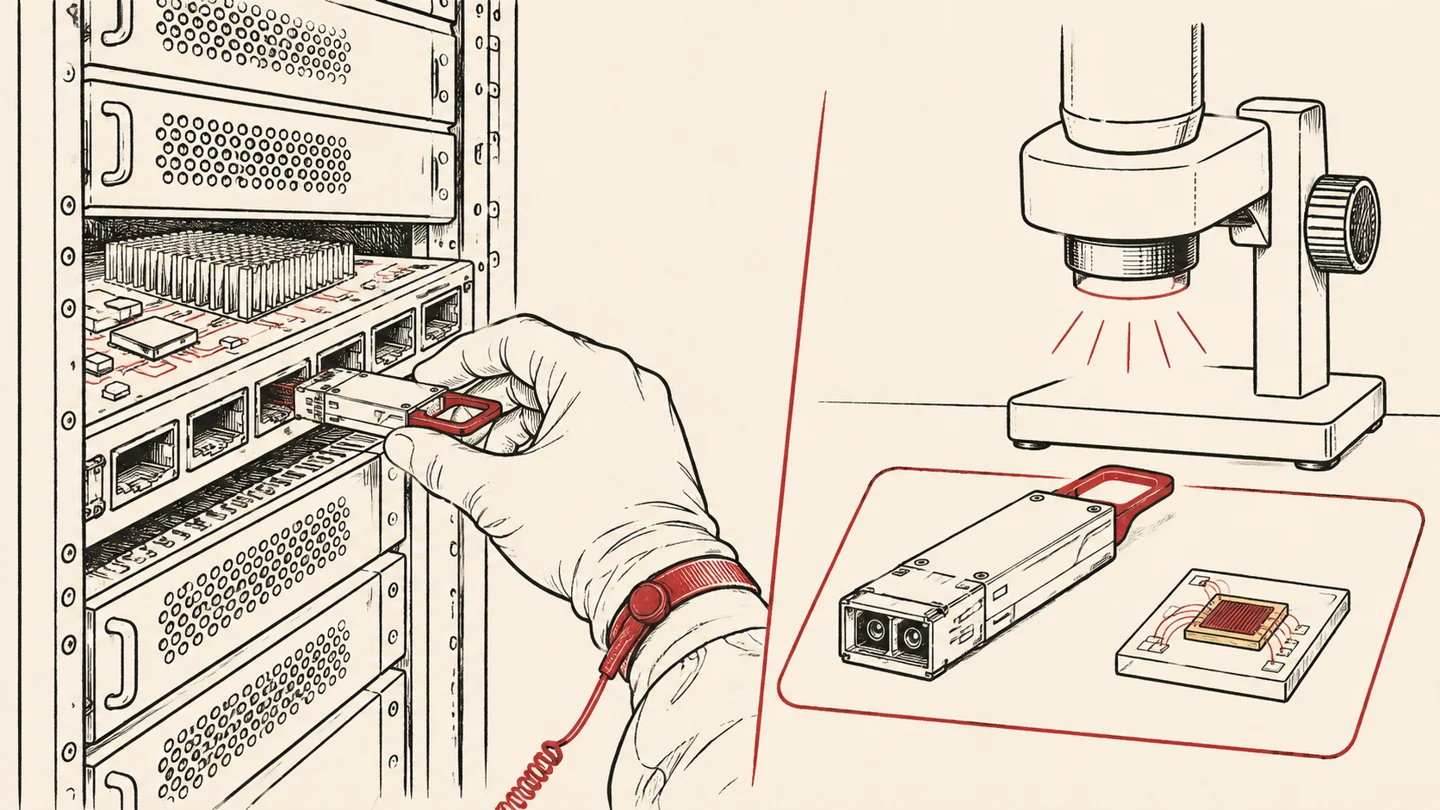
Applied Optoelectronics gave one piece of its data-center expansion a firmer demand baseline on November 24. An existing large customer committed to minimum purchases of roughly $1.5 billion of 800G transceivers in 2027 and $700 million of laser diodes across 2028–29. The two amounts add to $2.2 billion, but they cover different parts and different delivery windows. The broader demand discussion above $10 billion is not backed by the same commitment. That distinction is the start of the analysis, not the end of it.
Qualification comes after a commercial commitment
The agreement gives AOI a reason to schedule equipment, processes and people around specific products. It does not disclose quarterly order allocations, unit prices or payment schedules. Those omissions make it impossible to convert a dollar floor into a monthly factory requirement from the announcement alone. AOI said it would spend $2 million once to speed qualification and disclosed no capital commitment from the customer under the agreement. A customer’s purchase obligation cannot be treated as cash already available to build a facility.
A sample passing a test and a line repeatedly achieving customer specifications at commercial volumes are different outcomes. Scale can expose variation across production lots, rework and the time needed to test each batch. A manufacturer also needs to separate reusable equipment from product-specific fixtures. Those are analytical considerations, not disclosed terms of this agreement. The company did not specify the lines already qualified, its yields for this customer or the acceptance milestones.
An installed tool is not a sellable unit
In its November 5 earnings materials, AOI targeted enough installed equipment by the end of 2026 to support more than 500,000 800G and 1.6T products a month in combination, and capacity for more than one million combined transceivers a month by the end of 2027. It also flagged longer U.S. expansion lead times, including power. Neither target is a shipment tally, a product split, a customer allocation or an average across the full year. Multiplying the December target by twelve would transfer future capacity into earlier months.
After installation come validation, changeovers, downtime and yield losses. Allocation also reflects the customer’s specifications, competing orders and the available line mix. Laser diodes are a separate product line in the disclosed schedule; 800G transceiver capacity does not answer the diode question. The most informative updates would identify qualification, initial commercial shipments and the pace at which verified output expands, not merely the date equipment reaches a site.
Delivery, revenue recognition and collections move on different clocks
AOI reported $702.1 million of capital expenditure over the first nine months through September, spread across the U.S., Taiwan and China. It predates the announced agreement and cannot all be assigned to it. A separate at-the-market agreement allows up to $550 million of equity sales. The limit is neither proceeds received nor a statement of how those proceeds would be spent. Equipment payments and inventory can consume cash before delivery. Recognized revenue can then increase receivables before cash is collected.
One plausible path is timely qualification, a production ramp and a manageable inventory and collection cycle. Another is intact customer demand but late capacity: expenditure or inventory moves first while deliveries catch up. It is also possible to ship on time with a less favorable mix, price or yield. The public evidence does not select one scenario. The agreement improves demand visibility; subsequent reporting has to show the timing of qualified shipments and the balance-sheet cost of meeting them.
Sources
AI Q&A
Can the full $2.2 billion be booked as 2027 revenue?
No. About $1.5 billion is associated with 2027 transceivers; the remainder is for diodes across 2028–29. Revenue depends on actual performance and recognition.
Does the one-million-per-month target count actual shipments?
No. It is a combined year-end capacity target for two transceiver speeds. Yield, qualification and allocation remain separate.
What is the best follow-up evidence?
Look for qualification and first commercial shipments, then compare product mix, inventory, receivables and operating cash flow.
Information only. No investment, legal, tax, or financial advice.