Alibaba’s AI cloud grew 53%. Cash returns remain a separate test
Infrastructure margins improved while AI application losses widened. Revenue scope, subsidy presentation and cash spending need separate checks.
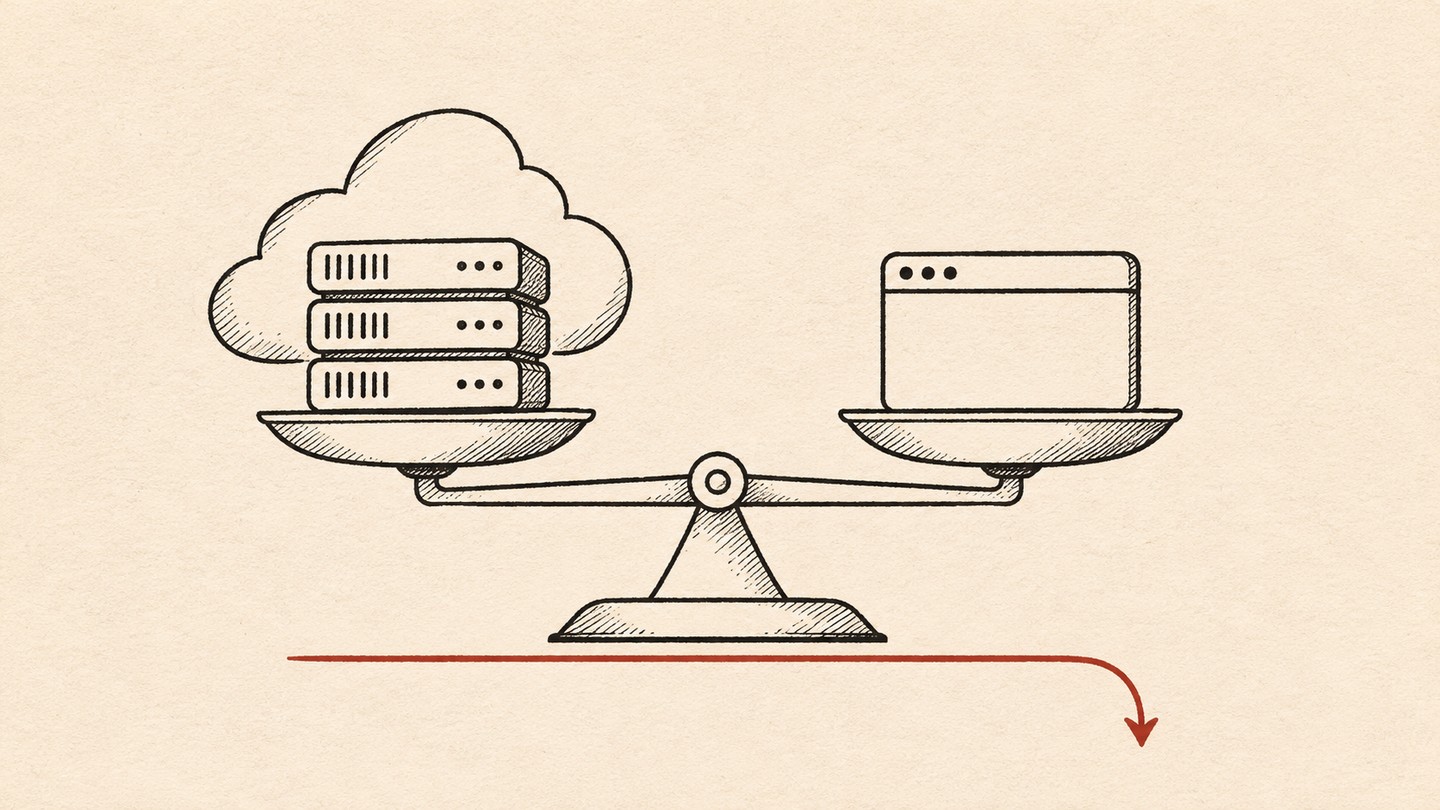
Alibaba’s September quarter combines faster growth and improving profitability in AI infrastructure with negative group free cash flow. There is no contradiction. Customer demand, current operating earnings and the cash required to build the next wave of capacity run on different schedules.
The results released on November 19 provide actual reporting evidence, not an earnings preview. This analysis uses the three months ended September 30, 2026, with all amounts in renminbi, rather than mixing half-year totals into quarterly performance.
Three growth rates, three scopes
AI Cloud and Compute Services revenue reached RMB60.973 billion, up 53%. External-customer revenue grew 64%, while recurring external-customer revenue grew 67%. These are nested measures, not three growth contributions that can be added together.
The company’s recurring definition covers ongoing consumption through pay-as-you-go services and monthly or annual subscriptions, principally public cloud, licences and software renewals. It excludes compute-equipment solutions. Recurring therefore does not mean all revenue is a contracted fixed annual fee. Consumption customers can increase or reduce usage. Durability still requires evidence about retention, expansion and pricing rather than simply annualizing rapid growth.
The segment also serves internal customers. Internal demand can support deployment and product validation, but cannot be counted again as new external group sales. The current segment combines Cloud Intelligence Group and T-Head, with comparative figures recast. It is not an unadjusted continuation of an old cloud reporting line. Segment definitions and revenue breakdown, pages 8–11
Profitable infrastructure does not mean applications have repaid their investment
Segment adjusted EBITA was RMB8.838 billion, with a reported margin of 14.5%. Meanwhile, AI Labs and Applications generated RMB4.435 billion in revenue and an adjusted EBITA loss of RMB10.503 billion. Alibaba primarily attributes the widening application loss to greater investment in AI capabilities and higher Qwen app inference costs.
The disclosure separates two economic activities within a shared technology stack. Infrastructure can charge customers while applications require research, inference and product-expansion spending. More application usage can increase both adoption and service costs. Paid conversion, cost per service delivered and retention are needed to interpret the implications for future profitability.
But adding the two segments and calling the result “Alibaba’s final AI profit” would also overreach. There are intersegment transactions, unallocated costs and eliminations, and these are not standalone cash-flow statements. Segment figures identify where earnings and investment occur; they do not establish a complete AI return-on-investment measure the company has not disclosed.
Commerce improvement needs a presentation check
Commerce adjusted EBITA reached RMB38.851 billion, versus RMB11.336 billion a year earlier, supporting the group’s improvement. Customer-management revenue nevertheless fell 5% as reported. The company says it would have grown 1% on a comparable basis excluding the contra-revenue effect of its new business-development programme.
Relevant subsidies previously appeared in sales and marketing expense and now partly reduce revenue. That matters when interpreting falling costs. Moving an otherwise identical subsidy from expense to a revenue deduction does not itself create profit, but it changes revenue growth and expense ratios. The entire marketing-expense decline cannot be described as cash saved. Nor does reported revenue decline alone establish weaker merchant demand.
Operating improvement and presentation changes can coexist. Comparable revenue, actual subsidy spending and unit economics need to be checked together, rather than selecting the most attractive line. Expense discussion, pages 13–14
Free cash flow needs the full bridge
Operating cash inflow was RMB15.690 billion; free cash outflow was RMB34.472 billion. The company’s reconciliation is RMB15.690 billion, less RMB50.463 billion of qualifying property and equipment purchases, plus a RMB0.301 billion buyer-protection-deposit adjustment, producing negative RMB34.472 billion.
The RMB50.463 billion deduction should not be replaced with the RMB50.477 billion total capital expenditure in the investing-activities discussion: their scopes differ. Nor should all group capital expenditure be assigned to one segment. Alibaba attributes the free-cash-flow deterioration mainly to increased cloud infrastructure spending, partly offset by narrower instant-commerce losses and higher cloud customer prepayments. Cash-flow discussion and reconciliation, pages 17 and 39
Prepayments bring cash forward but also bring future performance obligations. They are not all current-period revenue. Capital spending occurs upfront, while equipment depreciation is recognized over time, so better earnings can coexist with a cash deficit. EBITA also needs to be distinguished from EBITDA: the former does not add depreciation back in the same way the latter does. Describing EBITA as profit before equipment depreciation would misread these results.
Group net income is additionally affected by investment valuation changes and other items. It measures a financial outcome but is not a substitute for cloud cash collections. Management’s aspiration for positive free cash flow remains a target, not an achievement already recorded this quarter.
The next evidence to watch
The report demonstrates infrastructure revenue growth and improved segment earnings, alongside intensive application investment and infrastructure cash spending. Further evaluation requires three continuing strands of evidence: external recurring revenue growing on consistent definitions; verifiable improvement between application monetization and inference costs; and operating cash leaving a surplus after necessary investment, rather than improvement driven only by collection timing.
For a company spanning commerce, infrastructure and AI applications, one growth rate cannot summarize an investment cycle. Separating who the customers are, where profit arises and when cash moves shows which part of the business growth is actually improving. Official quarterly-results index
Information only. No investment, legal, tax, or financial advice.