AI Infrastructure’s Next Test Is Replaceability
OCP’s announcements invite a practical question: how much of an AI system can change without forcing everything else to change?
Analysis | October 13, 2026. Based on announcements dated October 12.
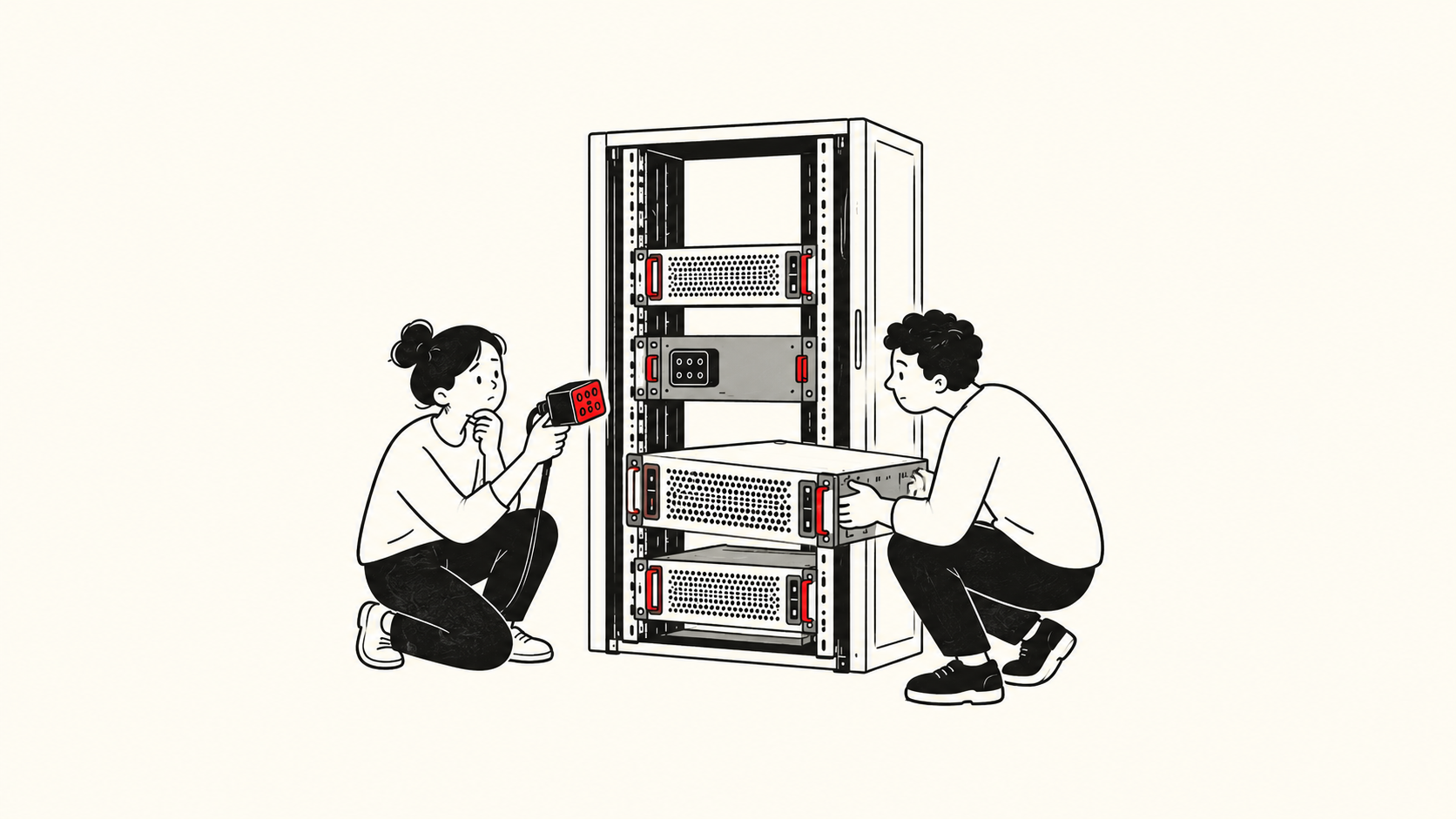
The most useful question after this week’s infrastructure announcements is not how large the next installation might become. It is what an operator could replace without reopening the engineering of the entire system. That is our proposed test of meaningful interoperability.
Three kinds of evidence
Microsoft says Maia 200 serves production workloads; Maia 300 production deployments begin in 2027. Microsoft announcement
NVIDIA contributed Vera Rubin rack and compute-tray designs to OCP through MGX. NVIDIA announcement
Lumentum, Astera Labs and Corning announced a joint PCIe-over-optics demonstration. Supplier announcement
These are distinct evidentiary categories: reported operation, a design contribution, and an announced demonstration. None should be promoted automatically into proof that customers can substitute components across suppliers. Nor should the absence of that proof be mistaken for evidence that the technologies cannot work together.
Define the boundary before measuring openness
Our analysis starts with a hypothetical purchasing decision. An operator wants to change a compute tray while retaining the rack, or change an optical component while retaining the surrounding network. The relevant question is which other contracts, software dependencies and validation procedures must change along with it.
A common mechanical interface might preserve a chassis while leaving firmware tightly coupled. A shared communication interface might permit data exchange while leaving troubleshooting dependent on one supplier. These are examples of different boundaries of compatibility, not findings about the products announced this week. Procurement teams should name the boundary they need rather than accept “open” as a complete answer.
We would ask for three practical demonstrations. First, document the exact configuration that has passed testing, including firmware versions. Second, replace one component with an independently supplied alternative and repeat the same workload. Third, introduce a failure and show which party diagnoses it, which part is replaced, and how service resumes. A successful benchmark alone answers none of those ownership questions.
Measure retained work
Our proposed metric is the amount of validated infrastructure and operational knowledge retained through a change. Does a replacement preserve existing monitoring, spare-parts procedures and maintenance training? How much testing must be repeated? The answers reveal whether modularity reduces future work or merely rearranges it.
This framework also avoids a false contest between custom silicon and common infrastructure. A specialized compute system could still preserve useful choices at carefully defined interfaces. Conversely, a broadly available design could leave important operational dependencies unresolved.
The next decisive evidence would therefore be published substitution tests and repeatable field-service results. Until those appear, production claims, design contributions and demonstrations deserve separate columns in a buyer’s assessment. Announced scale is a destination; replaceability is a test an operator can actually specify.
Information only. No investment, legal, tax, or financial advice.